





UAlbany Joins SUNY Chancellor, Capital Region Colleges to Celebrate Expansion of Student Success Programs
By Amy Geduldig
ALBANY, N.Y. (Sept. 30, 2026) — When University at Albany sophomore Ethan Ballard arrived on campus last year, he was determined to defy expectations. Growing up with a learning disability, Ballard said academics were often an “uphill battle,” and he was frequently told not to bother with college.
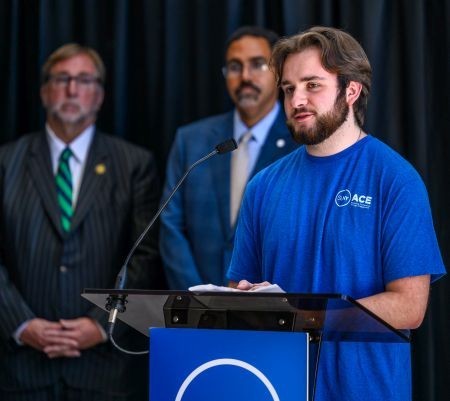
One year later, Ballard has not only completed his first year at UAlbany — he earned a spot on the dean’s list. He credits UAlbany’s Advancing Completion through Engagement (ACE) program with helping him navigate that transition, from selecting classes and staying on track academically to finding new ways to get involved on campus.
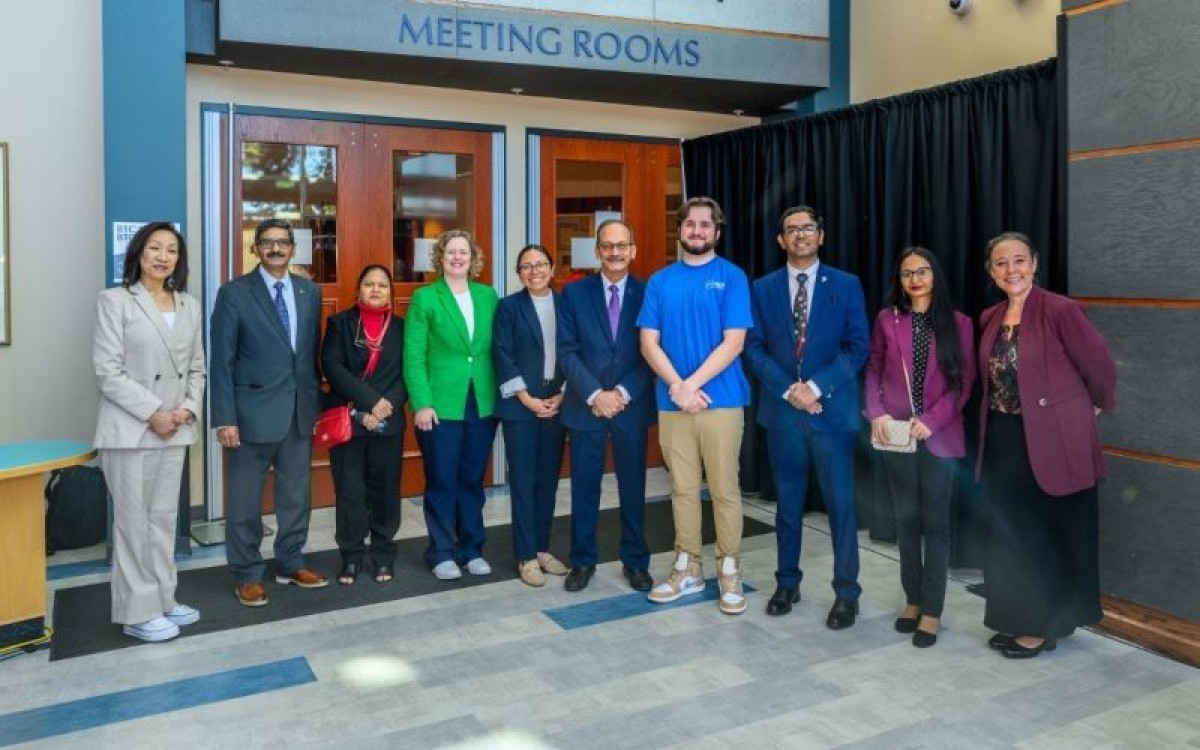
Ballard shared his experience last week as UAlbany joined SUNY Chancellor John B. King Jr., SUNY Board of Trustees Chair Merryl H. Tisch and higher education partners from across the Capital Region to celebrate the expansion of ACE and Advancing Success in Associate Pathways (ASAP), two programs designed to help more SUNY students stay on track and graduate on time.
The event, held at Hudson Valley Community College, brought together students, faculty, staff and leaders from UAlbany, Columbia-Greene Community College, Hudson Valley and SUNY Schenectady. It was part of a series of regional events SUNY is holding in September and October to highlight the programs and the students they serve.
“Being part of ACE hasn't just changed the college experience for myself, but it’s also changing the college experience for others who were told that they weren't going to succeed. The foundation that I've helped build through the ACE program has made it so I can succeed, along with my peers and future students as well,” Ballard said.
UAlbany expanded ACE this fall to serve 355 students pursuing bachelor’s degrees. Across the Capital Region, ASAP and ACE are serving more than 1,100 students this semester.
“At the University at Albany, we believe talent is everywhere, but opportunity isn't evenly distributed. ACE changes that by meeting students where they are, with advisement, resources and a community that helps them stay on track and finish strong. We're grateful to SUNY and our elected leaders for investing in a program that is empowering so many of our students to find success,” said UAlbany President Havidán Rodríguez.
Angelus David, who also spoke at the event, participated in ASAP while attending Hudson Valley and transferred to UAlbany, becoming one of the University’s first ACE graduates when he completed his bachelor’s degree in business administration this summer with a 4.0 GPA.
“The dedicated support system, financial incentives, and special access to course scheduling provided by the ASAP and ACE programs were truly life changing. Thanks to the incredible guidance from HVCC and UAlbany and an entire network of dedicated advisors, these programs played a massive role in helping me graduate with a 4.0 GPA. ASAP gave me the exact help I needed as soon as possible, and ACE literally and figuratively helped me 'ace' my education. I highly recommend that every student take advantage of these phenomenal programs,” David said.
Through an additional $8 million allocated in the 2026-27 Enacted State Budget, ASAP, for students pursuing associate degrees, and ACE, for students pursuing bachelor’s degrees, expanded to serve 10,000 students at 44 SUNY campuses beginning this fall.
The programs are already showing positive results across SUNY. Compared with similar students, ASAP and ACE participants are attempting and earning more credits and are more likely to remain enrolled or complete a degree in the semesters after entering the program. By the fourth semester, retention rates for ASAP participants are 12.3 percentage points higher than matched comparison students, while ACE participants have retention rates 8.6 percentage points higher.
“SUNY is committed to student success, and ASAP/ACE is a vital part of SUNY's efforts to ensure our students thrive at every stage of their academic journey,” said SUNY Chancellor King. “The expansion of this nationally proven model has given more students access to the resources they need to complete their degrees on time and move forward on a path to upward mobility.”