





New York State Mesonet Director Featured on The Weather Channel
By Mike Nolan
ALBANY, N.Y. (Nov. 20, 2025) — With winter weather making its return, the nation’s largest and most advanced state weather observation network is hard at work to keep New Yorkers informed.
The New York State Mesonet, operated by the University at Albany, features 127 standard weather stations, spaced an average of 17 miles apart across the state. Each site is equipped with automated sensors that measure various weather data points in real time.
June Wang, director of the NYS Mesonet, was featured live on The Weather Channel last week. She explained that the network operates around the clock, feeding weather prediction models and decision-support tools for users across New York.
The network also provides real-time camera images to show current conditions at each monitoring site.
“The New York State Mesonet is tracking this lake effect snowstorm in real time from our 127 stations,” said Wang, talking about expected snow in Western New York. “We provide information on snow depth, precipitation type, temperature, wind speed and other relevant variables. More importantly, we have real-time camera images to show you exactly what's going on out there.”
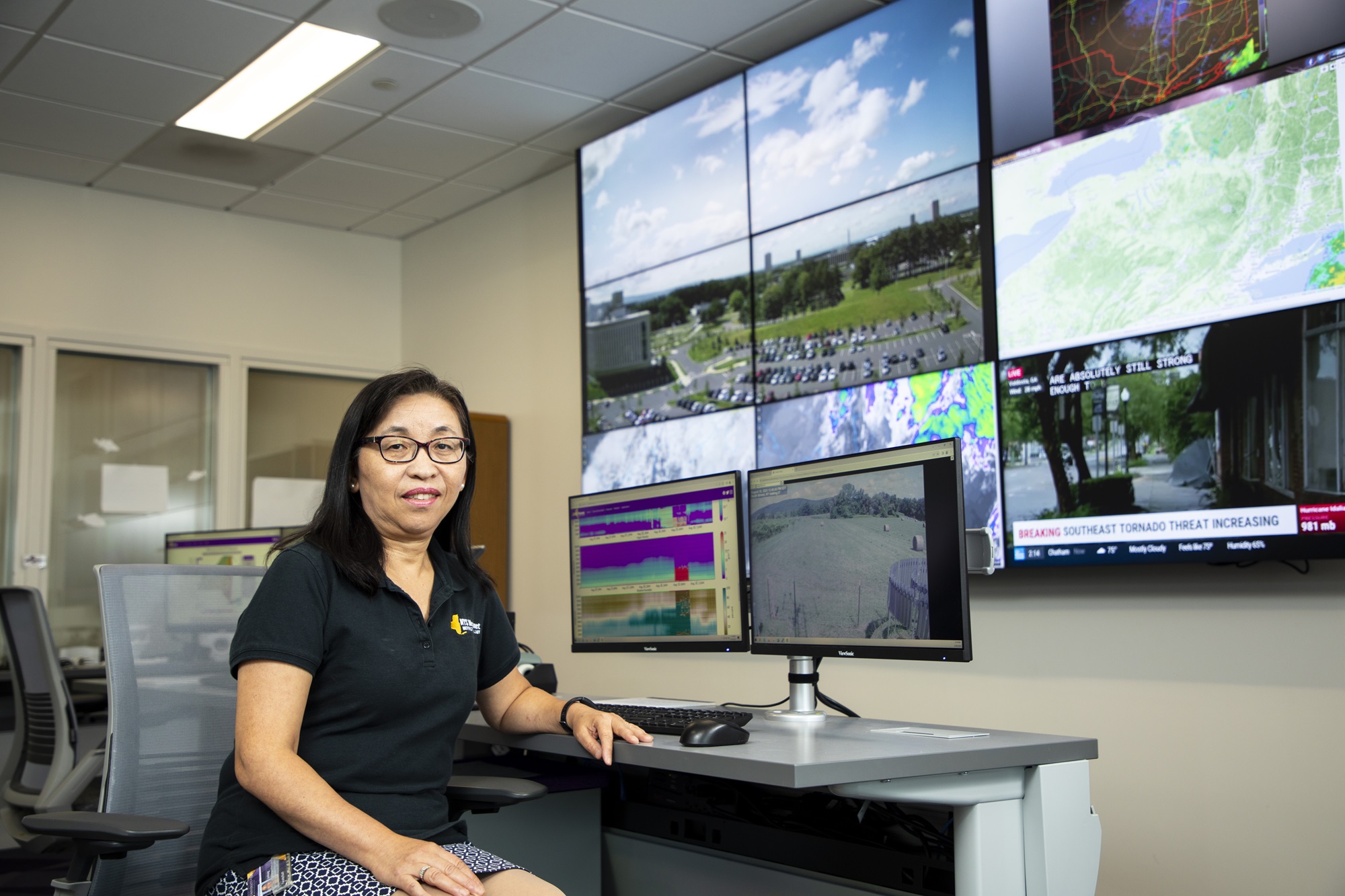
Following Superstorm Sandy, and several other extreme weather events in New York, FEMA provided the state with a recovery and resiliency grant to establish the Early Warning Severe Weather Detection Network in 2014, now known as the NYS Mesonet.
Since then, the Mesonet has not only grown its standard network, but also several sub-networks of specialty sites. This includes a Profiler Network of 17 sites that provide data about the atmosphere vertically (up to 6 miles above ground); a Flux Network of 18 stations that monitor surface energy; and a Snow Network of 20 sites that measure the water content of snow.
In addition, the Mesonet operates monitoring sites along the New York State Thruway to support winter operations and roadway safety.
Wang noted that the network’s site density provides emergency managers, the National Weather Service, and the general public with localized weather information to aid in decision-making.
“Everyone in New York State is within 10 miles of a Mesonet site,” said Wang. “You can find your backyard weather station and track exactly what the current conditions are like there.”
The Mesonet’s real-time data is available for public viewing on its website, along with a winter weather page that offers continuous, statewide updates on variables such as snow depth, recent snow accumulation and precipitation type.