





What to Know About Day of the Dead: A Q&A with Verónica Pérez Rodríguez

By Bethany Bump
ALBANY, N.Y. (Oct. 29, 2024) — The Day of the Dead, a holiday traditionally celebrated in Mexico and Guatemala, has become increasingly popular in the United States as people look to partake in colorful, joyful celebrations honoring loved ones who have died.
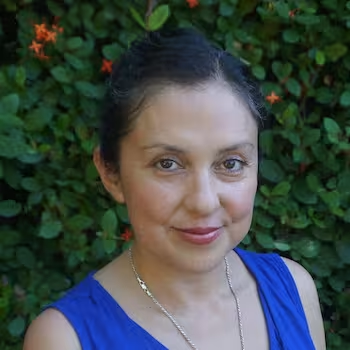
The holiday, traditionally called Dia de Muertos, is typically celebrated Nov. 1 and Nov. 2 and has a history dating back to pre-hispanic Mesoamerica, which encompasses Mexico and Northern Central America, according to Verónica Pérez Rodríguez, an associate professor of anthropology and director of the Institute for Mesoamerican Studies (IMS) at UAlbany.
Established in 1975, the IMS studies and disseminates knowledge concerning the peoples and cultures of Mesoamerica, and helps coordinate the work of UAlbany’s Mesoamericanist faculty, who are active and prominent scholars in the field of Mesoamerican anthropology. In fact, UAlbany has the largest number of full-time Mesoamericanists of any institution north of Mexico.
Last year, the IMS began organizing Day of the Dead celebrations on campus. Together with the Department of Languages, Literatures and Cultures; the Department of Africana, Latin American, Caribbean and Latinx Studies; the Spanish Program; and the Humanities Labs Project, they solicited members of the University community to help build colorful altars around campus that they decorated with photos and mementos honoring deceased loved ones.
This year, the IMS is again inviting people to help decorate a Day of the Dead altar at the anthropology entrance on the first floor of the Arts and Sciences building, starting at 4 p.m. Friday. Individuals are encouraged to bring pictures of loved ones for the altar.
Pérez Rodríguez took some time to explain the meaning behind the increasingly popular holiday and how individuals can participate in honoring their own lost loved ones.
What are the origins of Dia de Muertos?
The Dia de Muertos celebration takes place in Mexico and Guatemala, and it represents a tradition that has ancient, prehispanic Mesoamerican roots as well as Spanish and European roots. The celebrations mix ancient Mesoamerican practices, imagery and attitudes toward honoring our dead, our ancestors, with offerings of flowers, candles, copal (an aromatic tree resin), and their favorite foods and drinks on the days that the Catholic liturgical calendar celebrates All Saints Day.
While in Spain this date was celebrated by a mass, in Mexico and Guatemala the tradition changed and integrated aspects of ancient Mesoamerican beliefs and practices, such as honoring our loved ones in our homes and on their tombs with beautiful offerings, food and music. It is a celebration of life as much as it is a celebration of death.
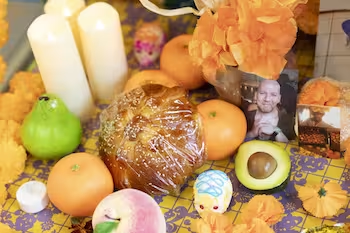
These altars, or ofrendas, are done in the family home. Families set up tables and altars that can have anywhere between three to seven stages or heights. These numbers reflect prehispanic Mesoamerican beliefs on how the world is structured (underworld, our world and sky) or the seven stages that a person must go through after their death on their way to the Mictlan (the ancient Nahuatl place of the dead in the underworld). In some parts of Mexico, like in Oaxaca, Michoacán and parts of the Valley of Mexico, families also visit the cemeteries and the tombs of their loved ones. They clean the tombs, decorate them with flowers, candles, food, and in Oaxaca with beautiful “paintings” made with colored sand and sawdust, and they spend the night as a family with their dearly departed, sharing stories about them and perhaps serenading them with live music.
How and where is it observed today?
The tradition is celebrated traditionally in West, Central and Southern Mexico and Guatemala. With the recent recognition of this holiday in media and movies, the celebration is now becoming more popular and widespread in northern Mexico and places of the Mexican diaspora, namely the United States, especially in the southern U.S.
Making ofrendas is a popular tradition associated with the holiday. What do these look like and why are they significant?
The ofrendas or altars offer our dearly departed with a chance to enjoy what they loved in life, especially their favorite meals and drinks. The family, especially the younger generation, get to learn about their ancestors and hear stories about their lives. Altars also contain things that in ancient times were thought to be necessary to undergo the ordeals that separated a newly deceased person from their final resting place in the Mictlan, such as water, salt, marigold flowers (and their aroma), and even a fresh set of clothes or toys, in the case of children. Also present in altars are the smells and smoke of cempasúchil (marigold flowers) and burning copal, an aromatic tree sap used since prehispanic times and thought to attract the souls of our dearly departed through its delicious smell.
How is Day of the Dead celebrated at UAlbany?
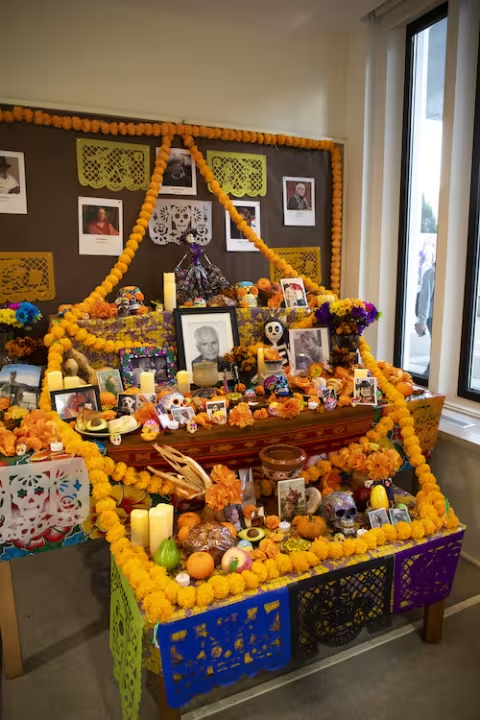
Since 2023, the Department of Anthropology and the Institute of Mesoamerican Studies at UAlbany have been celebrating Dia de Muertos by setting up an ofrenda next to the East entrance of the Arts and Sciences building. This will take place on Friday, Nov. 1, starting at 4 p.m. New this year is that from our ofrenda in the Arts and Sciences building we will go to the Campus Center Auditorium, where we will have a celebration of Mexican dance and music from 6-8 p.m. The Herencia Cultural Mexicana (Mexican Cultural Heritage) group of the Capital Region will be performing at the event and pan de muerto (sweet bread) and warm drinks will be available after.
In this IMS/Anthropology ofrenda we will honor our dearly departed, anthropologists and former students of our program, people who have left their mark on our department, our Institute and the discipline of Anthropology. We invite students and the public to also contribute pictures if they have someone they wish to honor. We just ask that after the ofrenda is taken down during the following week, they come by the IMS office and collect their photos.
While this is a day to celebrate lost loved ones, does it also bring up feelings of grief and loss?
These celebrations are beautiful, fun, loud, but also sometimes raw and bittersweet. This celebration is an opportunity to share, talk and experience, as a family or community, the joy and pain of life and death and losing loved ones. Through these celebrations new generations learn about the people who preceded them and who help pave the way for them. It is important that we know where we come from and honor these people and our heritage.