


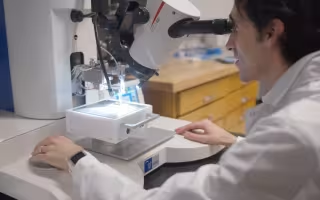
CNSE Semiconductor Startup NoMIS Power Receives $207K to Advance EV Charging
NoMIS Power, which licenses technology developed at CNSE, will collaborate with DOE’s National Renewable Energy Laboratory to develop faster, more efficient and cost-effective EV charging by relying on higher voltages to avoid energy loss from excessive heat.

CTG UAlbany Launches AI in Government Lab
The University at Albany’s Center for Technology in Government has launched the AI in Government Lab to highlight a substantial body of work dedicated to the study and application of artificial intelligence (AI) in the public sector.
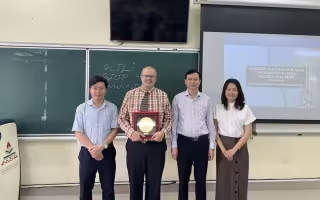
Noteworthy: Research grants, awards and publications
The latest developments on University at Albany faculty and staff who are receiving research grants, awards and other noteworthy attention.
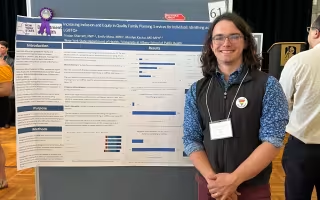
SPH Student Explores Amish and Plain Anabaptist Culture to Facilitate Partnerships with Local Health Departments
UAlbany MPH student Tristan Sharratt, a Fellow in the NYS Fellowship in Applied Public Health program, has a keen interest in rural health, with ongoing research focused on Amish and Plain Anabaptist communities
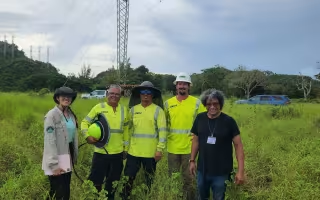
UAlbany Researcher, Grad Student Team Up to Improve the Resiliency of Puerto Rico’s Power Grid
Graduate student Bianca Méndez Cruz has seen firsthand how vulnerable Puerto Rico’s electrical grid is to extreme weather events.
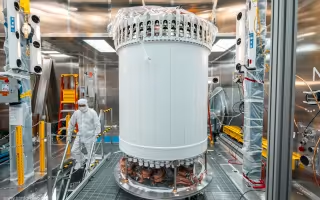
‘Nowhere Near Done’ — UAlbany Physicists Hail Latest in Dark Matter Hunt
LUX-ZEPLIN, or LZ, is the most sensitive dark matter detector in the world, and its operation is a collaboration among scores of international scientists from 38 institutions, including Associate Professor Cecilia Levy and Associate Professor Matthew Szydagis in UAlbany’s Department of Physics.
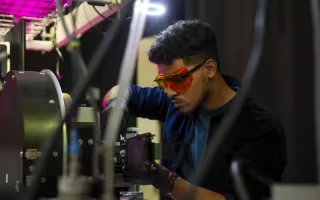
UAlbany Launches New Programs in Semiconductor Engineering
The College of Nanotechnology, Science, and Engineering has launched three new graduate certificate programs in semiconductor engineering. The programs are designed to meet the demand for a skilled workforce in the U.S. and global semiconductor industry, a market which is expected to reach $1 trillion annually by the end of the decade.