


Stopping Malaria Before It Starts: An Interview with Dr. Gladys Tetteh

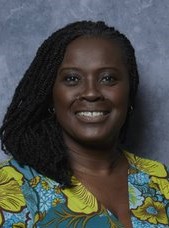
ALBANY, N.Y. (May 12, 2023) - We sat down to speak to Gladys Tetteh, a UAlbany School of Public Health alum, about her career in public health and her role as the Senior Technical Director for Malaria at Jhpiego. Jhpiego is a non-profit organization dedicated to working in partnership with national governments, health experts, and local communities to build the skills of health providers and develop systems that save lives now and guarantee healthier futures for women and their families.
Where is home for you?
'Home for me is Ghana. I was born at the Komfo Anokye Teaching Hospital in Kumasi, Ghana where my dad was an obstetrician-gynecologist and my mother worked as a nurse. I grew up in Accra, Ghana and aside from a year in the US as a foreign exchange student, I spent most of my life in Ghana. I currently live in Atlanta, Georgia, a place I love so much it feels like home."
What got you interested in public health, and malaria specifically?
"My uncle, Dr. Ward Brew, worked for the World Health Organization. I remember being a child and listening to him speak about his work on smallpox eradication. I thought it sounded so exciting, and I wanted to pursue a career that would serve to protect the health of the population as a whole. Years later, I graduated from medical school and decided to go straight to graduate school at UAlbany to get my MPH. Armed with my degree, I returned to Ghana in 1997 to work in clinical practice at the foremost teaching hospital in Ghana: Korle Bu Teaching Hospital.
In the summer of 1998, while I was working as a medical officer in the pediatric department, I remember that there were many children dying of severe malaria in our hospital. I recall one child in particular—he was so pale from anemia. We were giving him blood to try to save his life, but he had been brought in too late. During my time working in the pediatric department, I spoke with many mothers whose children were admitted for malaria. I would ask what they knew about malaria, if they knew how to prevent it, and if they knew what to do as soon as they realized their child was unwell. I remember many of them saying with regret that they did not know enough, because of course if they did they would never have let their children end up in such a bad way – and certainly never to the point of losing them. To me that was striking.
Soon after that summer, I was invited to join a group of researchers conducting clinical research projects in malaria, and I jumped at the opportunity to apply my proficiency in epidemiology to prevent disease, disability, and death from malaria. Since then, malaria has been the focus of my career. For over 25 years I have worked in preventive health care roles to slow and stop this disease."
What are the biggest barriers to malaria control, and how can we overcome them?
"Thanks to the World Health Organization and a very large committed community of global malaria stakeholders, countries have a wide arsenal of high impact, evidence-based interventions for malaria prevention, control and elimination. Prevention interventions include the use of insecticide treated nets, indoor residual spraying, prevention of malaria in pregnancy, seasonal malaria chemoprevention, vaccines, other chemoprevention approaches such as intermittent preventive treatment in infants and school children and mass drug administration. Alongside these many preventive tools, countries have access to highly effective tools for early diagnosis and prompt treatment of all forms and stages of malaria, when it occurs. Even then, the biggest barriers are still in the areas of access, uptake, and quality of services of these life-saving interventions for some at risk populations. At Jhpiego, in our effort to help the countries we support overcome these recognized barriers to malaria control, we have developed and use an organizational Malaria Theory of Change. This involves tackling the root cause of the barriers from a number of different fronts—everything from public policy to data use. We believe it’s important to tackle the ‘big picture’ when it comes to ending the devastating effects of this disease.
On an average day, about 1,320 children die from malaria. But malaria is a highly preventable disease, and the best way to stop these deaths is to prevent children from getting sick in the first place. As an organization, we believe that if we support national malaria programs to achieve critical components of effective malaria programming and implementation, we will help countries pre-empt and overcome important barriers to access, quality, and uptake of malaria services while strengthening the efficiency of health systems. Women and their families will benefit from the evidence-based interventions that are recommended by the World Health Organization. Together, we can end the suffering caused by malaria."