"I was interested in the program itself because it also has a sustainable component to it, which is something I have rarely seen in other environmental engineering programs."
- Sridhana Tata '25




You will develop skills that can be applied at a local or global level to promote sustainability in all areas related to the environment and public health.
UAlbany provides you with a rigorous curriculum, a team of dedicated and renowned environmental engineering leaders who have long-term vision, and deep commitment to sustainable engineering.
As an ESE student, you will:
Environmental engineers enjoy among the highest starting salaries and are in great demand for careers in industry, government and academia, as well as with consulting firms to help clients manage their environment issues.
Our program provides both a conventional environmental engineering education along with sustainable engineering. This valuable combination opens even more career paths at the intersections of different disciplines including industry, government, academia and consulting firms.
Potential job titles with an environmental and sustainable engineering bachelor's degree include:
Air Quality Analyst, Energy Engineer, Water Quality Specialist, Remediation Manager, Sustainable Designer and Process Engineer.
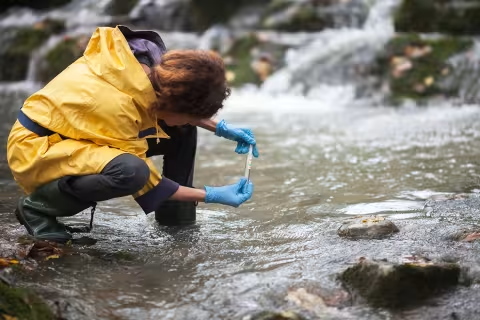
"The ESE department offers an excellent opportunity for students and faculty members having an interdisciplinary platform for their learning, teaching and research. Having expertise in urban and rural air quality issues, I feel great joy sharing my knowledge and experience to my students and seeing them working on air quality problems is truly rewarding."
- Md. Aynul Bari (ESE faculty)
You can save time and money by beginning your graduate degree coursework while still enrolled as an undergraduate student. Up to 6 academic credits, billed at the undergraduate rate, will count towards both degrees – so you’ll complete your combined program in only 5 years and spend less than you would if you completed each program separately.
Combine your undergraduate degree with the MS Environmental and Sustainable Engineering. With this master’s degree, you'll secure the advanced skills and technical depth to protect human health and the environment.

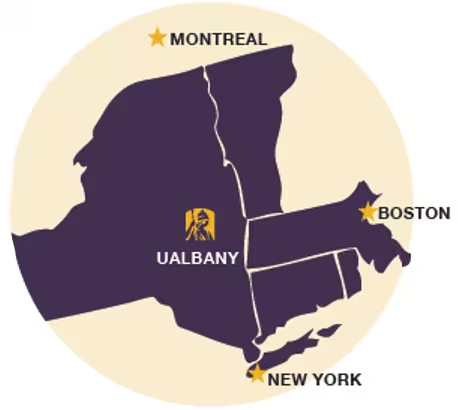
The University’s well-connected Capital Region location and proximity to New York City and Boston mean the immediate area is well represented by engineering firms and government organizations eager to prepare our students through exciting internship opportunities – which often leads to a significant number of job offers.
"I was interested in the program itself because it also has a sustainable component to it, which is something I have rarely seen in other environmental engineering programs."
- Sridhana Tata '25
Institutional Accreditation
UAlbany is fully accredited by Middle States Commission on Higher Education.
Academic Program Accreditation
The BS Environmental and Sustainable Engineering program is accredited by the Engineering Accreditation Commission of ABET, under the commission’s General Criteria and Program Criteria for Environmental and Similarly Named Engineering Programs.
Program Education Objectives
Graduates of the Environmental and Sustainable Engineering program are expected to:
Student Outcomes
The Student Outcomes for the Environmental and Sustainable Engineering program are:
Note: The formatting and language as related to “learning objectives and outcomes” for the College of Engineering and Applied Sciences are ABET specific and differ from our internal UAlbany academic assessment standards.
Enrollment and Graduation Data

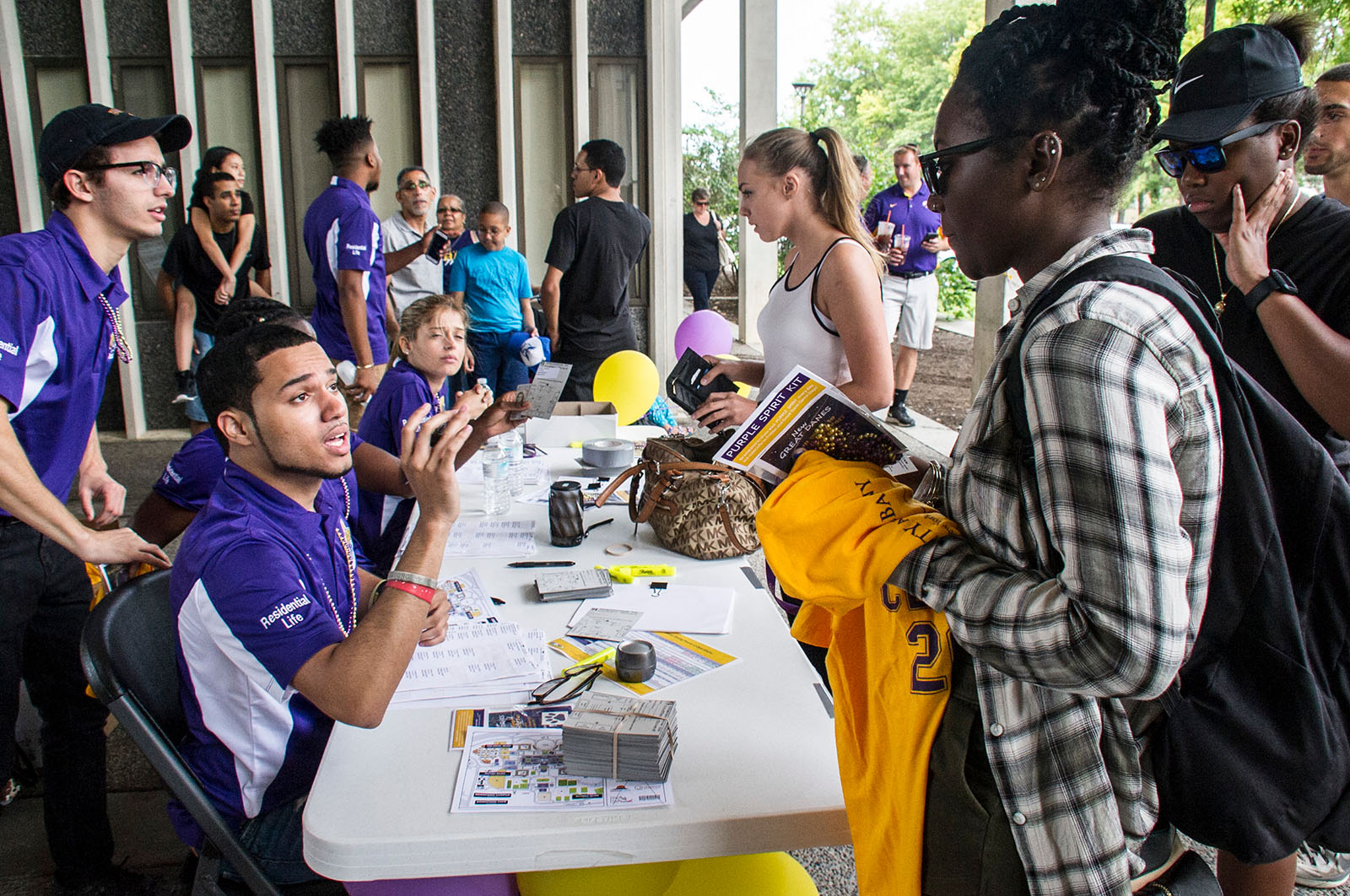
Live and take classes with other incoming freshmen who share your personal interests, passions or intended academic major.

Become a global citizen: international experience is crucial to success in business, education, research, and public policy.
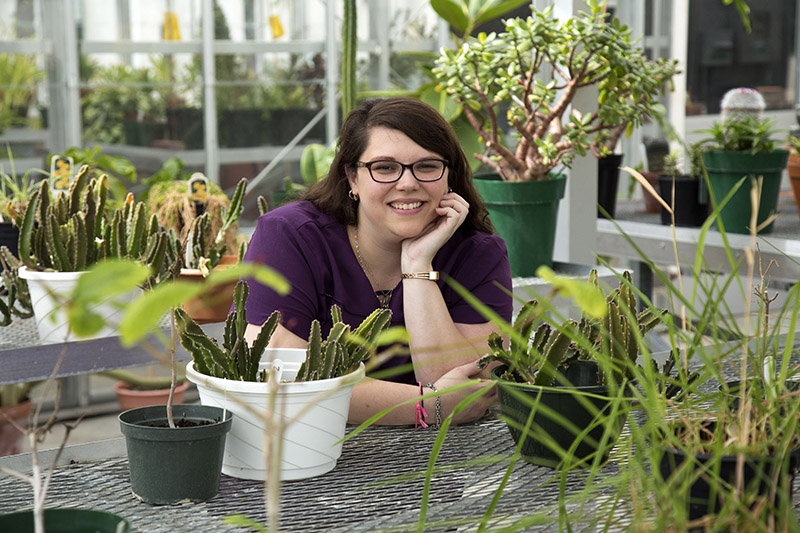
Research, scholarship, and creative activities at the University at Albany is an option for all students, across all academic disciplines. You will be able to learn more about a specific academic field or career path all while building a long-lasting mentoring relationship with a faculty member or principal investigator.
Build competency in a passion or strengthen your resume.
A minor consists of 18–24 graduation credits which must include a minimum of 9 graduation credits of advanced coursework at or above the 300 level. Most undergraduate degrees require completing a minor and it has to have a different title from your major.