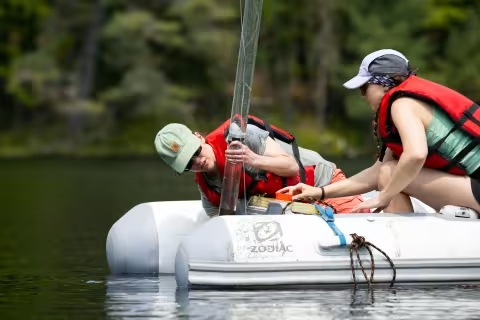
Two students conducting environmental research near a lake.

Bachelor of Arts in
Environmental Studies

Program of Study

programofstudy

The environmental studies undergraduate program is built around a flexible, interdisciplinary curriculum that allows you to follow the pathway that fits your interests and career goals. Through required coursework you’ll develop a solid foundation in biology, chemistry, physics, mathematics and statistics, and atmospheric and environmental sciences. 

You’ll take that foundation and contextualize it with electives and other required courses that explore environmental systems through the lens of geography, planning, culture, ethics, history, politics and/or economic perspectives. This interdisciplinary approach provides a rich framework to analyze complex environmental issues and pursue highly varied fieldwork, research and internship opportunities that enrich your education and unique interests.

This degree requires 68–69 credits, including 15 credits of electives.

Core Courses

  • Introduction to Environmental Science and Lab
  • Sustainable Development: Energy and Resources
  • American Environmental History OR Environmental Anthropology
  • Global Env. Issues & Their Effect on Human Health OR Env. Planning
  • The Adirondack Environment OR Air Quality and Air Pollution Policy
     

Life Science

  • General Biology: Molecular & Cell Biology & Genetics
  • General Biology: Ecology, Evolution, and Physiology


Physical Sciences

  • General Physics I OR Physics I: Mechanics OR Physics I: Advanced Mechanics
  • General Chemistry I and Lab
  • Atmospheric Structure, Thermodynamics and Circulation
  • Understanding the Earth
  • Ocean Science
  • Meteorological & Environmental Measurement  
  • Major Topics in Environmental Science


Math

  • Elementary Statistics
  • Precalculus Mathematics OR Survey of Calculus OR Calculus I


Social Science 

Choose one:

  • Intro. Public Policy  
  • American Politics  
  • Comparative and International Politics  
  • Principles of Economics I: Microeconomics  
  • Intro. Human Geography


Electives  

Sample courses:

  • Environmental Science Fieldwork Experience
  • Internships in Environmental Sciences
  • Paleoclimatology  
  • Env. Stats. & Computation
  • Landscape Ecology
  • Introduction to Sustainable Engineering
  • Principles of Ecology and Evolution
  • Understanding Energy Policy and Climate Change
  • Environmental Ethics  
  • Environmental Planning
  • Remote Sensing I & II
  • Parks, Preservation & Heritage Planning

Research and Experiential Learning
 

In this program, you chart your own course with hands-on learning to explore tackling environmental issues in your preferred field. 

Through local organizations like the NYS Department of Environmental Conservation and the NYS Energy Research and Development Authority, and interdisciplinary channels at the University, you can find a wide variety of fieldwork, research and internship opportunities. This experiential learning will enhance your education and contribute to your potential for success in your future career.


Two students conducting environmental research in a boat on a lake.
appliedlearning

Career Outlook
 

Environment-related occupations are on the rise in both the private and public sector, as is the demand for individuals whose environmental science knowledge is enhanced by further expertise in business, communications, analysis, policy and more. Through the environmental studies bachelor’s program, you’ll gain these layered, in-demand skills and graduate ready to work or go on to graduate school in the area that interests you most.  

Potential job titles with a bachelor’s in environmental studies include:

  • Environmental consultant
  • Staff scientist
  • Energy efficiency associate
  • Lab manager
  • Engineering aide
  • Park manager
  • Outdoor educator
  • Environmental policy analyst


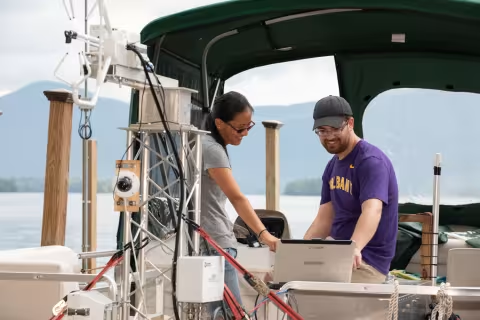
Two researchers aboard a boat examining data on a laptop while conducting fieldwork on a lake.
career

International Students

This degree is designated as a STEM program. International students maintaining F-1 status are allowed to apply for up to 12 months of post-completion Optional Practical Training (OPT) following completion/graduation from their degree program. Currently, this degree program is also designated by the Department of Homeland Security (DHS) as an eligible degree for the F-1 STEM OPT work authorization extension; students who secure qualifying employment may be eligible to apply for the STEM OPT extension for a cumulative total of up to 36 months of F-1 OPT work authorization.

Student Learning Objectives


Learning objectives that UAlbany students are expected to attain through their course of study within their academic program.

Bachelor of Arts
Bachelor of Arts

Students who successfully complete the BA in Environmental Studies are able to:

  • Effectively communicate complex environmental issues via clear and efficient writing and presentation techniques.
  • Apply an interdisciplinary lens to contextualize environmental issues by approaching them from a cultural, ethical, historical, political and/or economic perspective.
  • Analyze and understand interactions within and between human societies and their environment.
  • Apply field or lab methods, data, concepts and models from physical and life sciences to solve environmental problems.
  • Perform quantitative analyses specific to environmental problems, including assessing relevant parameters and interpreting their trends in space and/or time. 
slo

What Makes The University at Albany Great

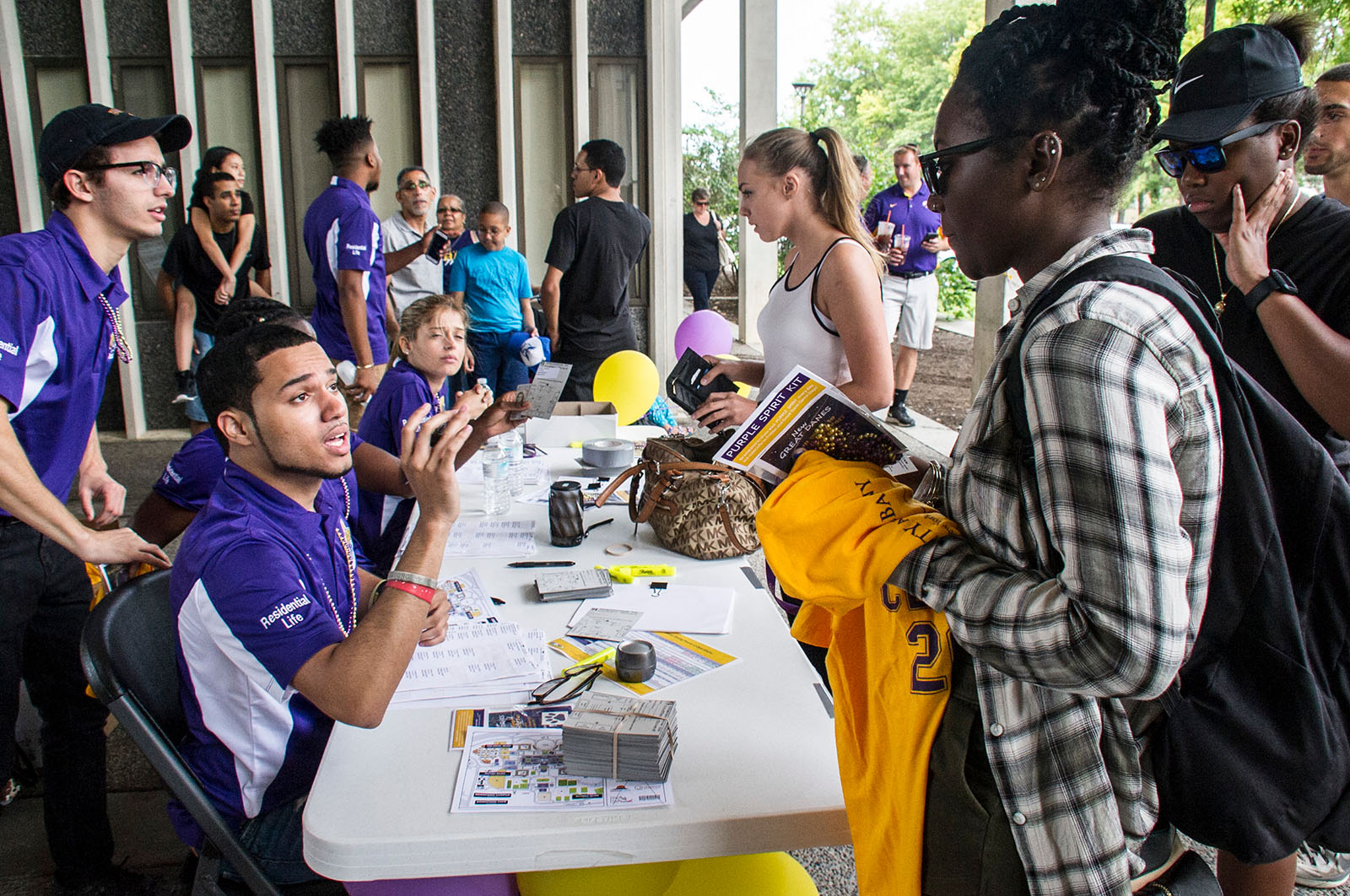
Student move-in day.

Living-Learning Communities

Live and take classes with other incoming freshmen who share your personal interests, passions or intended academic major.

A student abroad visiting a monument.

Study Abroad

Become a global citizen: international experience is crucial to success in business, education, research, and public policy.

A student conducting undergraduate research.

Undergraduate Research

Research, scholarship, and creative activities at the University at Albany is an option for all students, across all academic disciplines. You will be able to learn more about a specific academic field or career path all while building a long-lasting mentoring relationship with a faculty member or principal investigator.

Explore Minors

Build competency in a passion or strengthen your resume.

A minor consists of 18–24 graduation credits which must include a minimum of 9 graduation credits of advanced coursework at or above the 300 level. Most undergraduate degrees require completing a minor and it has to have a different title from your major.

Full List of Minors
Full List of Minors
  • Acting
  • Africana Studies
  • Anthropology
  • Art
  • Art History
  • Atmospheric Science
  • Bioethics
  • Biology
  • Broadcast Meteorology
  • Business
  • Chemistry
  • Chinese Studies
  • Cognitive Science
  • Communication (Fully Online Option)
  • Computer Science
  • Creative Writing
  • Criminal Justice Studies (Fully Online Option)
  • Cybersecurity (Fully Online Option)
  • Documentary Studies
  • East Asian Studies
  • Economics
  • Educational Studies
  • Electrical and Computer Engineering
  • Electronics
  • Film Studies
  • Emergency Preparedness, Homeland Security and Cybersecurity (Fully Online Option)
  • English
  • Forensic Science
  • French
  • Game Design and Development
  • Geographic Information Science
  • Geography
  • Globalization Studies
  • Hebrew
  • History (Fully Online Option)
  • Informatics (Fully Online Option)
  • Instrumental Performance
  • International Studies
  • Italian
  • Japanese Studies
  • Journalism (Fully Online Option)
  • Judaic Studies
  • Korean Studies
  • Latin American and Caribbean Studies
  • Law and Philosophy
  • Leadership
  • Legal Studies
  • LGBTQ Studies
  • Library and Information Science
  • Linguistics
  • Machine Learning
  • Mathematics
  • Medical Anthropology
  • Music
  • Musical Performance
  • Musical Theatre
  • Philosophy
  • Physics
  • Political Science
  • Portuguese
  • Pre-Education
  • Psychology (Fully Online Option)
  • Public Health
  • Public Policy
  • Religious Studies
  • Russian
  • Russian and Eastern European Studies
  • Social Welfare Studies
  • Sociology (Fully Online Option)
  • Spanish
  • Statistics
  • Sustainability
  • Theatre
  • Theatrical Design/Technology
  • Urban Studies and Planning
  • U.S. Latino Studies
  • Vocal Performance
  • Women's, Gender and Sexuality Studies