CARPENTER RESEARCH GROUP

Welcome to the Carpenter Research Group

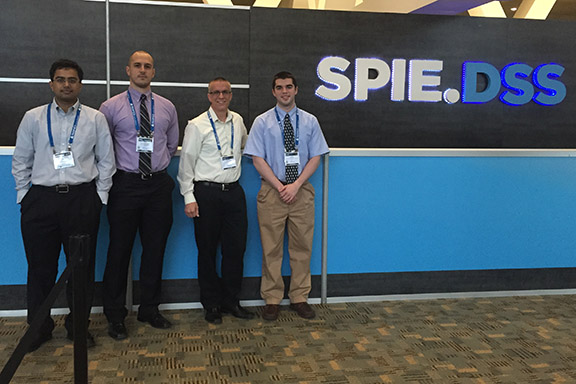
Professor Carpenter's Research Group next to the SPIE logo

Developing Nanoscale Sensor Solutions

Our research program engages in the integration of chemical sensors into system-on-a-chip technology platforms with the intent of enabling cost effective and reliable solutions for energy and environmental monitoring applications. One of our major research focus areas for integrated chemical sensors is the development of nanomaterials with the required selectivity, specificity and reliability for the targeted sensing application. To achieve these goals we utilize a tailored design methodology which explores the unique properties of nanomaterials and their subsequent development into harsh environment compatible chemical sensors and also sensitive and selective hydrocarbon sensors for groundwater, soil and ambient air monitoring applications.

For each of our research projects we develop unique nanomaterials and characterize their fundamental optical or electrical properties as a function of changes in their surrounding temperature and chemical environment, thereby achieving a more complete understanding of nanoscale dynamic processes.

More Information
News
News
Nick Karker

2017

September

Nick Karker won Best Poster at the 2017 Electronics Packaging Symposium held at General Electric for his work on “Bio-inspired and planar film nanostructures for high temperature sensing of non-condensable gases”.


2007

August

Mayrita Arrandale won an EPA Fellowship through the Syracuse CARTI program.

February 

Michael Carpenter was interviewed on the NanoNow TV show.


2006

May

Nano Career Day at the UAlbany College of Nanoscale Science and Engineering on May 23, 2006.


2005

Quantum Dots for the DOT

Rezina Siddique was awarded a prestigious Intel-SRC Masters fellowship beginning Fall 2005, which will be used for her research on silica nanowires

Rezina Siddique was selected as a MS level University at Albany Valedictorian during the Spring 2005 semester.


2004

Michael Carpenter was awarded a Promising Inventor Award on November 4, 2004 by the Research Foundation – State University of New York, for recognition of filing his first invention disclosure for technology related to the All-Optical Hydrogen Sensor program

CNSE/Union College collaboration results in Union College undergraduate participation at SRC conference


2003

UAlbany Nanosciences professors are taking local high school seniors to the forefront of nanosciences in a novel internship program -2003

Funding
Funding
  • National Science Foundation (NSF)
  • U.S. Department of Transportation
  • National Energy Technology Laboratory (NETL)
  • New York State Energy Research and Development Authority (NYSERDA)
  • U.S. Department of Energy
  • New York State Office of Science, Technology, and Academic Research (NYSTAR)


Carpenter Research Group
Dr. Michael A. Carpenter

257 Fuller Rd
Albany, NY 12203
United States

Phone
Fax
518-437-8667

Projects

Pd Based Hydrogen-sensing Nanofilms
Quantum Dot Based Hydrocarbon Sensors
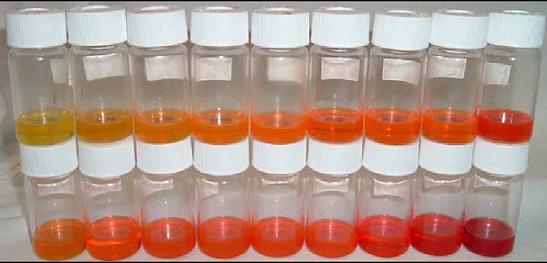
Colloidal Solutions of CdSe QDs
Harsh Environment Compatible Chemical Sensors: Nanocomposites
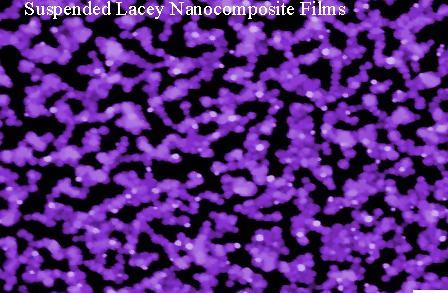
Suspended Lacey Nanocomposite Films
Silica Nanowires
Silica Nanowires

Nanostructured materials have stimulated much research interest because of their novel mechanical and electrical properties due to their low dimensionality. SiNWs in particular show potential for many innovative applications and furthermore can serve as a high surface area material for either catalysis or sensing applications.

A variety of methods have been used for producing SiNWs, but mass-production simply, easily, and in a controlled fashion has been difficult to achieve, as has been the development of a thorough understanding of the growth mechanism.

We have been able to synthesize amorphous SiNWs on Au and Au-Pd (60:40) catalyzed silicon substrate via the SLS mechanism. Growth of the nanowires is maximized at a temperature of 900C. Future work will be aimed at developing coatings and coating methodologies of unique nanomaterials for both chemical and biological sensing applications.

SEM Image of a ~5 Micron Thick Bed of Silicon Nanowires

Publications

Rezina Siddique, George Sirinakis, Michael. A. Carpenter,
Low Temperature Synthesis of Silicon Oxide Nanowires
Mat. Res. Soc. Proc., V879E, (Spring 2005).

Instrumentation

A variety of instruments/benches are utilized within the lab to provide both baseline and in-situ characterization of the optical, electrical and microstructural properties of tailored nanofilms for the development of novel chemical sensing solutions. A common theme in the lab is to achieve both parallel deposition and sensor testing methodologies, with nanomaterial optimization achieved through both the design of smart sensing microstructures and design of experiments techniques.

Sensor Test Stations

Low Temperature (25-100C) Optical Reflectance/Transmission
Optical reflectance/transmission of a white light source from or through tailored samples is monitored with a MTI-I Fotonics 1000 fiber optical probe as a function of both temperature and gas composition. The sample is held in a 20cc stainless steel chamber with the surrounding gas composition computer controlled using an Environics S-4000 gas mixing system to achieve ppb to % level concentrations of the target gas of interest. Humidity levels can be varied from 10 to 95% RH. Seconds level response times are achievable with this test station.

Fluorescence Based Sensing
A Varian Eclipse spectrofluorometer is the base for this testing station. A bifurcated fiber optic probe for both excitation and fluorescence collection is coupled to a 20cc stainless steel chamber where the sample is mounted. Gas compositions are controlled by an Environics S-4000 gas mixing system which is coupled to a glass bubbler for hydrocarbon vapor entrainment at 100ppb to % level concentrations. A modified micro-array plate assembly based micro-chamber can be used for testing a series of films with semi-parallel testing protocols.

High Temperature (100-1000C) Optical Transmission
Collimated light from a CW Xe flash lamp is passed through samples mounted in a quartz cell housed in a 10″ long furnace. The transmitted light is collected and coupled to an imaging monochromator with a CCD detector. Either singular or multiple films can be monitored as a function of operation temperature and gas phase composition. Hydrogen, CO, NO2 and various sulfur containing gases are mixed with air or inert carrier gases at concentrations ranging from ppb to % levels. Seconds level response times are achievable with this test station.

Kelvin Probe and Reflectance
The Kelvin probe and reflectance test station simultaneously monitors both changes in the contact potential difference (CPD) and optical reflectance of tailored sensing materials. We utilize a McAllister Technical Services Kelvin probe and a MTI-I Fotonics 1000 optical probe to monitor the CPD and the reflectance, respectively, as a function of changes in the gaseous environment. A minichamber with a 3cc internal volume is housed within the Kelvin probe mounting chamber to ensure a minimal dead volume enclosure around the sample. We have been able to measure changes in the CPD of our palladium alloy thin films upon exposure to only 100ppb of hydrogen in an air carrier gas. The Kelvin method has extremely high surface sensitivity (<0.1 meV, typically corresponding to 0.001 of an adsorbate layer) and is completely non-damaging, even to the most sensitive adsorbates, making it a unique asset to the sensor lab for development of electrically active sensing materials. The Kelvin probe is complimented with the simultaneous optical reflectance measurement which enables an understanding of the dynamics between bulk and surface limiting reactions. A computer controlled Environics S-4000 gas-mixing system is used to achieve ppb to % level concentrations of the target gas of interest.

Equipment

Dual target confocal physical vapor deposition system
Veeco Explorer AFM
Veeco Aurora near field scanning optical microscope
Coherent Ar ion CW laser
Nicolet 760 Magna FTIR spectrometer
Varian GC-MS
Varian Eclipse spectrofluorometer
Varian Cary 50 Uv-visible absorption spectrometer

An extensive array of metrology equipment within the College of Nanoscale Science and Engineering is further utilized for a complete analysis of our materials.

Publications

R. A. Potyrailo, J. Brewer, B. Cheng, M. A. Carpenter, N. Houlihan, A. Kolmakov, “Bio-Inspired Gas Sensing: Boosting Performance with Sensor Optimization Guided by “Machine Learning”, Faraday Discussions, https://doi.org/10.1039/D0FD00035C (2020)

N. M. Houlihan, M. A. Carpenter, “Morpho-Butterfly Inspired Lamella-based Optical Sensors for Measuring Percent Level Concentrations of H2 and CO with Au and CeO2, MRS Advances https://doi.org/10.1557/adv.2020.318 (2020)

V. A. V. Rossi, M. A. Carpenter, “Non-invasive optical pressure sensing using a scalable reflective polydimethylsiloxane membrane”, Sensors and Transducers, 239, 34-40 (2019).

V. A. V. Rossi, M. A. Carpenter, “Reusable polystyrene wafer coating as an antiadhesive layer for PDMS film production”, Materials Letters, https://doi.org/10.1016/j.matlet.2019.12

R. A. Potyrailo, J. Brewer, B. Scherer, V. Srivastava, M. Nayeri, C. Henderson, C. Collazo-Davila, M. A. Carpenter, N. Houlihan, V. Vulcano Rossi, A. Shapiro, “Multi-Gas Sensors for Enhanced Reliability of SOFC Operation”, ECS Transactions, 91, 319-28 (2019).

L. Banu, R. A. Potyrailo, M. A. Carpenter, “Kinetics analysis of multichannel hydrogen reactions on plasmonic based Au-GdC thin film nanocomposites”, J. Phys. Chem. C, 123, 17925-32 (2019).

N. Houlihan, N. Karker, R. A. Potyrailo, M. A. Carpenter, “High sensitivity plasmonic sensing of hydrogen over a broad dynamic range using catalytic Au-CeO2 thin film nanocomposites”, ACS Sensors, 3, 2684-92 (2018).

R. A. Potyrailo, N. Karker, M. A. Carpenter, A. Minnick, “Multivariable bio-inspired photonic sensors for non-condensable gases:  initial results, Journal Of Optics, Special Issue on Biomimetic Photonics, 20, 024006 (2018).

G. Dharmalingam, M. A. Carpenter, “Chemical Sensing Dependence on Metal Oxide Chemistry and Thickness for High Temperature Plasmonics Based Sensors”, Sensors Actuators B., 251, 1104 - 11 (2017).

N. Karker, M. A. Carpenter, “High Figure of Merit Hydrogen Sensor Using Multipolar Plasmon Resonance Modes”, Sensors Actuators B, 252, 385-90 (2017).

J. Elwood, Z. Zhao, L. M. Saupe, T. D. Strayer, R. N. Odell, M. A. Carpenter, “Gold Nanoparticles Embedded in Soda-lime Glass Substrate for Temperature Sensing”, Sensing and Biosensing Research, 11, 37- 44 (2016).

Z. Zhao, V. A. Vulcano Rossi, J. P. Baltrus, P. R. Ohodnicki, M. A. Carpenter “Ag Nanoparticles supported on Yttria-stabilized Zicronica: A Synergistic System within Redox Environments”, J. Phys. Chem. C, 120, 5020-32 (2016).

Z. Zhao, J. Elwood, M. A. Carpenter, “Phonon Anharmonicity of PdO Studied by Raman Spectrometry”, J. Phys. Chem. C, 119, 23094 (2015).

N. Karker, G. Dharmalingam, M. A. Carpenter, “Thermal Energy Near-infrared radiation and accessing low temperatures with plasmonic sensors”, Nanoscale, 7, 17798 (2015).

N. Karker, G. Dharmalingam, M. A. Carpenter, “Thermal Energy Harvesting Plasmonic Based Chemical Sensors”, ACS Nano, 8, 10953-62 (2014).

J. P. Baltrus, P. R. Ohodnicki, N. A. Joy, M. A. Carpenter, “Examination of Charge Transfer in Au/YSZ for High-Temperature Optical Gas Sensing”, Applied Surface Science, 313, 19-25 (2014).

Z. Zhao, M. A. Carpenter, M. A. Petrukhina
Semiconductor Quantum Dots for Photoluminescence-based Sensing, Semiconductor Gas Sensors
Eds. R. Jaaniso and O. K. Tan, Woodhead Publishing, UK, (2013).

Z. Zhao, M. A. Carpenter
Support Free Bimodal Distribution of Plasmonically Active Ag/AgOx Nanoparticle Catalysts: Attributes and Plasmon Enhanced Surface Chemistry
Journal of Physical Chemistry C, 117, 11124 (2013)

N. A. Joy, B. K. Janiszewski, S. Novak, T. W. Johnson. S-H Oh, A. Raghunathan, J. Hartley, M. A. Carpenter
Thermal Stability of Gold Nanorods for High Temperature Plasmonic Sensing
Journal of Physical Chemistry C, 117, 11718 (2013)

Metal Oxide Nanomaterials for Chemical Sensors
Eds. M. A. Carpenter, S. Mathur, A. Kolmakov, Springer, NY, NY (2013).

N. A. Joy, M. A. Carpenter
Optical Sensing Methods for Metal Oxide Nanocomposites, Metal Oxide Nanomaterials for Chemical Sensors
Eds. M. A. Carpenter, S. Mathur, A. Kolmakov, Springer, NY, NY (2013).

N. A. Joy, P. H. Rogers, M. I. Nandasiri, S. Thevuthasan, M. A. Carpenter
Plasmonic Based Sensing Using an Array of Au-Metal Oxide Thin Films
Analytical Chemistry, 84, 10437, (2012)

G. Dharmalingam, N. A. Joy, B. Grisafe, M. A. Carpenter
Plasmonic Based Detection of H2 and CO: Discrimination Between Reducing Gases Facilitated by Material Control
Beilstein Journal of Nanotechnology, 3, 712 (2012).

N. A. Joy, M. I. Nandasiri, P. H. Rogers, W. Jiang, T. Varga, S. V. N. T. Kuchibhatla, S. Thevuthasan, M. A. Carpenter,
Selective Plasmonic Gas Sensing: H2, NO2 and CO Spectral Discrimination by a Single Au-CeO2 Nanocomposite Film
Analytical Chemistry, 84, 5025 (2012).

A. Rubio-Rios, B. A. Aguilar-Castillo, S. Flores-Gallardo, C. A. Hernandez-Escobar, A. E. Zaragoza-Contreras, Z. Zhao, M. A. Carpenter
Effects of Synthesis Variables on the Fluoresence Properties of CdSe Polystyrene Latexes
Journal of Polymer Research, 19, 1, (2012).

N. A. Joy, C. M. Settens, R. J. Matyi, M. A. Carpenter
Plasmonic Based Kinetic Analysis of Hydrogen Reactions within Au-YSZ Nanocomposites
Journal of Physical Chemistry C, 115, 6283 (2011).

Z. Zhao, T. M. Dansereau, M. A. Petrukhina, M. A. Carpenter
Nanopore Array Dispersed Semiconductor Quantum Dots as Nanosensors for Gas Detection
Applied Physics Letters, 97, 113105 (2010).

P. H. Rogers, M. A. Carpenter
Particle Size Dependence of Nanocomposites for Plasmonic-Based All Optical Sensing Applications
Journal of Physical Chemistry C, 114, 11033 (2010)

H. Amiri, Z. Zhao, T. M. Dansereau, M. A. Petrukhina, M. A. Carpenter
Dependence of Hydrocarbon Sensitivity on the Distance of Linked Phenyl Group to CdSe Quantum Dot Surfaces
Journal of Physical Chemistry C, 114, 4272 (2010).

O. V. Vassiltsova, D. Jayez, Z. Zhao, M. A. Carpenter, M. A. Petrukhina
Synthesis of Nanocomposite Materials with Controlled Structures and Optical Emissions: Application of Various Methacrylate Polymers for CdSe Quantum Dot Encapsulation
Journal of Nanoscience and Nanotechnology, 10, 1635 (2010)

P. H. Rogers and M. A. Carpenter
Defect State Dampening of Surface Plasmons in Au-YSZ Nanocomposites, 
Proceedings of the SPIE (2009 Fall Meeting)

P. H. Rogers and M. A. Carpenter
Characterization of Surface Plasmon Peak Shifts and Dampening in Au-YSZ Nanocomposites, 
Proceedings of the SPIE (2009 Fall Meeting)

Z. Zhao, M. Arrandale, O. V. Vassiltsova, M. A. Petrukhina, M. A. Carpenter
Sensing mechanism investigation on semiconductor quantum dot/polymer thin film based hydrocarbon sensor
Sensors and Actuators, B: Chemical B141, 26-33 (2009).

O. V. Vassiltsova, S. K. Panda, Z. Zhao, M. A. Carpenter, M. A. Petrukhina
Ordered Fabrication of Luminescent Multilayered Thin Films of CdSe Quantum Dots
Dalton Transactions43, 9426 (2009)

K. Yokoyama, H. Cho, S. P. Cullen, M. Kowalik, N. M. Briglio, H. J. Hoops, Z. Zhao and M. A. Carpenter
Microscopic Investigation of Reversible Nanoscale Surface Size Dependent Protein Conjugation
Int. J. Mol. Sci., 10, 2348-66 (2009)

P. H. Rogers, G. Sirinakis, M. A. Carpenter
Plasmonics Based Detection of NO2 in a Harsh Environment
Journal of Physical Chemistry C, 112 , 8784-8790 (2008)

P. H. Rogers, G. Sirinakis, M. A. Carpenter
Direct Observations of Electrochemical Reactions within Au-YSZ Thin Films via Absorption Shifts in the Au Nanoparticle Surface Plasmon Resonance
Journal of Physical Chemistry C, 112 , 6749-6757 (2008)

Z. Zhao, O. V. Vassiltsova, M. Arrandale, M. A. Petrukhina, M. A. Carpenter
Nanomaterials Enabled Chemical Sensors: The Detection of Hydrocarbons with a High Degree of Sensitivity and Selectivity
Proceedings of the I MECH E Part N Journal of Nanoengineering and Nanosystems, 221 , 73-79 (2008). 

Z. Zhao, M. Knight, S. Kumar, E. T. Eisenbraun, M. A. Carpenter
Humidity Effects on Pd/Au-based All-Optical Hydrogen Sensors
Sensors and Actuators B, 129 , 726 (2008)

O. V. Vassiltsova, Z. Zhao, M. A. Petrukhina, M. A. Carpenter
Surface Functionalized CdSe Quantum Dots for the Selective Detection of Hydrocarbons
Sensors and Actuators B, 123 ,522 (2007).

G. Sirinakis, R. Siddique, P. H. Rogers, I. Manning, M. A. Carpenter,
Development and Characterization of Au-YSZ Surface Plasmon Resonance Based Sensing Materials: High Temperature Detection of CO
Journal of Physical Chemistry B, 110 , 13508 (2006).

Z. Zhao, M. A. Carpenter, D. Welch, H. Xia
All-Optical Hydrogen Sensor Based on a High Alloy Content Palladium Thin Film
Sensors and Actuators B, 113 , 532 (2006)

George Sirinakis, Rezina Siddique, Kathleen A. Dunn, Harry Efstathiadis, Michael A. Carpenter, and Alain E. Kaloyeros
Spectro-ellipsometric Characterization of Au-Y2O3-stabilized ZrO2 Nanocomposite Films
Journal of Materials Research, 20 , 3320 (2005)

George Sirinakis, Rezina Siddique, Christos Monokroussos, Michael A. Carpenter,and Alain E. Kaloyeros
Microstructure and optical properties of Y2O3-stabilized ZrO2-Au nanocomposite films
Journal of Materials Research, 20 , 2516 (2005)

Z. Zhao, M. A. Carpenter,
Annealing Enhanced Hydrogen Absorption in Nanocrystalline Pd/Au Sensing Films
Journal of Applied Physics, 97 , 124301 (2005).

Z. Zhao, Y. Sevryugina, M. A. Carpenter, D. Welch, H. Xia
All-Optical Hydrogen Sensing Materials Based on Tailored Palladium Alloy Thin Films
Analytical Chemistry, 76, 6321 (2004)

M. A. Carpenter, E. Lifshin, R. Gauvin
SEM-EDS Quantitative Analysis of Aerosols = 80nm: Impacts on Atmospheric Aerosol Characterization Campaigns
Microscopy and Microanalysis 8 (Suppl. 2) 2002

Patents

Carpenter, Michael A.; Sirinakis, George
Optical methods and systems for detecting a constituent in a gas containing oxygen in harsh environments
PCT/US2007/64665, (2007).

Zhouying Zhao, Michael A. Carpenter
Methods for Forming Palladium Alloy Thin Films and Optical Hydrogen Sensors Employing Palladium Alloy Thin Films
Serial Number: 11/049,833, Filed: February 3, 2005


People

Dr. Michael A. Carpenter

Dr. Michael A. Carpenter
Associate Professor
Interim Dean, College of Engineering
SUNY Polytechnic Institute
[email protected]

Michael A. Carpenter received his BS in chemistry from the State University of New York College at Geneseo in 1991, and a PhD in physical chemistry from the University of Rochester, NY in 1996. He was a postdoctoral associate at Cornell University from 1996 to 1998, and was a postdoctoral associate at Pacific Northwest National Laboratory from 1998 to 2000. In 2000, he became a staff scientist at Albany Nanotech. In 2002 he was appointed as an assistant professor and in 2009 was promoted with tenure to associate professor in the College of Nanoscale Science and Engineering at the University at Albany-SUNY. He is currently the Interim Dean of the College of Engineering and is an associate professor in the College of Nanoscale Science and Engineering at SUNY Polytechnic Institute. Carpenter has edited a book entitled “Metal Oxide Nanomaterials for Chemical Sensors, has published three book chapters, 70 journal publications, his work has over 1550 citations, and he has given 88 presentations. Carpenter has led the development of plasmonics for use as harsh environment chemical sensors and recently developed thermal energy harvesting methods, which enables an integrated platform for plasmonics based detection of emission gases at temperatures exceeding 500°C to be realized. Five patents have been filed with two being granted.

Carpenter Curriculum Vitae (pdf)


Carpenter Group Alumni

Nora Houlihan, PhD, 2020
Samuel Straney, BS, 2020
Laila Banu, PhD, 2019, Currently at Global Foundries
Vitor Vulcano Rossi, PhD, 2019, Currently at Global Foundries
Nicholas Karker, PhD 2018, Currently at GE Power Systems
David Leff, BS, 2018
Dr Zhouying Zhao, 2018
Gnanaprakash, Dharmalingam, PhD 2016, Currently an Assistant Professor at PSG Institute of Advanced Studies, India
Nicholas Joy, PhD 2013, Currently at TEL
Jacqueline Elwood, BS 2016, Currently a graduate student at UC Berkeley
Jerry Shih, BS 2016, Currently a graduate student at UC Berkeley
Phillip Rogers PhD, 2009, Currently at Cortana Corporation, NRC Postdoctoral Fellow, NIST, Maryland – Worked with Steven Semancik
Russell King, High School Intern, 2007-2010, Schuylerville HS
Hasti Amiri MS Nanosciences, 2009, Currently a PhD student in Chemistry at Columbia University
Mayrita Arrandale MS Nanoengineering, 2008, Atotech
Esteban Morales, Universidad de Las Américas Puebla, México
Luis Talamantes,Visiting PhD student, CIMAV, MX
George Sirinakis PhD Nanosciences and Nanoengineering, 2007, Currently a postdoctoral associate at Yale University
Oxana Vassiltsova, Postdoctoral Associate, 2004-2007
Rezina Siddique MS in NanoEngineering, 2006, Currently a PhD student in Biomedical Engineering at Johns Hopkins University
Ian Manning 2005-2006 Intern, BS in Physics at the University at Albany, 2006, Currently a PhD Student in Physics at Pennsylvania State University
Ian Schaefer, 2005-2006 Intern, BS in Chemistry, Union College, 2006, Currently a Research Associate at U.S. Genomics
Young Yoon 2006 Summer Intern, Boston College, Chemistry
Matt Fowler Research Support Specialist – Spring 2006, Northeastern University, Computer Science
Jeremy Goren 2005 Summer Intern, Columbia University, Applied Physics
Mark Schwab 2005 Summer Intern, Yale University, Chemical Engineering
Professor Michael Hagerman Sabbatical 2004, Union College, Department of Chemistry
Damira Pon Fall 2004 Intern, University at Albany, Information Sciences
Kenneth Rudinger Summer 2004 Intern, University of Chicago, Physics
Eric Tucker Summer 2004 Intern, Elmira College, Chemistry
Manuel Fletterman Spring 2004 Intern, Fontys Hogeschool, Netherlands
Joris Maas Fall 2003 Intern, Fontys Hogeschool, Netherlands
Rachael Miller Summer 2003 Intern, Albany High School
Max Xia Summer 2003 Intern, Niskayuna High School
Ashley Chapple Summer 2003 Intern, Albany High School
Bram Margry Fall 2001 Intern, Fontys Hogeschool, Netherlands
Jurjen Dijk Fall 2001 Intern, Fontys Hogeschool, Netherlands
Alok Tayi Summer 2001, 2002 Intern, Currently a Postdoctoral Associate, George Whitesides Group, Harvard University PhD Northwestern University, BS Materials Science, Cornell University