



UAlbany Meteorologist: NOAA’s Observed Warming Trend a Sign of Global Climate Change
A new NOAA report released last week shows that the United States is getting warmer and parts of it are getting wetter.
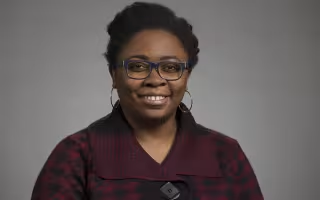
Ekenna’s Research Tackles Robotics, Mathematics and Malaria
Assistant Professor Chinwe Ekenna is an active researcher who is also focused on fostering opportunities, particularly for young women, in STEM fields — as a mentor and advocate for equity and inclusiveness in the workplace, life and learning environments.
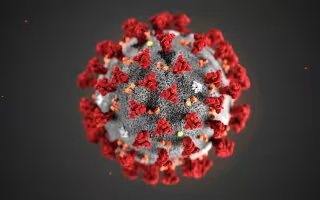
Interdisciplinary Town Hall Looked at Lessons Learned, Ways to Move Forward
The School of Public Health, School of Social Welfare and College of Emergency Preparedness, Homeland Security and Cybersecurity teamed up for a town hall discussion on the second year of the COVID-19 pandemic.
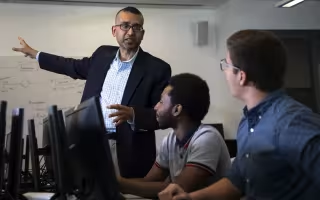
Study looks at how businesses cope with “COVID fatigue”
A Massry School of Business study, funded by the U.S. Economic Development Administration, finds changing attitudes to the COVID-19 pandemic can result in risky behavior, and suggests ways businesses can manage and aid employees.
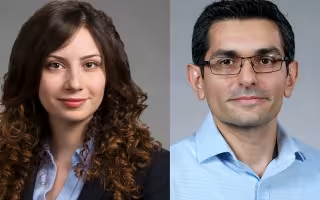
CEAS Faculty Garner CAREER Awards for Advancing Online Education and Cybersecurity
At UAlbany’s College of Engineering and Applied Sciences (CEAS), two faculty members have joined the esteemed ranks of CAREER Award winners, as they lead projects aimed at improving and securing online learning environments: Assistant professors of Computer Science Amirreza Masoumzadeh and Shaghayegh (Sherry) Sahebi. With their respective grants, CEAS now has seen eight faculty members receive CAREER awards, including researchers in Computer Science and Electrical and Computer Engineering.
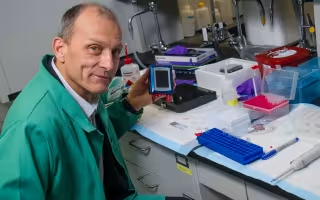
Forensic Chemist’s Start-Up Receives Support from the National Science Foundation
Department of Chemistry professor Igor Lednev is now one step closer to helping law enforcement catch violent criminals.
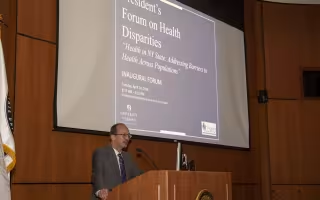
President’s Forum on Health Disparities Returns with Forum of Experts
As part of its ongoing efforts to tackle minority health disparities, the UAlbany is again convening a forum of experts to discuss barriers to health and healthcare for minority populations.