



Researchers Examine How AI Chatbots Are Shaping Government Operations
Published in Public Performance & Management Review, the study, “Uncovering the Results of AI Chatbot Use in the Public Sector: Evidence from U.S. State Governments,” is co-authored by UAlbany researchers Tzuhao Chen and Mila Gasco-Hernandez. It draws on interviews with officials from 22 state agencies, offering an empirical look at how chatbot technology is influencing government operations and interactions with the public.
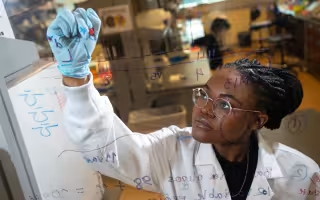
Study Identifies Pollutant Exposure as Gap in Human Biology Research
Publishing in the American Journal of Human Biology, UAlbany scientists Lawrence M. Schell and Mia V. Gallo outline why measuring pollutant exposure should be a central component of research on growth, development, reproduction and chronic disease.
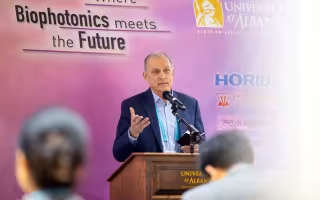
International Conference at UAlbany Shines Light on the Future of Biophotonics
The University at Albany hosted the 2026 International Congress on Biophotonics last week, marking the first time in more than a decade that the event was held in the United States.
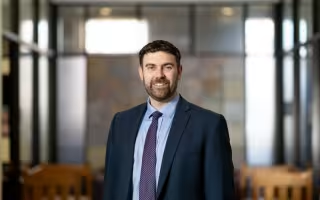
Transactional Intel: Using Banks to Stop Nuclear Proliferation
UAlbany political scientist Bryan Early's latest book, a collaboration with colleague Togzhan Kassenova, explores both the promise and challenges of using the global financial system to prevent the spread of weapons of mass destruction.

Showcase 2026: Nanotech Student Finds Rhythm in Research
UAlbany junior Harry Weinstein is already presenting his research on a global stage, sharing work on next-generation chip-making materials at a leading international conference. He will present that work again at Showcase on April 30.

Study: 'Security Fatigue' May Weaken Digital Defenses
A recent study led by UAlbany researchers on security fatigue, published in the European Journal of Information Systems, examines how growing cybersecurity demands are impacting employee behavior.
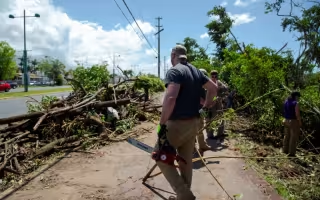
Brian Tang: The Costs of Living Weather Blind
For decades, the U.S. country has wisely invested in the pieces needed to improve forecasts — collecting observations, performing research and developing more capable computer models. Much of this work is performed and funded through government agencies like the National Oceanic and Atmospheric Administration (NOAA) and the National Science Foundation (NSF).