PALUH RESEARCH GROUP

Paluh Research Group

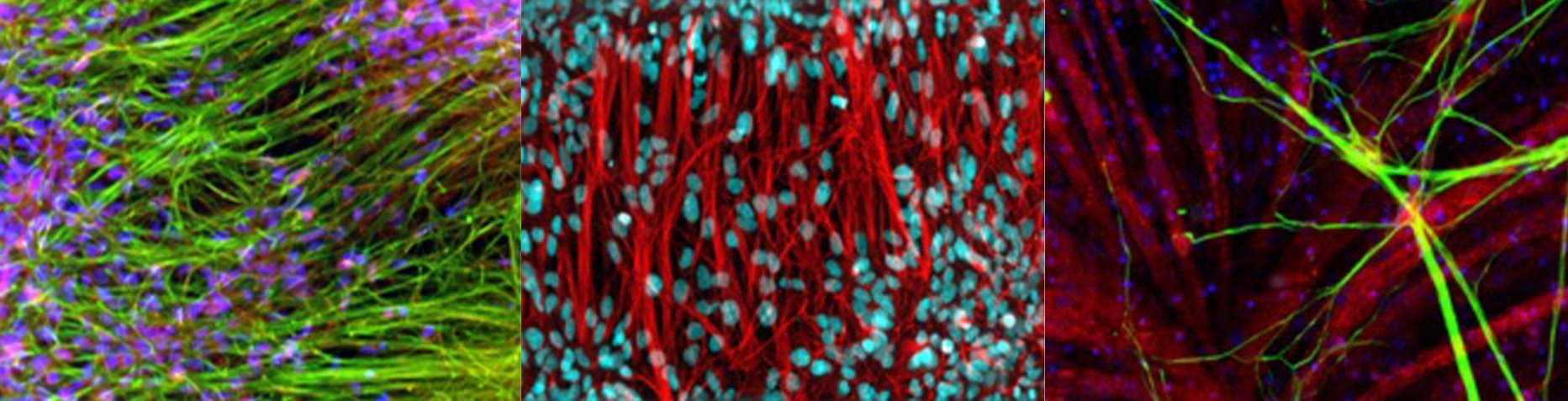
Paluh microscope image

Scope

The Paluh laboratory applies human stem cell technologies, gastruloid and developmental neurotechnologies, nanotechnology, bioengineering and computational neuroscience. Collaborative research focuses on neural circuitry, innervation, and neuropathologies, including axonopathies and neurodegeneration, Alzheimer’s disease, spinal cord injury, as well as complex disease synaptopathies. This includes transplantable neural circuitry, and software and hardware design of artificial neuromorphic synapses as well as machine learning applied to brain imaging and drug discovery. Additional research areas include human stem cell applications for cardiomyopathies, bioprocessing/ biomanufacturing for diabetic cell therapy, traumatic brain injury and control of biological nanomachines. SUNY Polytechnic Institute is a bench to commercialization environment that enhances productive academic-industry partnerships and multi- academic collaborations to accelerate the pace of discovery.

Agencies and Organizations

NYSDOH: NYSTEM, NYSCIRB
Federal: NSF, NSF SBIR
SUNY SEED

NYS/NSERDA Additive Manufacturing
SUNY Brain Network of Excellence
Academic Industrial Roundtable
IEEE Standards Association

Editorial Board, Scientific Reports
Editorial Board, Stem Cell Research
Faculty of 1000

IRB compliance
SCRO compliance

Industry and Academics

Industry

General Electric, NY
Intel, USA
Cytocybernetics LLC, NY
Nanoshift LLC, CA
Sepragen Corporation, CA
Neural Stem Cell Institute, NY

Academic

University at Albany, SUNY
SUNY Buffalo
Rensselaer Polytechnic Institute
Michigan State University
Houston Methodist Research Center
University of Nebraska-Lincoln
Johns Hopkins University
University of Waterloo, Canada
York University, Montreal Canada
Jadavpur University, Kolkata India
Calcutta University, Kolkata India

Lab Members

Principle Investigator

Janet L. Paluh, PhD

Janet L. Paluh

Associate Professor Nanobioscience, College of Nanoscale Science and Engineering

Dr. Paluh, received her PhD from Stanford University in Cancer Biology with post-doctoral training at the University of California, Berkeley studying mitosis and microtubule molecular machines and mechanisms. Dr. Paluh is internationally recognized for her research applying human stem cell biology towards translational applications in multiple diseases, including aging and trauma in neurodegeneration, as well as collaborations to advance bioprocessing for stem cell based cell therapies.  Her work on the IEEE Standards Association Framework for Nanoscale and Molecular Communication has extended to mathematical and computational disease modeling and neuromorphic models and hardware. Biomedical research includes identification and patent of a new cancer therapy target published in Nature Communications and collaborations to address neural circuitry restoration of SCI, TBI neural cell-cell interaction microchip, pancreatic -islet bioprocessing, opioid biosensing, and bioelectronics.


Graduate Students

Nooshin Amini, PhD candidate

Nooshin Amini

Nooshin Amini received her B.S. degree in Biomedical Engineering (minor in biomaterials) from Islamic Azad University-Science and Research branch and her MS degree in Nanotechnology (minor in nanomaterials), from Sharif University of Technology in Iran in 2013 and 2015. Her research interests are in tissue regeneration and cell therapy, including fabrication of porous 3D polymeric scaffolds for drug delivery and bone tissue regeneration with carbon nanotubes. She joined the Paluh lab and PhD program at SUNY Polytechnic in 2015 and her research and publications include bioengineering of insulin producing hiPSC-derived pancreatic cells on 3D scaffolds for bioreactor based bioprocessing, and co-development of a neural cell-cell interaction microchip, NCCIM, with applications to cell therapy and biomarker identification for traumatic brain injury. Dr. Amini is now a Stem Cell Research Scientist at Trailhead Biosystems, Inc. Ohio.


Zachary Olmsted, MD PhD candidate

Zachary Olmsted

Zachary Olmsted received his BS in Nanoscale Engineering from the University at Albany, CNSE, NY (2011-2015), including recognition as a Goldwater Scholar in 2013, and his PhD in Nanoscale Engineering (2018-2021), both in the Paluh lab. His research in the Paluh lab has focused on human stem cell applications in neurotechnologies including neural cell therapeutics and in vitro models of transplantable neuronal circuitry and research on neurodevelopmental pathways for tissue innervation. Publications include cell therapeutics in a rat hemicontusion spinal cord injury model using stem cell derived matured neurons and oligodendrocyte progenitor cells and advancements in gastruloid innervation neurotechnologies. As an MD PhD Candidate in Nanomedicine, Dr. Olmsted is completing the MD segment of this dual-degree program at SUNY Downstate College of Medicine, the first Nanomedicine medical program in the nation established as a partnership with SUNY Polytechnic and its Nanoscale Science and Engineering programs.nation with spindle assembly, work for which he was awarded the Barry M. Goldwater Scholarship in 2013.


Martin Tomov, PhD

Martin Tomov

Martin Tomov received his PhD in 2016 in Nanoscale Engineering with a focus in Nanobioscience. His research and publications in the Paluh lab advanced studies on ethnically diverse human pluripotent stem cells derived in the Paluh lab in collaboration with Michigan State University Cibelli lab, focusing on neural and cardiac lineage bioengineering. From 2016-2018 he was a post-doctoral fellow at the Broad Institute of Technology, working on Automation and High Throughput Biochemistry for Neural Applications. In 2018 he moved to Emory University, Wallace H. Coulter Department of Biomedical Engineering as a postdoctoral fellow applying human stem cells to applications in heart and kidney bioprinting and bioengineering.


Timothy Rhielman, PhD

Timothy Rhielman

Timothy Riehlman received his PhD in 2016 in Nanoengineering from the Paluh lab with a focus in Nanobioscience. His research and publications included analysis and application of nanomachines and dynamic biological architectures, applying biochemistry, cell biology, yeast genetics, molecular biology and in vitro assays. His research advanced analysis of the gamma tubulin ring complex, γ-TuRC, that is a multiprotein macromolecular complex required for mitotic microtubule nucleation and specialized functions in neurons where it is implicated in viral and neurodegenerative diseases. Dr. Riehlman is now an Analytical Scientist at Regeneron Pharmaceuticals, Inc in NY, in Biochemical Assay Development.


Undergraduate Students

CNSE and University at Albany Students

StudentCollege & MajorYears of Contributions
Roger RienersteinCNSE, Nanoscience2015- 2017
Tracy FlynnCNSE, Nanoengineering2015- 2016
Tyler RexhouseCNSE, Nanoengineering2015- 2016
Brittany Egnot UAlbany, Bioengineering2014- 2017
Aritra SahaCNSE, Nanoengineering2015
Sharadh JoisCNSE, Nanoengineering2014- 2015
Zachary OlmstedCNSE, Nanoengineering
* 2013 Goldwater Scholar
* 2012 Goldwater Scholar Honorable Mention
2011- 2015
Andrew ColliverCNSE, Nanoengineering2012- 2015
Carmen Branca IIIUAlbany, Biology
* 2012 Lita & Stephen Greenwald ’40 Endowment Fund
2012- 2014
Adam WinnieUAlbany, Biology2012- 2014
Ani LevineCNSE, Nanoengineering2012- 2013
Sean R. FallonUAlbany, Physics2012
Miry-Almada MakebishUAlbany, Biology2012

High School Students

StudentHigh SchoolYears of Contributions
Nicolas CastroBethlehem Central HS, NY2014- 2015
Ankit Baghel Granville HS, NY2013
Harry Plotnick Shenendehoah HS, NY2013
Brittany Noland Averill Park HS, NY2012
Laura PatrickColumbia HS, NY2010- 2012
Ida LinColumbia HS, NY 2009- 2010  

Research Projects

Research:Technology to Therapy

Paluh research image


Traumatic NeurodegenerationOverview

Spinal Cord Injury

Transplantable
Neural ribbon circuits

Neural Stem Cell Biology
Neural Ribbon Encapsulation
Circuitry & Signaling
MEA & ePhys
NMJs, ECM, Injury niche
Bioinformatics
(Animal models)
Transplantation cell therapies require a robust reproducible and patient adaptable cell delivery platform for neuroprotection, cell retention, and circuitry neuro-regeneration with homotypic cells.
Traumatic Brain Injury-TBINCCIM (Microchip Sensor)
Photolithography platforms
High throughput multiplex detection platform
Trauma disrupts architectures of cell-cell microenvironments and alters cytokine signaling. Multiplex tracking Informs on new pathways and biomarkers


Neurodegeneration and AgingOverview
Axonopathies
Tauopathies
Microfluidic Array
Neuronal platform
The complex cytoskeleton of axons- including intermediate filaments, actin and microtubules interact with binding partners and cargo to form a unique functional microarchitecture that is disrupted in neurodegenerative diseases


BioelectronicsOverview
Neural CircuitsSCI in vitro to in vivo therapeutic Platforms
Neural Ribbons
Encapsulated neurons and oligodendrocytes form a 3D neurotransmitter responsive network.
Mobile Opioid DetectorDetector/BiosensorThe mu opioid receptor (MOR) expressed in human neurons is an ideal biosensor to integrate into MEMS for mobile detection needs.


Computational and NeuromorphicOverview
Artificial Axon
Artificial Synapse
Computational Neuroscience
Neuromorphic Hardware
The challenge to track axonal dynamics while applying high- resolution imaging is not yet achieved. To fill gaps we generate informative mathematical models to guide experimentation and increase computational speed in neuromorphic hardware


Other Disease Areas & ApplicationsOverview
Heart DiseaseNanotechnology platforms
ePhys/Arrhythmias
We use cardiomyocytes as models of human arrhythmias and cardiac diseases.
DiabetesBioprocessing ScaffoldsThe ability to produce high quantity mature -islet cells is a bioprocessing challenge that may be met by combining stem cell technologies with novel cell-interacting platforms and designs.


Research Images

Human hiPSC EMLO Gastruloids (Cox2, Gata4, Tuj1); (Gata4, Tuj1); (MOR, Tuj1)

Human hiPSC EMLO Gastruloids (Cox2, Gata4, Tuj1); (Gata4, Tuj1); (MOR, Tuj1)


Human hiPSC Neurons (SMI312, Tuj1); (DAPI, Tuj1); and SMN neuromuscular junction

Human hiPSC Neurons (SMI312, Tuj1); (DAPI, Tuj1); and SMN neuromucular junction


Human hiPSC Neurons  (NeuN, Tuj1); (Ki67, Tuj1, DAPI); (Tuj1, ISK1)  

Human hiPSC Neurons  (NeuN, Tuj1); (Ki67, Tuj1, DAPI); (Tuj1, ISK1)


Neural Ribbons for customized, shippable, transplantable, restorative Neural Circuitry

human neural ribbons - for transplantable neural circuitry


Isolated axonal tracks in neuronal microfluidic platforms

isolate axonal tracks in neuronal microfluidic platforms


Photolithography patterned chambers for cardiomyocytes and 3D embryoids

photolithograpy paCerned chambers for cardiomypcytes and 3D PSCs

Dissemination

Talks at Recent Conferences

Transplantable neural circuitry for spinal cord injury. Society for Neuroscience. Chicago.  October 2019

Manipulating Kinesin-Tubulin-MTOC Interactions For Engineering Polarized Networks. Biophysical Society. Vancouver, Canada, June 2017.

International Conference on Stem Cell Engineering, San Francisco, October 2016.

Precision Medicine in Oncology. SUNY Academic Industry Roundtable. Panelist and Speaker. 2016

Pluripotency and Ethnic Diversity in Neural and Cardiac Stem Cell Tissue Engineering. Emerging Scholar Spotlight.
Task Force on Minorities Aging and Health Disparities Research, NIH NIA. May 2015

Decoding Neuron-Glia Microarchitectures by Stem Cell Nanotechnology. Bioengineering and Stem Cell Research, RPI, June 2015.

Biological platforms in self-assembly and dynamic restructuring. Workshop 14w5170: Biological and Bio-Inspired Information Theory. Banff International Research Station for Mathematical Innovation and Discovery (BIRS), Canada, October 2014.

Select Recent Publications

View a full list of publications

Z.T. Olmsted and J.L. Paluh (2021) A gastruloid model for intrinsic nervous integration of the human heart.  In preparation.  

S. Chandra, J.L. Paluh, R. Chatterjee, A. Mukherjee and S. Pal (2021) A dynamic nanoscale axonal microtubule organization, DyNAMO, model reveals interplay of kinesin with staggered microtubule bundles along the axon length.  In preparation.

Z.T. Olmsted, C. Stigliano, B. Marzullo, A. Scimemi, J. Cibelli, P. Horner, and J.L. Paluh (2020) Fully characterized mature human iPS- and NMP- derived motor neurons thrive without neuroprotection in the spinal contusion cavity. Frontiers Cellular Neuroscience. In revision.

Rounak, Paluh, Mukherjee (2021) SyNC, a computationally extensive and realistic neural net to identify relative impacts of synaptopathy mechanisms on glutamatergic neurons and their networks in Autism and complex neurological disorders. Frontiers in Cellular Neuroscience. 15:674030. doi: 10.3389/fncel.2021.674030

Rounak, Paluh, Mukherjee (2021) Pre-SYNC: Hardware realization of the pre-synaptic region of a biologically extensive neural circuitry. 34th International Conference on VLSI Design & 20th International Conference on Embedded Systems.

Z.T. Olmsted, C. Stigliano, A. Scimemi, T. Wolfe, J. Cibelli, P.J. Horner, and J.L. Paluh (2021) Transplantable human motor networks as a neuron-directed strategy for spinal cord injury. iScience. 24:102827.   doi: 10.1016/j.isci.2021.102827

Z.T. Olmsted and J.L. Paluh (2021) Stem cell neurodevelopmental solutions for restorative treatments of the human trunk and spine.  Frontiers in Cellular Neuroscience. 15:667590. doi: 10.3389/fncel.2021.667590

Z.T. Olmsted and J.L. Paluh (2021) Co-development of central and peripheral neurons with trunk mesendoderm in human elongating multi-lineage organized gastruloids. Nature Communications 12:3020.  doi: 10.1038/s41467-021-23294-7

Z.T. Olmsted, C. Stigliano, A. Badri, F. Zhang, A. Williams, M.A.G. Koffas, Y. Xie, R. Linhardt, J. Cibelli, P. Horner and J.L. Paluh (2020) Fabrication of homotypic neural ribbons as a multiplex platform optimized for spinal cord delivery. Scientific Reports. 10:12939.  doi: 10.1038/s41598-020-69274-7

M.A.A. Abdullah, N. Amini, L. Yang, J.L. Paluh and J. Wang (2020) Multiplexed analysis of neural cytokines signaling by a novel neural cell-cell interaction microchip. Lab Chip. 20:3980-3995. doi: 10.1039/d0lc00401d

N. Amini, J.L. Paluh, Y. Xie, V. Saxena, and S.T. Sharfstein (2020) Insulin production from hiPSC-derived pancreatic cells in a novel wicking matrix bioreactor. Biotechnology and Bioengineering. doi.org/10.1002/bit.27359

M.L. Tomov, Olmsted Z.T., H. Dogan, E. Gongonrurler, M. Tsompana, H.H. Out, M. Buck, E-A. Chang, J. Cibelli, and J.L. Paluh (2016) Distinct and shared determinants of cardiomyocyte contractility in multi-lineage competent and ethnically diverse iPSCs. Scientific Reports, 6:37637. doi: 10.1038/srep37637

J. Wang, B. Egnot, J.L. Paluh (2016) Cell competition and cooperation in tissue development. J Tissue Sci Eng. 7:2 doi: 10.4172/2157-7552.1000131

M.L. Tomov, M. Tsompana, Z.T.  Olmsted, M. Buck, and J.L. Paluh (2016) Human embryoid body transcriptomes reveal maturation differences influenced by size and formation in custom microarrays.  J Nanosci and Nanotech, Special Issue Role of Nanotechnology in Stem Cell Research.16:8978-8988.

E-A Chang, M. Tomov, S.T. Suhr, J. Luo, Z.T. Olmsted, J.L. Paluh and J. Cibelli (2015) Derivation of Ethnically Diverse Human Induced Pluripotent Stem Cell Lines. Scientific Reports 5:15234.  doi: 10.1038/srep15234

Z.T. Olmsted, A. Colliver, T.D. Riehlman, and J.L. Paluh (2014) Kinesin-14 and kinesin-5 antagonistically regulate microtubule nucleation -TuRC in yeast and human cells. Nature Communications 5:5339. doi:10.1038/ncomms6339.

Mathematical Modeling/Computational Neuroscience/Neuromorphic Hardware

A. Banerjee, J.L. Paluh, et al. (2018). Modeling the neuron as a nanocommunication system to identify spatiotemporal molecular events in neurodegenerative disease. Int J Nanomedicine, 13:3105-3128. doi: 10.2147/IJN.S152664

IEEE Standards Association

S.F. Bush, J.L. Paluh, G. Piro, V. Rao, V. Prasad, and A. Eckford (2015) Defining Communication at the Bottom. IEEE Journal series on Selected Areas of Communication (JSAC): Molecular, Biological and Multi-Scale Communications.

S.F. Bush, J.L. Paluh, G. Piro, V. Rao, V. Prasad, A. Eckford, et al. (2015) P1906.1TM-2015 Recommended Practice for Nanoscale and Molecular Communication Framework. IEEE SA Active Standard. ISBN: 978-1-5044-01-1-2

Book Chapters
Book Chapters

T.D. Riehlman, Z.T. Olmsted, and J.L. Paluh (2012) Molecular Motors, Chapter 4 in The Nanobiotechnology Handbook, CRC Press/Taylor and Francis Group. ISBN: 9781439838693.

B. Riggs, J.L.  Paluh, G. Plopper, and D.B. Chrisey (2011) Impedance Spectroscopy for Characterization of Biological Function, Chapter 12 in NanoCellBiology: Multimodal Imaging In Biology and Medicine, Pan Sanford Publishing Pte. Ltd.  ISBN: 9789814411790   doi: 10.4032/9789814411806

Patents and Disclosures

“MTOC-Inactivating Peptide” J.L. Paluh and Z.T. Olmsted (2017) PATENT: 9,567,380, New Kinesin-5 mechanism and inactivation improves anti-mitotic efficacy over current Kinesin-5 drugs.

“MTOC-Inactivating Peptide”. J.L. Paluh and Z.T. Olmsted. Provisional Patent: 61/939.461, February 2014. Novel peptide agents that block spindle formation by targeted inactivation of the -TuRC microtubule organizing center.

“Combined devices for use in high content retention, tracking, and 3D-multi-cellular aggregate patterning and analysis”. J.L. Paluh, M. Tomov, and T. Riehlman. SUNY Poly CNSE Invention Disclosure, May 2014.  Stem cell niche manipulating platforms.

News, Media & STEM

Times Union Article: “Ready to Unlock Stem Cell Mysteries”


Nanotechnology Intro (42.25 minutes into)


BIRS-Banff Workshop - Biological and Bio-Inspired Information Theory


Microtubules


Capital Region Girls Inc/ Eureka! Nanotechnology

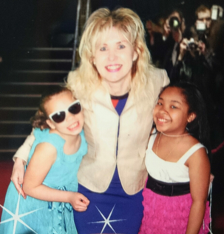
Jan Paluh with girls from Girls Inc

The Capital Region Girls Inc program is dedicated to helping young underprivileged girls develop inner strength and confidence along with STEM education to propel them in their careers. Many of these young girls go on to be entrepreneurs and start their own businesses. Dr. Paluh served on the Board of Directors for Girls Inc. and as Chair of the Philanthropy committee.  SUNY Polytechnic Institute faculty worked with Girls Inc in a partnership for Nanotechnology education, referred to as the Eureka! Nanotechnology program providing hands on experience and summer research activities and participating in events throughout the year.