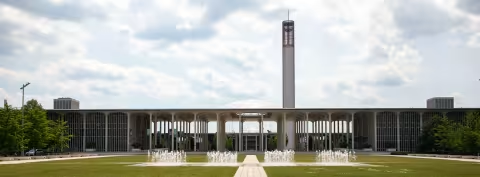
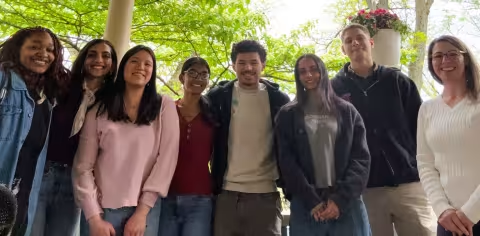
The Academic Podium on UAlbany's uptown campus The Academic Podium on UAlbany's uptown campus

PULSE Lab

Working to Strengthen Our Psychological Understanding of Legal System Encounters

About

Working to Strengthen Our Psychological Understanding of Legal System Encounters (PULSE)

Here in the PULSE Lab, our research focuses on improving our Psychological Understanding of Legal System Encounters. We use psychological theory to understand criminal justice and legal issues, particularly miscarriages of justice that affect marginalized and vulnerable populations. Our goals are to contribute to social science and disseminate relevant results to other researchers, front-line professionals, and lawmakers to improve public policy. Given these goals, we investigate (a) how stereotyping and racism generate racial and ethnic disparities in criminal legal contexts, (b) the developmental appropriateness of legal responses to juvenile offenders, and (c) myriad issues related to victims of abuse and trauma. Our interdisciplinary approach generates empirical knowledge on important real-world issues with the dual goals of advancing psychological science and improving equity in law, policy, and practice.
The PULSE Lab is also a great place for graduate students who want to begin their own careers in research, as well as undergraduate students who want to learn about research and prepare for graduate school.

Members and Collaborators

PULSE Lab Director

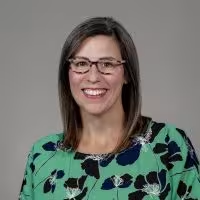
Cynthia Najdowski

Cynthia Najdowski, PhD
[email protected]

Cynthia Najdowski is an Associate Professor and Director of the Social & Personality Psychology Doctoral Program in the Department of Psychology at the University at Albany. Her research explores how social psychological phenomena shape criminal justice interactions in ways that produce miscarriages of justice for racial and ethnic minority group members, women, and children. Her previous work has been recognized with several national grants and awards and published in journals such as American Psychologist, Law and Human Behavior, and Psychology, Public Policy, and Law. She has co-edited two books: Criminal Juries in the 21st Century, which reviews contemporary challenges in the criminal jury system, and Children as Victims, Witnesses, and Offenders, which examines children’s experiences within various legal systems.


Research Assistants
Graduate Research Assistants

Melissa Anderson

Melissa Anderson is a doctoral candidate in the Social and Personality Psychology PhD program. She has been involved in research projects regarding racial issues in the criminal legal system, and she has presented these studies at the American Psychology-Law Society and American Psychological Association conferences in 2023 and the Association for Psychological Science Convention in 2025. She has written multiple articles as part of the "Judicial Notebook" column published in APA's Monitor on Psychology, and Melissa is part of the student editorial board for the Journal of Law and Human Behavior. Melissa also works as a Research Scientist for New York State's Division of Criminal Justice Services.
 

Srishti Katuri

Srishti Katuri is a third-year graduate student in the Social and Personality Psychology PhD program. Her current research focus is civilians’ perceived freedom to exercise their legal rights. Srishti completed her undergraduate education from SUNY-Stony Brook and then earned her master's degree in psychological science from California State University, Northridge. Her thesis broadly explored racial and gender bias in group decision-making in the context of jury deliberations. She is keen on investigating racial biases in criminal legal systems with the intention of bridging the gap between scientific research and public policy. In her free time, she likes watching movies and restoring old film cameras.
 

Charlotte Parque

Charlotte Parque is a third-year graduate student in the Social and Personality Psychology PhD program at the University at Albany. She received her bachelor’s degrees in Psychology and Music from Santa Clara University in 2022. Broadly speaking, she is interested in using research to explore racial biases within the U.S. legal system, people's perceptions of police legitimacy and trust in the police, and attitudes towards extralegal forms of justice. In her free time, she enjoys playing music, cooking and enjoying local scenery.
 

Jackson Gaffney

Kaj Ramirez 


Undergraduate Research Assistants

Sydney Foster 

Sydney Foster is a senior at UAlbany majoring in Psychology with minors in Criminal Justice and Anthropology. She is planning on continuing her studies by getting her masters in Forensic Psychology, then continuing to her PhD. Her goal is to research the effects of popular crime media on juries and jury selection and how these effects impact false incarceration rates. Outside of the lab she is a Peer Tutor, a STEM Tutor and enjoys spending time with her cat, Atlas.

Hailey Collado

Jack Davis

Matthew Feinsilver

Aliza Kaurejo

Victoria Laffin  

Collaborators
Current Collaborators

Maggie Stevenson, PhD
Kenyon University
Department of Psychology

Hayley Cleary, PhD
Virginia Commonwealth University
School of Government and Public Affairs

Phillip Atiba Solomon, PhD
Yale University
Department of Psychology

Elise E. Fenn, PhD
California State University, Northridge
Department of Psychology

Robert Worden, PhD
University at Albany
School of Criminal Justice

Iris Blandón-Gitlin, PhD
California State University, Fullerton
Department of Psychology

Bette Bottoms, PhD
University of Illinois Chicago
Department of Psychology

Kim Bernstein, PhD
New York State Senate

Lab Alumni
Former Graduate Research Assistants

Catherine Bonventre

Meagen Hildebrand

Melissa Noel

Rebecca Prince

Lauren Springer

Chase Waters

Jennifer Weintraub

Sam Wilcox

Katherine Zanotelli

Former Undergraduate Research Assistants

Kristale Abdulla

Daniel Agugliaro

Brianna Alfaro

Nick Ardito

Kayla Aschmutat

Reagon Boera 

Tayia Boyd

Trish Breault

Alicia Cacioppo

Carlie Cegielski

Ashely Coakley

Isabella de la Vega

Jordan Dolgos

Maeve Donnelly

Jessica Dubowski

Alicia Edwin

Ee Farh 

Laura Fleig

Victoria Giorgio

Melissa Gonzalez

Jalene Graham

Sean Houlihan

Julie Jasewicz

Vlad Jean-Baptiste

Persia Jgin

Sharon Josephs

Ellen Kim

Alicia Lall

Julia Lembach

Michelle Marcello

Camilla Marzella

Frank Mazzella

Hannah McCleery

Michael McCurdy

Brianna McKernan

Julia Melfi

Daniel Nisoff

Chelsey Nkrumah

Christianna Palermo

Nya Pemberton

Kara Ploss

Maria Randazzo

Kaitlyn Riley

Jae Rosenberg

Rozanna Sasa

Amanda Scarlata

Kristen Seaman

Sierra Siedsma

Edward Smith

Sarah Smith

Ethan Snowball

Zachary Sohotra

Carolyn Solimine

Eddy Suljic 

Ashely Tatis

August Thilberg

Jayonna Treacy

Healy Tureski

Chase Walters

Krysta Woodcock

Zhuoning Wu

Jessie Yuan 

Manshuer Yu

Peter Zambetti
 

Research Projects

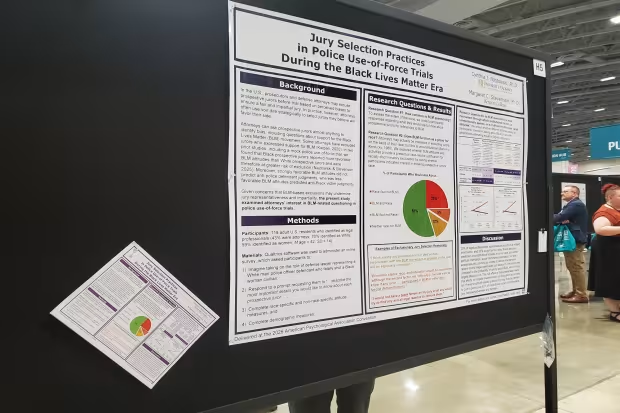
Jury Selection in the Black Lives Matter Era: Potential Impacts in Police Brutality Trials

Abstract

For trials involving police officers accused of violence against people of color, attorneys may ask prospective jurors about their support for the Black Lives Matter (BLM) movement to assess their ability to evaluate the cases fairly and impartially. Does the practice of excluding prospective jurors due to their BLM-related attitudes and behavior reduce the likelihood that people of color will be selected for jury service? Moreover, does exclusion of prospective jurors who support BLM result in juries that are attitudinally predisposed toward system justification and acquittal of police officer defendants? 

Two studies—one with an undergraduate student sample and the other with an online community member sample—suggest the answers to both of these questions is "yes." Black participants and other participants of color were significantly more favorable toward the BLM movement than White participants. The less prospective jurors support the BLM movement, the more racist, supportive of group hierarchies, conservative and authoritarian they were and the more favorable their attitudes were toward the police. Finally, compared to jurors who were at risk of being excluded from service due to their BLM attitudes or behavior, other jurors were more likely to acquit a police officer defendant in a mock trial involving allegations of excessive use of force resulting in the death of a Black woman. 

A third study is in development to investigate factors related to attorneys use of prospective jurors' BLM-related attitudes and behavior during jury selection. This line of research is revealing that selection practices based on prospective jurors' favorability to the BLM movement or related protest behavior produce nonrepresentative juries and biased jury decision-making.
 

Child Abuse Stereotype Study

Abstract

Given that Black families and individuals from lower social status backgrounds are disproportionately more likely to be implicated in child abuse cases and wrongfully convicted, there is a critical need to understand psychological mechanisms driving these disparities. This project aims to examine contributing psychological processes, focusing on how racial stereotypes may lead to bias and misdiagnosis of child maltreatment. Specifically, the research aims to illuminate common stereotypes about child abuse and how these stereotypes, along with cognitive biases such as confirmation bias and selective evidence processing, might influence decision-making in ambiguous cases. 

In the most recent study in this line of work, we are working to identify the content of stereotypes about abuse that occurs within different racial and ethnic groups. Participants were randomly assigned to think about a Black, Asian, Latino/Hispanic, White, or racially unspecified caretaker or child in a child abuse context, and then generated stereotypes associated with the group. Data analysis is currently undergoing. By identifying the mechanisms that underlie biased judgments, we hope to inform interventions and training programs that promote more equitable outcomes in child welfare and legal contexts.

The Roles of Perceived Police Legitimacy and Trustworthiness on Perceptions of Civilians Involved in Crime Control

Abstract

This ongoing project explores how people's attitudes towards civilians involved in crime control are affected by perceived police legitimacy and trust in the police. 

Past research finds that perceived police legitimacy and trust in the police negatively relate to attitudes toward civilian crime control. However, two broad aspects remain unexplored. First, past research has not addressed how attitudes towards vigilantism might differ from attitudes towards citizen's arrests as a function of perceived police legitimacy and trust in the police. Second, given that there is a lack of scholarly consensus on how police legitimacy and trust in the police are defined in the first place, and that some research suggests that there are differences in how lay people define the two terms compared to how academics define these terms, this study further explores how participants' self-defined police legitimacy and trust in the police are associated with perceptions of civilians involved in crime control.

Participants were recruited from an introductory psychology course in exchange for course credit. Analyses are in progress. Results from this line of research could provide theoretical refinements to our understanding of perceived police legitimacy, trust in the police, vigilantism,and citizen's arrests. Furthermore, results may inform our understanding of why recent cases of "vigilantism" and "citizen's arrests" have garnered such differing responses from the public.

Effect of Race on Calls to Police

Abstract

Evidence of racial disparities in policing and criminal legal outcomes led us to examine an understudied potential source of racial bias—civilians’ decisions to call for police service. Racial disparities in decisions to initiate contact with police may contribute to racial disparities that emerge in subsequent police and criminal legal system interactions. Previous studies have shown that White people are, in fact, more likely to call police than Black people, and, in our studies, we investigated whether this racial difference may stem from:

  1. Anti-Black stereotypes impacting perceptions of criminality, and
  2. White people experiencing “White racist” stereotype threat. Our studies also have sparked discussions of social desirability effects and improving research methodology for studying racial issues.

Our studies also have sparked discussions of social desirability effects and improving research methodology for studying racial issues.

Does Registration and Notification Policy Deter Adolescent Sexual Offending?

Abstract

This project advances scientific understanding about the likelihood that juvenile sex offender registration and notification policies can deter adolescents from engaging in sexual behaviors that are common in their age group, yet frequently criminalized and subject to serious, long-term penalties. In particular, Dr. Najdowski and her collaborator Dr. Cleary seek to explicate the criminological processes that are prerequisites to general deterrence as well as the developmental psychological mechanisms that may condition those processes. This is imperative as prior research and pilot work suggests many adolescents are unaware of the breadth of sexual behaviors that warrant registration and notification, which both undermines policy effectiveness and puts youth at risk of being systematically and sometimes publicly labeled as sex offenders.

Dr. Najdowski and Dr. Cleary have two objectives: 1) Empirically evaluate whether legal knowledge that certain sexual behaviors may be punished with sex offender registration and notification deters adolescent sexual offending over time, and 2) Advance scientific knowledge by identifying psychological mechanisms that undermine deterrence among adolescents who are aware of registration and notification risk by (a) precluding their ability to engage in rational choice and (b) shaping the perceived net cost of sexual offending. Dr. Najdowski and Dr. Cleary are administering two electronic surveys one year apart to derive relations between adolescents’ legal knowledge related to sex offender registration and notification policy and their likelihood of committing sexual offenses over time. Specifically, Dr. Najdowski and Dr. Cleary are expanding from their two prior pilot studies by experimentally manipulating whether adolescent participants are exposed to educational information about the risk of criminal justice involvement and sex offender registration and notification associated with illegal adolescent sexual behaviors. They are also discovering whether and how, even when adolescents are (made) aware that sexual behaviors are prohibited and carry legal risks, psychosocial maturity constructs of temperance, perspective, and responsibility reduce the deterrent impact of registration and notification.

Participants are 14 to 17 years old, a range commonly targeted by juvenile registration and notification policies and a period of rapid developmental change—that is, the group most legally and behaviorally at risk of punishment. The study is taking place in Virginia, a state with relatively restrictive juvenile sex offender registration policies and where Dr. Najdowski and Dr. Cleary have already collected cross-sectional pilot data to test preliminary hypotheses and inform this study’s design. This project’s experimental and longitudinal approach and inclusion of theoretically relevant yet currently untested constructs will thereby transform current understanding of relations between criminological theory on deterrence, social-developmental psychology, and legal policy.

The intellectual merit of this scientific work lies in (a) its experimental and longitudinal design, which allows for causal determination of whether and why sex offender registration and notification policy affects adolescents’ risky sexual behavior; (b) novel integration of theories from criminology and social-developmental psychology to advance scientific understanding of adolescent sexual offending in the real world; (c) expansion of knowledge related to psychological determinants of adolescents’ risky behavior; and (d) contribution to the broader field of criminology aimed at understanding when policy effectively deters undesirable behavior.

Sex offender registration policies have become more restrictive and more frequently applied to adolescent offenders, yet whether they actually deter youth sexual offending remains unknown. This project’s findings will inform policymaking on this heavily contested issue. Findings will be foundational for future investigations of policy reform, such as whether widespread intervention with parents is needed to assist youth in managing registration risk. Dr. Najdowski and Dr. Cleary also will promote interest in psychology, criminology, and policy research among adolescent research participants and graduate student research assistants. Dr. Najdowski and Dr. Cleary will use Open Science Framework to manage and report the research publicly in line with NSF’s open science policy. A project wiki and other dissemination efforts will ensure findings are publicly accessible and facilitate discussion and collaboration with other researchers, front-line professionals, community leaders, and policymakers. The proposed interdisciplinary approach will ultimately reveal whether and how policy can effectively deter adolescent sex offending, protect developmentally vulnerable adolescents from experiencing excessively punitive outcomes, and promote justice outcomes.

Racial Differences in Perceptions of Control and Freedom in Police Encounters

Abstract

A new but growing area of research is exploring whether racial differences in perceptions of police encounters translate into racial disparities in negative criminal justice outcomes.

Our study, funded by the UAlbany Faculty Research Award Programs, is building on this foundation by considering whether African Americans and Whites have different models of agency for interactions with police officers. Given the unique abuses Black people have experienced at the hands of the state, we hypothesized that Black people feel more under the control of the state and less able to assert their freedom in police encounters relative to White people. This hypothesis is being tested by comparing Black and White civilians' reactions to hypothetical police encounters.

In the most recent phase of this research, we are exploring how both (a) race and ethnicity and (b) U.S. citizenship status shape civilians’ perceived freedom to exercise their Fourth Amendment rights—specifically, their perceived ability to withhold consent during police search requests. This will allow us to understand whether civilians who are not U.S. citizens experience heightened psychological barriers to asserting their legal rights in police encounters, as well as whether such effects manifest regardless of civilians' racial and ethnic background or whether they are particularly pronounced for Black and Hispanic civilians.

Participants were recruited both online and from the community to explore whether online samples are valid for studying issues related to race and policing. Analyses are in progress. Results could shed light on racial differences in the tendency to yield civil liberties in police encounters (e.g., consenting to be detained or searched), which both increases the likelihood of criminal justice system involvement and restricts civilians’ defense options. Thus, this study is applying social psychological theory on agency to the novel context of the criminal justice system to shed light on critical issues related to race and policing.

Exploring Effects of Defendant Age and Race on Jurors’ Perceptions of Coerced Confessions

Abstract

This study investigates jurors’ ability to accurately evaluate juveniles’ confessions. Juveniles are disproportionately likely to give false confessions, which is a leading cause of their wrongful convictions.

Although jurors are notoriously bad at recognizing the psychological power of the interrogation to elicit false confessions from adults, my prior research suggests they may be sensitive to the circumstances of juveniles’ confessions. In one mock trial study (Najdowski & Bottoms, 2012), jurors’ verdicts were less influenced by a juvenile’s confession when it was coerced versus voluntary. Further, jurors were no more likely to convict the juvenile when she had been coerced to confess than when she maintained innocence. Consistent with attribution theory, jurors attached less weight to actual guilt as a potential cause of the juvenile’s confession when suggestibility and coercion were more plausible explanations.

In the present study, we varied the defendant’s age to directly test whether jurors are more aware of risks associated with coercion when considering juveniles versus adults. We varied the defendant’s race, too, to better understand racial disparities in wrongful convictions. Because Black children are perceived as older and less innocent than same-aged White children, we expect jurors will recognize that juveniles’ coerced confessions are unreliable only when the juvenile is White, not Black.

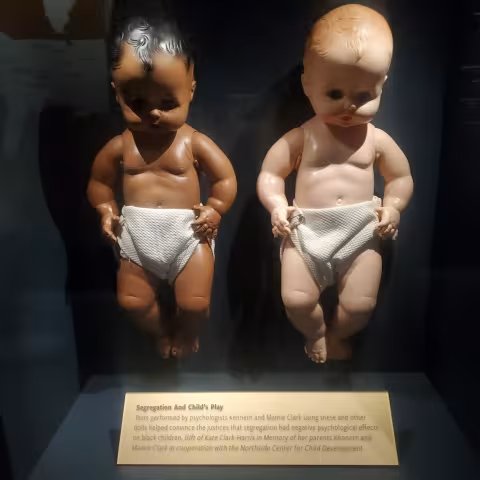
We are now in the process of coding qualitative data and conducting analyses to test these hypotheses. Results will help to explain why Black juveniles are overrepresented among wrongfully convicted false confessors. These studies have practical implications for attorneys’ jury selection tactics, jury instructions, and expert testimony, and therefore for improving the accuracy and fairness of decision-making in juvenile cases. This research was funded by a Psi Chi Mamie Phipps Clark Research Grant.

Publications

Books
Refereed Articles
Refereed Articles
Unrefereed Articles
Unrefereed Articles
Book Chapters
Book Chapters
Encyclopedia Entries
Other Scholarly Activities

News and Events

  • Professor Najdowski attended the annual convention of the American Psychological Association in Denver, Colorado in August 2025. She shared preliminary results from two new lines of research. Her posters were titled "Juror selection based on support for the Black Lives Matter movement discriminates by race & gender" and "Race-masking and bias: Investigating inferential patterns in racial stereotyping."
  • Professor Najdowski was selected to be a Fellow in the Society of Experimental Social Psychology and received a 2025 University at Albany Initiatives for Women Award!  
  • Check out these two new magazine and newsletter column contributions from the lab!
    Katuri, S., & Najdowski, C. J. (2025, July). The mental health effects of immigration control. Monitor on Psychology, 56(5), 43. 
    Najdowski, C. J. (2025, June 17). Keeping our eyes on psychology, law, and justice: A report from the Courtwatch Committee. The Forward.  
  • The PULSE Lab congratulates these alumni on their recent acceptance into graduate school and law programs! Way to go! We can't wait to see what you do next!  
    • Reagan Boera - University of South Florida, School Psychology PhD Program
    • Isabella de la Vega - Fordham School of Law
    • Kayla Aschmutat - Rutgers University, Masters in Social Work Program
    • Jessie Yuan, New York University Silver School of Social Work, MSW Program
    • Kaj Ramirez, University at Albany, Mental Health Counseling Master's Program
    • Jason Burlison, Brooklyn College, Mental Health Counseling Master's Program
    • Hannah McCleery - University of Tennessee at Chattanooga, Clinical Mental Health Counseling Master's Program  
  • Congratulations to our undergraduate student teammates Brianna Alfaro, Sharon Josephs, Hannah McCleery, Nya Pemberton, and Kaj Ramirez on graduating in May 2025! We wish you all the best on your future endeavors!  
  • Charlotte Parque and Srishti Katuri received the 2025 Excellence at the Intersection of Science and Life WISH Award. Congratulations!  
  • Srishti Katuri was awarded first place and people’s choice at UAlbany’s 2025 Three Minute Thesis Competition!  
  • Melissa Anderson presented a research poster co-authored by Sharon Josephs and Cynthia Najdowski at the 2025 Association for Psychological Science Annual Convention in Washington, DC.    
  • The PULSE Lab presented the following posters at the 2025 annual meeting of the American Psychology-Law Society conference in San Juan, Puerto Rico.
    • Perceptions of Civilians' Involvement in Crime Control by Charlotte Parque & Cynthia Najdowski
    • Race, Citizenship, and Perceived Freedom in Consent Searches by Srishti Katuri & Cynthia Najdowski
  • Professor Najdowski published an article with former student Katie Wahrer in Psychiatry, Psychology and Law entitled “Effects of dehumanization and disgust-eliciting language on attitudes toward immigration: A sentiment analysis of Twitter data.” More information is available at https://doi.org/10.1080/13218719.2023.2296484.
  • Cynthia Najdowski contributed to Wired's article, "A Pornhub Chatbot Stopped Millions From Searching for Child Abuse Videos," providing insight on deterring criminal behavior as it applies to Pornhub's pilot program to nudge users away from searching for child sexual abuse material.
  • The prestigious Gordon Allport Intergroup Relations Prize of 2023 has been awarded to Dr. Najdowski and Dr. Goff for their innovative work titled "Towards a psychological science of abolition democracy: Insights for improving theory and research on race and public safety"! This esteemed prize, established in honor of Dr. Allport's contributions to the Society for the Psychological Study of Social Issues, recognizes outstanding scientific papers and articles dedicated to the study of intergroup relations.
  • Melissa Anderson has won a Grant-in-Aid from the American Psychology-Law Society to support her research investigating factors that contribute to racial disparities in policing outcomes!
  • Dr. Najdowski's chapter on Racial disparities in policing: Psychological consequences over the lifespan has successfully been published in The Oxford Handbook of Developmental Psychology and the Law!
  • In April 2024, PULSE Lab will be presenting additional findings from the SAVVY Study at the Society for Research on Adolescents conference in Chicago, IL:
    • Anderson, M., Najdowski, C. J., & Cleary, H. M. D. (2024, April). Does knowing about sex offender registration and notification policies deter adolescents from engaging in illegal sexual behaviors?
  • Congratulations to our RA Tayia Boyd on graduating in December 2023! Thank you to Maeve Donnelly for 7 months (May to December!) of research assistantship! Wishing you both the best in future endeavors!
  • Upcoming presentations at the 2024 American Psychology-Law Society conference in Los Angeles, California:
    • Anderson, M., Najdowski, C. J., & Cleary, H. M. D. (2024, March). What do adolescents know about sex offender registration and notification policies?
      First authored by Melissa!
    • Fenn, E., Blandón-Gitlin, I., & Najdowski, C. J. (2024, March). A meta-analysis of stereotype threat during police encounters.
    • Scarlata, A., & Najdowski, C. J. (2024, March). Undergraduate students’ experiences with university police: An assessment of feelings of safety, belongingness, and well-being.
      First authored by former undergraduate honor student Amanda!
  • Look out for these two presentations from the PULSE Lab at the forthcoming APA Convention in Washington, D.C.!
    • On August 4 at 4 p.m., Melissa Anderson will be presenting on behalf of co-authors Gage Matyasovszky, Dr. Najdowski, Kimberly Bernstein, & Phillip Atiba Solomon on “Race-based differences in perceptions of freedom in police encounters."
    • At August 3 at noon, Amy Clifton-Mills will be presenting on behalf of coauthors Dr. Cleary and Dr. Najdowski on “Youths' awareness of sex offender registration policy and associated registerable sexual behaviors"
  • Congratulations to Dr. Najdowski for receiving the APA Society for Child and Family Policy and Practice (Division 37) Section on Child Maltreatment Mid-Career Award for Outstanding Work in Child Maltreatment! Dr. Najdowski will be receiving this award at the upcoming APA Convention in Washington, D.C.!
  • Announcing new research from the PULSE Lab!
    • Dr. Najdowski just published an article in American Psychologist about “How the “Black criminal” stereotype shapes Black people’s psychological experience of policing.”
    • Also, along with Dr. Hayley Cleary of VCU and UAlbany alum Paige Oja, Dr. Najdowski published an article in Behavioral Sciences & the Law about “Relations between peer influence, perceived costs versus benefits, and sexual offending among adolescents aware of sex offender registration risk." More details and links to these two articles are available under the Publications tab.
  • Dr. Najdowski contributed to Jillian Kramer’s recent article "Louisiana jurors can't go home until they reach a verdict. A new bill could change that" published in The Times-Picayune/The New Orleans Advocate!
  • Congratulations to Amanda Scarlata and Sarah Smith, lab alums who have been accepted into Master’s degree programs!
  • Each year, graduating seniors at UAlbany nominate a professor for the Torch Award—someone who has gone above and beyond the traditional teaching role to change that student’s life in a significant way.  Out of scores of nominations, Professor Najdowski was selected as one of four 2023 Torch Professor Distinguished Nominees!
  • Congratulations to Reagan Boera, who was accepted into UAlbany's School Psychology Certificate of Advanced Study (CAS) Program!
  • Lab Alumni Ethan Snowball was just accepted into the UAlbany Master's program in Information Science! Congratulations Ethan!
  • We're excited to report that the PULSE Lab was well-represented at the American Psychology-Law Society Conference in Philadelphia this past March with these three presentations:
    • Why do people call the Police? Effects of race in ambiguous situations by Melissa Anderson & Cynthia Najdowski
    • Do racial stereotypes contribute to medical misdiagnosis of child abuse? Investigating tunnel vision in the emergency room by Kimberly Bernstein, Cynthia Najdowski, & Katherine Wahrer
    • The psychological consequences of precinct diversification in a hypothetical police encounter by Srishti Katuri, Tara Henchey, Ryan Lefever, Elise Fenn, Cynthia Najdowski, and Iris Blandón-Gitlin

Photos

Summer 2025

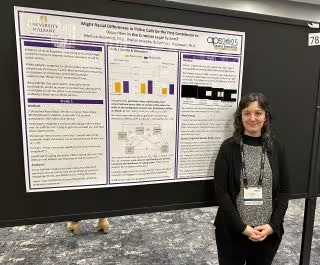
Melissa Anderson presented a poster entitled "Might racial differences in police calls be the first contributor to disparities in the criminal legal system?" at the annual convention for the Association for Psychological Science in May 2025.

Melissa Anderson with her poster project at APS 2025.


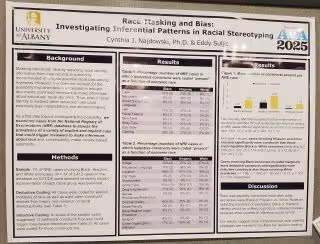
Professor Najdowski presented two posters at the annual convention for the American Psychological Association in Denver in August 2025. One project explored the potential discriminatory impacts of using information about prospective jurors' attitudes and behavior related to the Black Lives Matter movement during jury selection. The other investigated potential limitations of masking race in forensically relevant legal documents to reduce bias. 

Cynthia Najdowski's poster at APA 2025.


Spring 2025

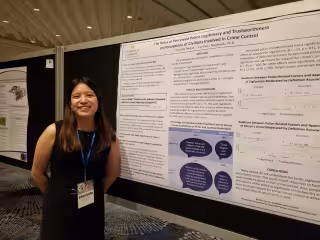
Charlotte Parque presented a poster describing her initial research project at the annual conference of the American Psychology-Law Society in San Juan, Puerto Rico in March 2025. The poster was entitled "The roles of perceived police legitimacy and trustworthiness on perceptions of civilians involved in crime control."

Melissa Anderson with her poster projects at APS 2025.


Summer 2024

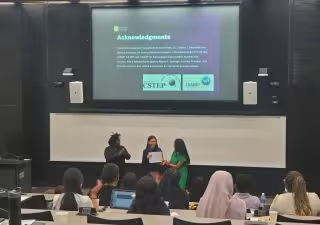
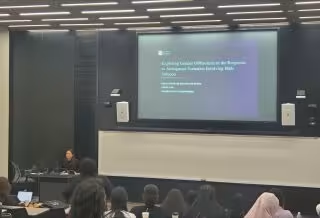
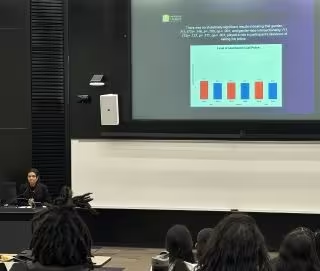
Maria De Sousa presented an analysis of gender differences and gender-race differences in response to ambiguous scenarios involving male subjects through the UAlbany Summer Research Program.

Maria De Sousa presenting with two other students in a lecture hall
Maria De Sousa addressing a class of students in a lecture hall


Maria De Sousa presenting at a podium in front of a class


Spring 2024

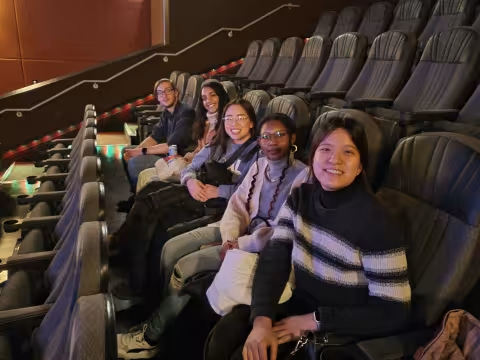
Professor Najdowski, Charlotte, Sharon, Ee, Srishti, and Eddie went on a field trip to watch Origin (2023), a biographical drama based on Isabel Wilkerson's journey of writing the book Caste: The Origins of Our Discontents.

Students sit and smile in a row of seats at the movie theater.


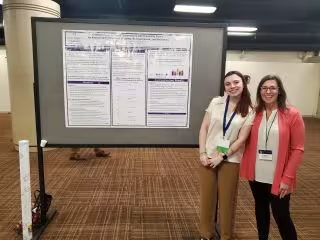
Amanda Scarlata presented her UAlbany honors thesis, "Undergraduate Students' Experiences with University Police: An Assessment of Feelings of Safety, Belongingness, and Well-being," at American Psychology-Law Society Conference in March 2024 – pictured below with Professor Najdowski.

Amanda Scarlata with Professor Najdowski


Summer 2023

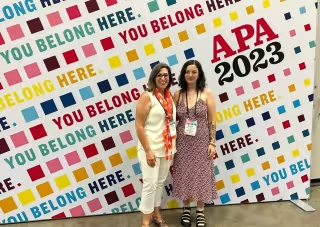
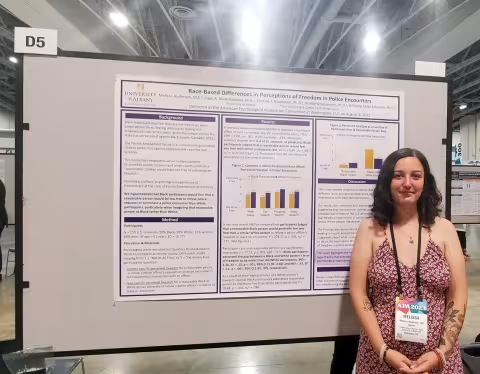
Cynthia Najdowski and Melissa Anderson attended the 2023 American Psychological Association Convention in Washington, D.C., where Melissa presented our research on race-based differences in perceptions of police encounters.

Two women wearing lanyards stand in front of a colorful pop-up wall that reads, 'you belong here.' and 'APA 2023'
A woman in a red and white floral dress, wearing a lanyard with shoulder-length brown hair stands in front of a research poster titled, 'Raced-Based Difference in Perceptions of Freedom in Police Encounters'


Spring 2023

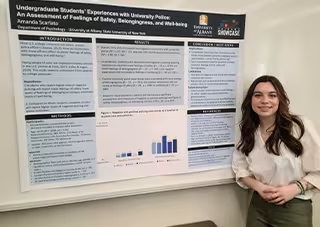
Lab members Amanda Scarlata and Sarah Smith and lab alum Eddie Smith presenting their research at UAlbany’s Showcase Day!

A woman with long, brown hair in a white blouse and olive pants stands next to a research poster titled, 'Undergraduate Students' Experiences with University Police: An Assessment of Feelings of Safety, Belongingness and Well-being,' with a byline underneath that reads 'Amanda Scarlata.'
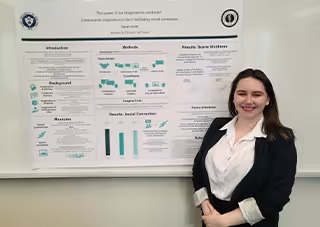
A woman with long brown hair, a white blouse and a black blazer smiles while standing next to a research poster titled, 'The power of our imagination combined: Collaborative imagination's role in facilitating social connection,' with a byline that reads, 'Sarah Smith.'


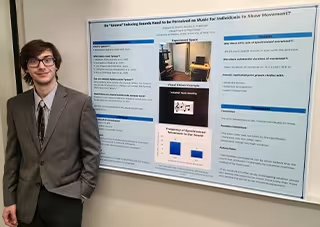
A man with brown hair, a pale blue shirt, and a gray blazer stands to the left of a research poster titled, 'Do 'Groove' Inducing Sounds Need to be Perceived as Music for Individuals to Show Movement?'


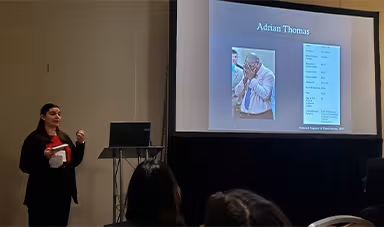
Dr. Kim Bernstein did a terrific job presenting our data at the 2023 American Psychology-Law Society Conference!

A woman with dark hair in a red shirt and black blazer stands by a podium in front of a room of people while presenting a slideshow. On a screen behind her, a slide reads 'Adrian Thomas' with a picture of a man holding his face in his hands.


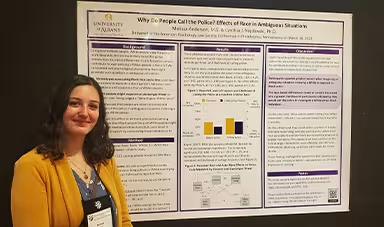
Melissa Anderson at her first American Psychology-Law Society Conference! She did a fantastic job on her poster presentation, which described the results of her initial research project examining laypeople's decision-making around 911 calls.

A woman with curly dark hair in a blue floral top and yellow blazer stands to the left of a research poster titled, 'Why Do People Call the Police? Effects of Race in Ambiguous Situations.'


Spring 2022

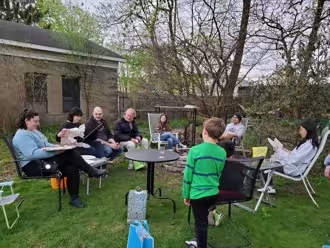
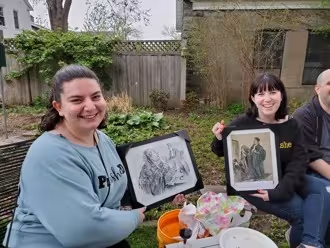
End-of-semester pizza party at Professor Najdowski's house. Congratulations to Dr. Weintraub and Dr. Bernstein!

Seven people sit in chairs around a fire pit in a backyard, surrounded by trees and a house, with a child standing with his back facing the camera.
Two women with brown hair sit in a backyard, smiling while holding up framed historical drawings.


Spring 2019

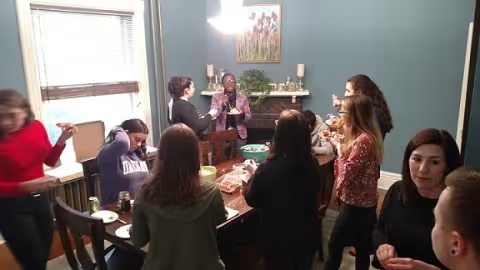
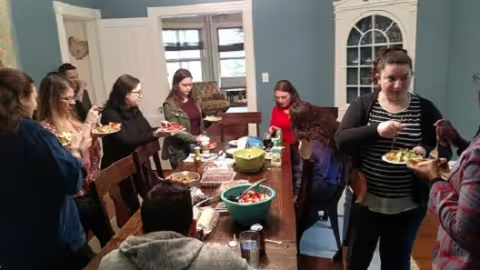
End-of-semester potluck dinner at Professor Najdowski's house.

Eleven people sit and stand around a dining room table, smiling, talking and enjoying food.


Ten people sit and stand around a dining room table, eating, talking and laughing


Summer 2018

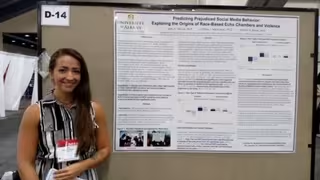
Sam Wilcox presents our research on racial prejudice in social media at the 2018 American Psychological Association Convention in San Francisco, California. 

A woman with long brown hair. in a black and white dress wears a name tag and smiles next to a research poster


Spring 2018

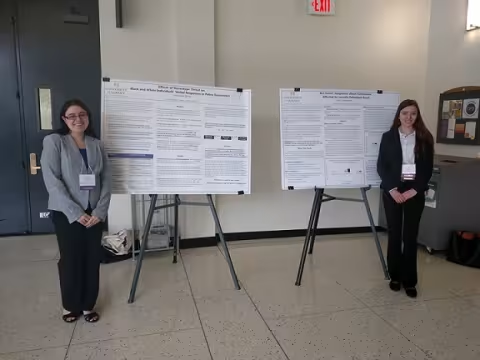
Sam Strine and Lisa Dobrowolsky present their honors thesis research projects at the 2018 UAlbany Undergraduate Research Conference. 

Two women, dressed in business apparel and wearing name tags smile and stand on either side of two research posters displayed side-by-side


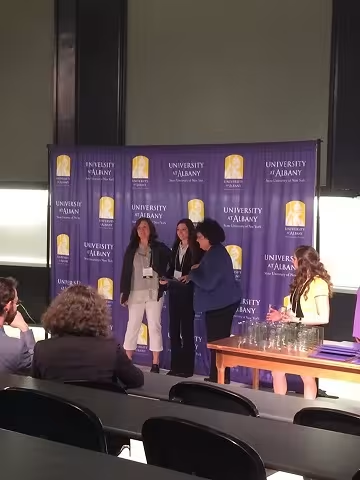
Lisa Dobrowolsky receives the 2018 UAlbany Presidential Award for Undergraduate Research. 

Three women stand at the front of a conference room in front of a UAlbany backdrop. The person in the middle holds a plaque.


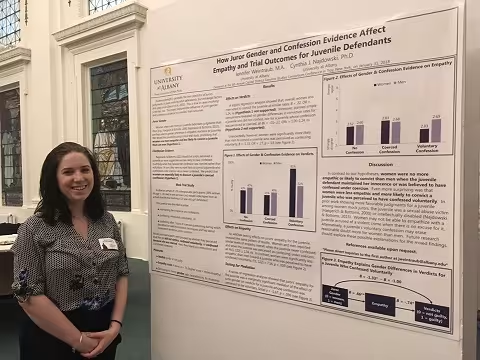
Jenn Weintraub presents our research on juror decision-making at the Capital District Feminist Studies Consortium Conference in 2018 in Troy, New York. 

A brunette in a black and white blouse and a name tag smiles and stands next to a research poster mounted on a wall.


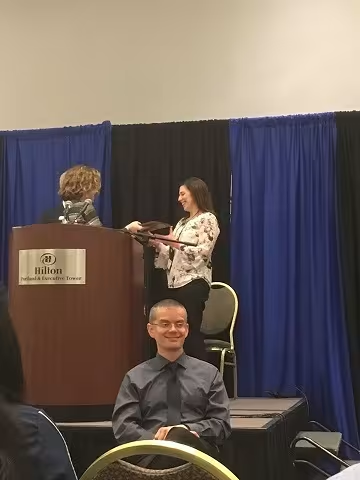
Professor Najdowski receives the American Academy of Forensic Psychology and the American Psychology-Law Society (AP-LS) Saleem A. Shah Early Career Development Award at the 2018 AP-LS meeting in Memphis, Tennessee. 

A woman with brown hair and a white patterned blouse accepts a plaque from a woman with short blonde hair behind a podium on stage in front of crowded room.


Spring 2017

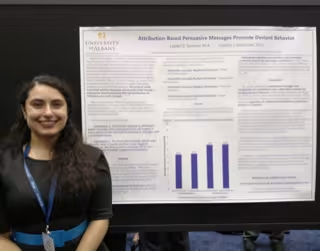
Lauren Springer presents her PhD Comp project at the 2017 meeting of the Association for Psychological Science, in Boston, Massachusetts.

A woman with long curly brown hair stands and smiles to the left of a research poster. She is dressed in black and has a nametag around her neck.


Spring 2016

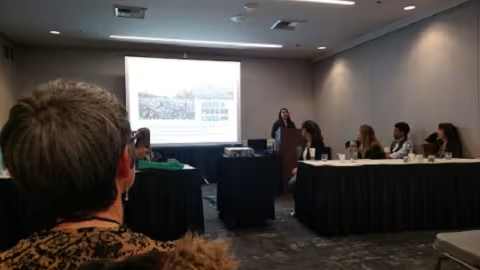
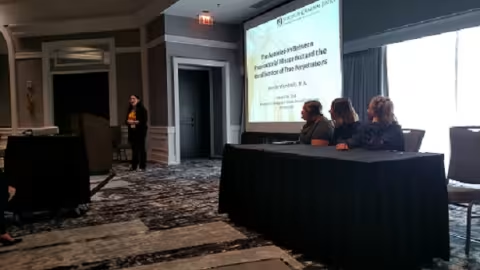
Jenn Weintraub presents her PhD Comp project at the 2016 American Psychology-Law Society meeting.

A woman in a black blazer stands behind a podium in a conference room to the left of a projection screen. To the right of the screen, three people sit at a table.


Kim Bernstein presents her PhD Comp project at the 2016 AP-LS meeting. 

A woman stands at a podium and presents a slideshow to a conference room full of people.


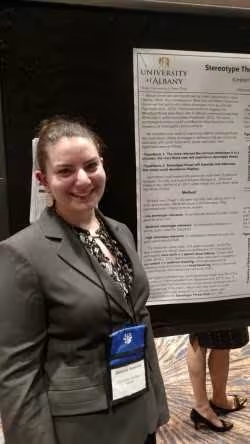
Kim Bernstein presents her poster, "Stereotype Threat and Social Dominance in Police-Citizen Encounters," at the 2016 annual AP-LS meeting in Atlanta, Georgia.

A woman in a gray blazer and a lanyard smiles with her hair pulled back in a bun. She is standing next to a research poster.

Join the PULSE Lab

If you are interested in joining the PULSE Lab as a doctoral student, you may apply to the University at Albany Social & Personality Doctoral Program here.

If you are currently a University at Albany graduate student or undergraduate student and are interested in becoming a research assistant in the PULSE Lab, please fill out the PULSE Lab interest form below.

We look forward to hearing from you!