



A teacher working with a young student in a classroom.

Bachelor of Science in
Adolescent Education

Becoming an Adolescent Education Major

Designed for outstanding students, the undergraduate adolescent education program at UAlbany empowers you to pursue a career where you can make a lasting impact in today’s secondary school classrooms.

Current UAlbany students and transfer students must submit applications for admission to the adolescent education major after meeting the following eligibility requirements:  

  • Successful completion of at least 24 credits (sophomore status)
  • Cumulative grade point average for all coursework must be 3.00 or higher at the time of evaluation  

If you meet the above criteria, you must submit an essay as part of the application to declare the major process. Be sure to reach out to your advisor for further information.

Teacher Certification

This degree is a New York State approved pathway leading to initial certification in Adolescent Education (Grades 7–12) in one of eight secondary subject areas: biology, chemistry, earth science, English, mathematics, physics, social studies or Spanish.

This program is approved for licensure or certification in New York State.

For more information on Professional Licensure Disclosure, please see the Undergraduate Bulletin.

Program of Study

programofstudy

By earning your BS in Adolescent Education at UAlbany, you’ll learn the teaching skills and subject knowledge you need through coursework and robust experiential field work as a student teacher.

This in-person program will include topics for teaching, such as educational psychology, adolescent development, literacy instruction, lesson planning and classroom management, as well as in-depth study of a secondary subject. In your chosen concentration, you will study key subject areas in-depth and develop a deep well of knowledge to share with your future students. You will also gain innovative classroom experiences, and graduate prepared to lead a class of secondary students. 

Required Courses and Fieldwork

84 credits, including 30 credits in your chosen concentration and 18 credits of field experience and student teaching.


Core Courses

36 credits in the following topic areas:  

  • Foundations of Education  
  • Teaching as a Profession  
  • Educational Psychology, Development and Assessment  
  • Special Education  
  • Literacy  
  • Secondary level teaching methods

Concentration Courses

Minimum of 30 credits in the content area, including a minimum of 15 credits at the upper division level carefully selected to support your success as a teacher:

  • Biology
  • Chemistry
  • Earth Science
  • English (double major option)
  • Math
  • Physics
  • Social Studies
  • Spanish

Please see the Undergraduate Bulletin for specific course requirements for the concentrations.


Fieldwork and Student Teaching

Our New York State approved program immerses you in classroom experiences, with 18 credits dedicated to field experiences and your student teaching placement in schools working with young adults in Grades 7–12.  

Note: You must maintain a 2.85 GPA to remain in the major. 

Field Experiences and Student Teaching

To fulfill the student teaching requirements, you will spend two semesters in a range of school placements, with in-classroom time prior to student teaching. Through these placements you will experience a variety of communities—including in high-need schools—work with students across developmental levels and socioeconomic backgrounds and engage with families and caregivers.

A faculty member with expertise in content and pedagogy will mentor you during these experiences to help ensure your time in your placements is productive and valuable.

field

Career Outcomes

With current teacher shortages creating a lot of opportunity in the field, earning your BS in Adolescent Education will set you up for a successful career in education. We will not only provide professional guidance and advice, we’ll also support you in finding a position after graduation through our partnerships with area schools and other educational opportunities.

If you wish to continue your studies at the graduate level, you’ll find a wide range of carefully designed advanced degree programs at the UAlbany School of Education, including nationally ranked online programs, to help you earn your New York State Professional teaching certification and reach the next level in your professional pursuits.


A teacher working with a young student in classroom.
career

"I've done my student teaching here and the support I've gotten from professors and from the school in general has helped to set me up to be the best educator that I can be in my career."

- Sophia Caprara, '24

UAlbany Majors: Teacher Certification Programs

Accreditation

The University at Albany is a member in good standing of the Association for Advancing Quality in Educator Preparation (AAQEP), a national accrediting organization recognized by the Council for Higher Education Accreditation.


Logo for the AAQEP - Association for Advancing Quality in Educator Preparation
Accreditation Details

The programs listed below have been awarded full accreditation by AAQEP through June 30, 2028. Full accreditation acknowledges that a program prepares effective educators who continue to grow as professionals and has demonstrated the commitment and capacity to maintain quality.


AAQEP-Accredited Programs and Annual Reports at the University at Albany


Advanced Graduate Certificate Programs


Master of Science Programs


Bachelor of Science Programs

Accelerated Undergraduate/Graduate Options


You can save time and money by beginning your graduate degree coursework while still enrolled as an undergraduate student. Up to 12 academic credits, billed at the undergraduate rate, will count towards both degrees – so you’ll complete your combined program in only 5 years and spend less than you would if you completed each program separately. Choose to combine your Adolescent Education undergraduate degree with the following graduate programs:


UAlbany graduate at Commencement


MA in English
This master’s program will help you develop strong communication and research skills while giving you the opportunity to explore your interests in British, American, Native American, postcolonial and contemporary literature in English, as well as creative writing, rhetoric, composition, pedagogy, and cultural studies.

MS in Information Science School Library
In this fully online program, you’ll learn to teach essential 21st‑century information literacy skills and become prepared for certification as a school librarian.  Graduates are also eligible for public librarian licensure, opening careers in both K–12 school libraries and public library settings.

MS in Literacy
Learn how to teach reading and writing effectively by applying research‑based literacy strategies and working directly with diverse learners across grade levels. With this degree, you become qualified for roles such as literacy teacher, literacy specialist or literacy coach, and you meet the education requirements for New York State literacy certification.

MS in Reading
This program teaches you how to support children, teens and adults as they develop reading and literacy skills by studying language acquisition, literacy development, effective instructional methods and interventions for literacy difficulties. With this degree, you can pursue roles in educational and community settings, including positions as a reading specialist, literacy instructor or literacy-focused educator.

MS in Special Education
This master’s degree prepares you to teach students with disabilities across all grade levels in inclusive classroom settings and leads to initial New York State certification in special education. It also fulfills the graduate degree requirement for receiving professional classroom teacher certification in New York State.

combined
Student Learning Objectives


Learning objectives that UAlbany students are expected to attain through their course of study within their academic program.

Bachelor of Science
Human Development

a. Individual Learning Differences

b. Graduates understand how ability, language, culture, and family background influence the learning of students.    

c. Graduates know the psychological, social, and cultural facets of human development and learning. Graduates use understanding of development and individual differences to respond to the needs of students, showing their understanding of the commonality and diversity of patterns of development.


Learning Environments

a. Graduates create safe, inclusive, culturally responsive learning environments to engage students in meaningful learning activities and social interactions through collaboration with general educators and other colleagues.  

b. Graduates demonstrate the ability to develop and apply effective, culturally responsive-sustaining procedures and proactive behavior management strategies that provide differentiated behavioral supports.  


Standards

a. Graduates choose and apply current standards to design student learning (e.g., NYS Next Generation Learning Standards across content areas; Culturally Responsive-Sustaining Education Framework).

b. Graduates enact teaching standards in their instruction (e.g. NCTM, NCSS, ILA classroom teacher standards, Next Generation Learning Standards).

c. Graduates demonstrate an in-depth understanding of New York State grade 7-12 content learning standards for your subject areas through planning and delivery of standards-based classroom instruction.


Assessments

a. Graduates use knowledge of measurement principles and practices to interpret assessment results and guide classroom educational decisions in alignment with federal and state legal requirements.  

b. Graduates use or design assessments to identify learner strengths and areas of growth across a range of skills and practices to inform their instruction and decision making.

c. Graduates evaluate the affordances and constraints of a range of assessments (e.g., diagnostic, formative, summative) to develop comprehensive assessment plans/comprehensive learner portraits and convey this information to a range of stakeholders.

d. Graduates minimize bias (e.g. racial, linguistic, ability) by selecting and/or using technically sound, equitable formal and informal assessments.  


Materials, Resources, and Digital Technologies

a. Graduates evaluate, select, and integrate relevant materials, resources, and digital technologies for classroom teaching and assessment that are inclusive of cultural and linguistic diversity.

b. Graduates embed resources into authentic instruction that supports critical conversations and student inquiry.

c. Graduates foster supportive learning environments where learners draw on multimodalities to create meaning, responsive to purposes and audiences.


Engagement

a. Graduates co-create learning environments with students.

b. Graduates teach for understanding and meaning-making through inquiry.

c. Graduates provide opportunities for learners to experience learning practices as intentional, purposeful, and authentic.


Disciplinary Literacies

a. Graduates understand the historical, theoretical, and evidence-based foundations of literacies and the role of literacies in building disciplinary practices.

b. Graduates support learners in accessing and engaging in discipline specific practices including constructing knowledge, pursuing intellectual inquiries, marshalling evidence, and building vocabulary.

c. Graduates build disciplinary literacies over time with attention to material selection and assessment of knowledge and literacy development.


Content Knowledge in Adolescent Education

a. Graduates plan lessons that demonstrate knowledge of how grade 7–12 students learn and engage with core ideas and cross-cutting concepts in your subject area.

b. Graduates design and facilitate authentic learning experiences, which facilitate relevant and meaningful content learning for grade 7–12 students.


Instructional Planning and Strategies

a. Graduates incorporate an individual’s abilities, interests, learning environments, and cultural and linguistic factors in the selection, development and adaptation of learning experiences for all learners.  

b. Graduates use technologies to support instructional assessment, planning, and delivery.  

c. Graduates develop and/or implement a variety of special educational plans across a wide range of settings and different learning experiences in collaboration with and/or the consideration of the perspectives of students, families, and teams.  

d. Graduates teach to mastery and promote generalization of learning.


Responsive Teaching  

a. Graduates plan for and enact a range of instructional approaches and practices to meet the needs of each learner (e.g. historical knowledge, vocabulary development, writing processes).

b. Graduates ensure students have equitable access to high quality, engaging, and comprehensive instruction, curriculum, and authentic learning.

c. Graduates turn learners’ attention to using productive strategies.

d. Graduates provide learners with multiple points of access to instruction (e.g., visual, verbal, written, gesture, etc.).  


Data Based Decision Making

a. Graduates collaborate with colleagues to analyze assessment data and reflect on teacher practice to create instructional plans that respond to student needs.

b. Graduates critically consume published research studies to inform instructional planning and decision-making.

 
Learning as Sociocultural Practice

a. Graduates understand that learning practices occur across multiple contexts, not only schools, and for multiple purposes.

b. Graduates build on students’ funds of knowledge (e.g. linguistic diversity; cultural, family and community resources) to inform instruction.

c. Graduates are self-reflexive about how their positionalities, lived experiences, and identities shape their instructional practices and teaching philosophies.


Critical Perspectives and Equity

a. Graduates create teaching and learning contexts in which students value multiple perspectives in the service of equity and social justice.

b. Graduates promote civic engagement and inspire learners to take action in local and global communities.

c. Graduates create teaching and learning contexts in which students critically consume and produce media.

d. Graduates effect change in educational inequities, including bias stemming from races, classes, genders, languages, abilities, and sexualities.


Respectful Representation of Youth, Families, and Communities

a. Graduates notice, name and build upon learner strengths and progress.

b. Graduates interact and engage with youth, families, and communities in ways that respect diverse life experiences.

c. Graduates foster empowering partnerships by learning from and with youth and families to support learners.


Professional Learning Communities and Reflective Practice

a. Graduates engage in professional learning communities (PLCs) with colleagues as reflective practitioners who work to improve teaching practice.  Graduates engage in reflective inquiry on practice both independently and with others to foster continual professional growth and learning progression toward more sophisticated understandings.

b. Graduates advocate for students through instructional practices and professional collaboration to promote the well-being of all students. 
 

slo

What Makes the University at Albany Great

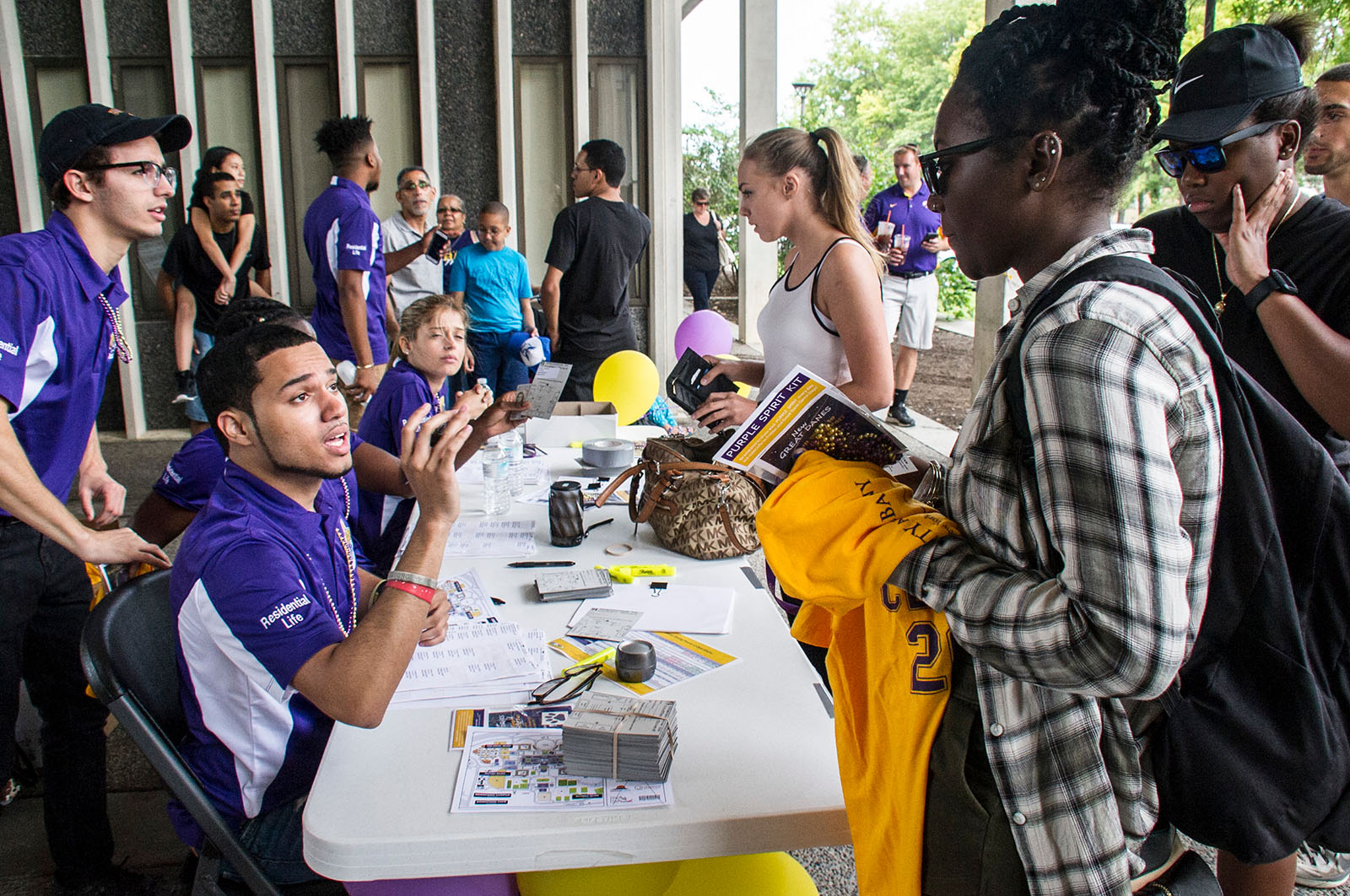
Student move-in day.

Living-Learning Communities

Live and take classes with other incoming freshmen who share your personal interests, passions or intended academic major.

A student abroad visiting a monument.

Study Abroad

Become a global citizen: international experience is crucial to success in business, education, research, and public policy.

A student conducting undergraduate research.

Undergraduate Research

Research, scholarship, and creative activities at the University at Albany is an option for all students, across all academic disciplines. You will be able to learn more about a specific academic field or career path all while building a long-lasting mentoring relationship with a faculty member or principal investigator.

Explore Minors

Build competency in a passion or strengthen your resume.

A minor consists of 18–24 graduation credits which must include a minimum of 9 graduation credits of advanced coursework at or above the 300 level. Most undergraduate degrees require completing a minor and it has to have a different title from your major.

Full List of Minors
  • Acting
  • Africana Studies
  • Anthropology
  • Art
  • Art History
  • Atmospheric Science
  • Bioethics
  • Biology
  • Business
  • Chemistry
  • Chinese Studies
  • Climate Science
  • Cognitive Science
  • Communication (Fully Online Option)
  • Computer Science
  • Creative Writing
  • Criminal Justice Studies (Fully Online Option)
  • Cybersecurity (Fully Online Option)
  • Documentary Studies
  • East Asian Studies
  • Economics
  • Educational Studies
  • Electrical and Computer Engineering
  • Electronics
  • Emergency Preparedness, Homeland Security and Cybersecurity (Fully Online Option)
  • English
  • Ethics and Philosophy of Artificial Intelligence
  • Film Studies
  • Forensic Science
  • French
  • Game Design and Development
  • Geographic Information Science
  • Geography
  • Globalization Studies
  • Hebrew
  • History (Fully Online Option)
  • Informatics (Fully Online Option)
  • Instrumental Performance
  • International Studies
  • Italian
  • Japanese Studies
  • Journalism (Fully Online Option)
  • Judaic Studies
  • Korean Studies
  • Latin American and Caribbean Studies
  • Law and Philosophy
  • Leadership
  • Legal Studies
  • LGBTQ Studies
  • Library and Information Science
  • Linguistics
  • Machine Learning
  • Mathematics
  • Medical Anthropology
  • Music
  • Musical Performance
  • Musical Theatre
  • Philosophy
  • Physics
  • Political Science
  • Portuguese
  • Pre-Education
  • Psychology (Fully Online Option)
  • Public Health
  • Public Policy
  • Religious Studies
  • Russian
  • Russian and Eastern European Studies
  • Social Welfare Studies
  • Sociology (Fully Online Option)
  • Spanish
  • Statistics
  • Sustainability
  • Theatre
  • Theatrical Design/Technology
  • Urban Studies and Planning
  • U.S. Latino Studies
  • Vocal Performance
  • Weather and Climate Communication
  • Women's, Gender and Sexuality Studies