Medical Services
Have an urgent medical concern or emergency? Please visit our Emergencies page for 24/7 resources.



Have an urgent medical concern or emergency? Please visit our Emergencies page for 24/7 resources.
Student Health Services (SHS) provides compassionate and inclusive healthcare to all registered UAlbany students.
To make, reschedule or cancel an in-person or telemedicine appointment at Student Health Services, please call Scheduling at 518-442-5229 during business hours.
In-person appointments may also be scheduled through the Student Health Portal.
Appointments are required for all medical services and tests, and we do not accept walk-ins.
Note: Masks are required inside Student Health Services for sick visits.
The Health & Counseling Services Building is located the south side of Dutch Quad, at the ground level facing the athletic fields, on UAlbany’s Uptown Campus.
Please do the following in preparation for your appointment:
Arrive 10 to 15 minutes before your scheduled appointment time, so you can complete any required paperwork and an initial nurse evaluation. If you arrive five minutes past your scheduled appointment time, your appointment will be rescheduled to the next available time.
Bring your health insurance information. Our services are generally free to registered students. However, if you need a test or specialty care that we don’t offer on site, we’ll need your health insurance information to help refer you to an outside lab, radiology office or specialist.
For general questions, call 518-442-5454 or email [email protected].
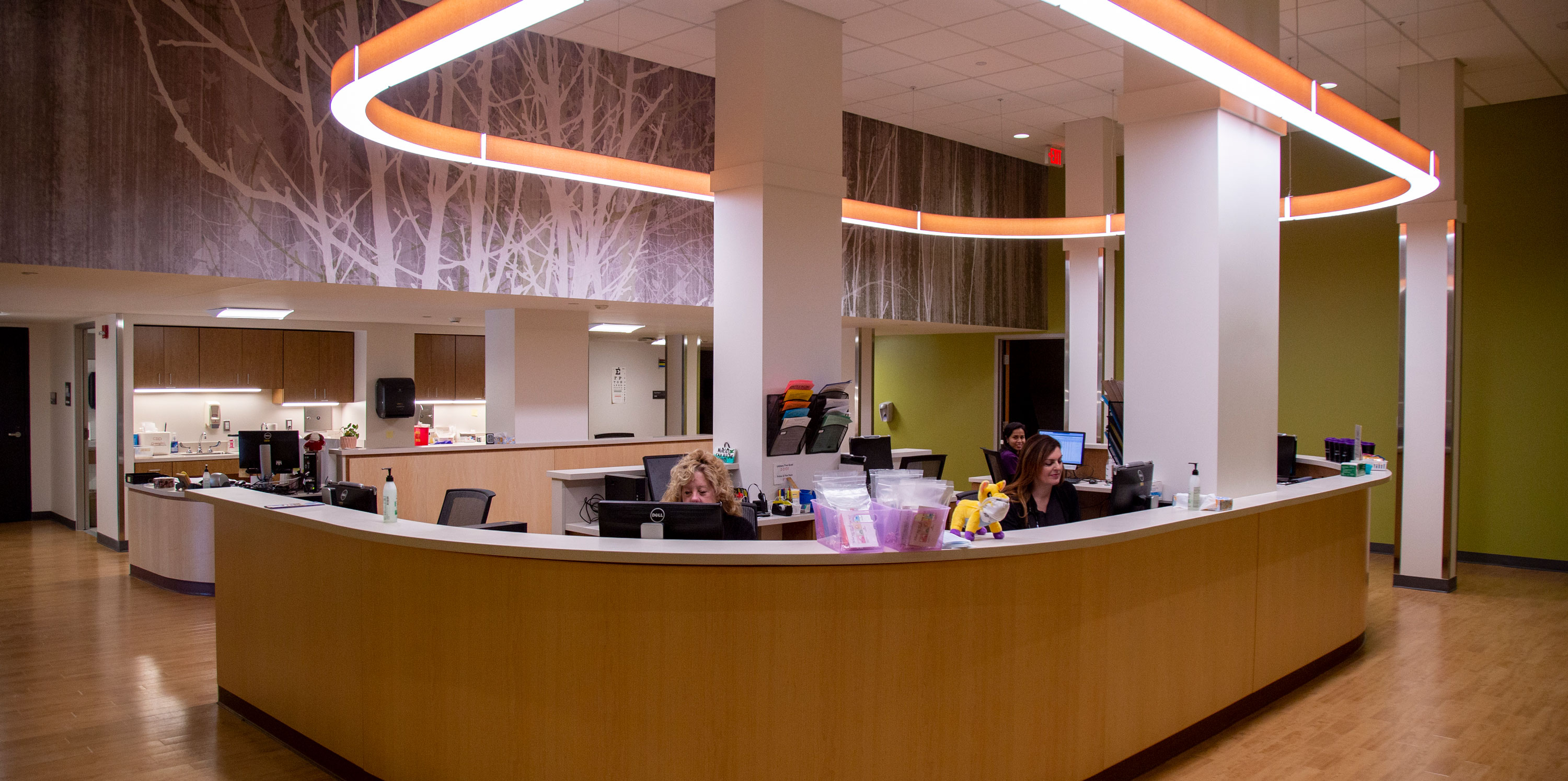
We offer quality care to all registered UAlbany students. Our services are covered by your tuition and fees, unless otherwise specified below.
Appointments are required and walk-ins are not accepted. Schedule an appointment.
For general questions, call 518-442-5454 or email [email protected].
Medical conditions we typically see include, but are not limited to:
Student Health Services has limited durable medical equipment (such as crutches) on site. Our staff will review the fees for durable medical equipment with you before dispensing the item(s), which will be charged to your student account and listed as “Health Services."
When necessary, students may be referred to an outside provider for specialty care. Fees for outside services are determined by the outside provider and the patient's insurance, not Student Health Services.
UAlbany has partnered with TimelyCare, a virtual health and well-being platform that provides 24/7 access to medical and mental health services.
Currently enrolled UAlbany students can access TimelyCare for free, regardless of insurance status — removing barriers and enhancing access to care, especially during nights and weekends.
Student Health Services offers rapid testing for:
Some of these tests have a $10 fee. Our staff will discuss any fees with students before ordering a test. You’ll be billed to your student account, where they are listed as “Health Services.”
Please call for an appointment or to discuss testing.
A student can utilize their health insurance and Student Health Services, or your treating provider can order labs to be collected at a local off-campus lab.
The off-campus lab will bill you and your health insurance directly.
We offer confidential appointments to screen for, diagnose and treat sexually transmitted infections (STIs). Schedule an appointment.
Students commonly request testing for several reasons, including routine STI screening, possible STI exposure and STI symptoms.
Lab Testing: Our providers can order testing for chlamydia, gonorrhea, syphilis, herpes, Hepatitis C and HIV. These tests are run at a local lab that will bill you and your health insurance directly.
No one, except authorized Student Health Services and health department personnel, has access to your results. We cannot share your health information with partners, parents, guardians, teachers or employers.
Alternatively, students can access testing through the Albany County STI Clinic or Upper Hudson Planned Parenthood.
UAlbany strongly urges students to protect themselves and others from respiratory viruses, including COVID-19, the flu and RSV.
Core prevention strategies include:
Additional prevention strategies include:
Please visit the CDC website for detailed guidance on respiratory viruses.
UAlbany expects that anyone who is feeling unwell will stay home, follow public health guidance and seek medical care as needed.
If you need to speak to a medical provider, make a Student Health Services appointment. Note: Masks are required inside Student Health Services for sick visits.
Additionally:
Any student planning to study abroad should visit the CDC’s Travelers’ Health Guide for detailed information on recommended vaccines and other precautions.
Be sure to schedule an appointment for medical advice and immunizations at least six to eight weeks before your planned departure date to ensure adequate time for vaccine response.
Absences: Students should work directly with their instructors for absence accommodations. For academic regulations related to attendance, please refer to the Undergraduate Bulletin and Graduate Bulletin.
Student Health Services often assists in University administrative processes that involve medical and mental health records.
However, those processes are managed by separate offices. Please contact the offices listed below with any questions and visit their websites for detailed instructions:
All visits to Student Health Services are free to registered UAlbany students. However, students may incur costs for certain services.
The following charges will be billed to your student account (appearing as “Health Services”) and payable via E-Pay:
Students with unpaid balances may have a hold placed on the student account.
If you have questions regarding Student Health Services charges on your student account, please call us at 518-956-8400.
Additionally, if lab specimens are sent to an off-campus lab, the lab will bill the student and their health insurance directly.
Any Student registered for summer classes as well as students who are not registered for summer classes but who were registered during the spring semester and are registered for the fall semester must pay a one-time $36 fee to be treated by Student Health Services during the Summer Session. The fee is assessed at the student's first visit.
Student Health Services (SHS) is firmly committed to preserving the confidentiality of all patient visits and records.
All SHS employees will treat all patient information confidentially. They will act in such a manner as to protect the privacy and confidentiality of both clinical and personal information, except when required by law.
To assure the confidentiality of our patients’ medical records, the following requirements must be met.
Current registered students who need a copy of their MMR Immunizations may view and print those records through the Student Health Portal.
Students who want Student Health Services to send information related to their mental health or HIV status to another provider or entity must send a completed HIPAA Authorization to Release Form to [email protected].
Students who want Student Health Services to send other medical records, including immunizations, to another provider or entity must send a completed Medical Record Release Form to [email protected].
To request medical records in person, you must show your student ID or government-issued ID.
Requests may take a week or more to process. Note: Medical records, including immunizations, are only retained for seven years.
UAlbany does not offer a domestic student health insurance plan. This means domestic students:
Requirements for mandatory international student health insurance remain in effect for international students. Visit the International Student & Scholar Services website for detailed information.
There are also health insurance requirements for students participating in Education Abroad programs.
All students are charged a Student Health Fee. This is not an insurance charge but instead covers services provided by Student Health Services.
Student Health Services is not a participating provider with any insurance company. Your insurance company may not reimburse you for our services that carry a fee.
Students who need to obtain health insurance should visit the New York State of Health Official Plan Marketplace, where New Yorkers can compare and enroll in health insurance coverage and get financial assistance to reduce the cost of that coverage. Find a Navigator who can provide you with enrollment help.
Student Health Services does not provide allergy injections. Students must work with their hometown provider to find an appropriate allergist in the Albany area, including:
Please note that some allergists require complete re-testing before administering allergy shots and most allergy clinics cannot use serum prepared by an allergist who is not affiliated with their practice.
We suggest you contact local providers to ask about these policies and to determine which providers accept your health insurance before scheduling an appointment.
Student Health Services does not provide gender-affirming medications. However, there are local providers who do prescribe these medications, including:
Student Health Services does not provide HIV prevention medications PrEP and PEP. However, there are local providers who do prescribe these medications, including:
Student Health Services offers contraceptives and pregnancy tests and is able to provide pre-conception, pregnancy and termination counseling. Student Health Services can refer to outside providers for pregnancy care and can refer to outside providers such as Upper Hudson Planned Parenthood for abortion access.
These pharmacies have locations near UAlbany's Uptown Campus. Use your UAlbany ID for access CDTA and UAlbany buses for free.
Walmart : 141 Washington Avenue Extension, Albany, NY; 518-869-4697
CVS: Stuyvesant Plaza, 1475 Western Avenue, Albany, NY; 518-482-8759
1400 Washington Avenue
Albany, NY 12222
United States
Have an urgent medical concern or emergency? Please visit our Emergencies page for 24/7 resources.
To make, reschedule or cancel an appointment at Student Health Services, please call Scheduling at 518-442-5229.
The Student Health Services clinic is open on weekdays, year-round. Note: Masks are required inside Student Health Services for sick visits.
Fall & Spring Semesters:
Summer & Winter Sessions:
The Health & Counseling Services building is on the Uptown Campus. The building is located on the south side of Dutch Quad, at the ground level facing the athletic fields. Download a campus map.