Counseling & Psychological Services (CAPS)
Have an urgent mental health concern or emergency? Please visit our Emergencies page for 24/7 resources.



Have an urgent mental health concern or emergency? Please visit our Emergencies page for 24/7 resources.
CAPS provides compassionate, confidential and inclusive mental health care to registered UAlbany students. All services are covered by your tuition and fees.
Current students can schedule an appointment with CAPS, using these options:
You can schedule an appointment online if any of the following apply to you:
This is your first appointment ever at CAPS.
You haven’t seen a CAPS counselor since June 1.
You’ve met with a CAPS counselor but want to switch to another CAPS counselor.
Be sure to have your student ID number and your schedule handy.
Note: You can also schedule your first appointment by calling CAPS at 518-442-5800 during our business hours.
You can schedule any type of appointment by calling CAPS at 518-442-5800 during our business hours.
This includes scheduling appointments for individual counseling, relationship counseling, psychiatry, group therapy, or case management. Review our services to learn more.
Be sure to have your student ID number and your schedule handy when you call.
The Let’s Talk service gives you access to a 15- to 20-minute consultation with a CAPS clinician at convenient locations on campus. The service is often used by students who:
Let’s Talk is available during the fall and spring semesters when classes are in session.
There may be a short wait while we talk to another student. If we have already reached capacity that day, please visit Let’s Talk another day or use the instructions above to schedule an appointment.
Let's Talk Schedule
Download a map of the Uptown Campus.
Note: Let’s Talk is not the appropriate CAPS service if you’re experiencing an emergency or if any of the following apply to your situation:
In these cases, please refer to our Emergencies page.
The STEPS programs offer personalized feedback on alcohol and cannabis use.
STEPS focuses on alcohol, while STEPS 2.0 focuses on both cannabis and alcohol. STEPS-R is available for students who have already completed STEPS and/or STEPS 2.0.
Students may participate voluntarily or be referred to the program following a disciplinary sanction related to alcohol and/or other drugs.
Information you share as part of any STEPS program is kept confidential by CAPS. This includes survey responses and information discussed during your appointment. For students who are required to participate in STEPS due to a sanction, only information about your completion of the program is shared, with your consent.
Please email [email protected] with any questions.
CAPS offers free consultations to students, parents, families, faculty, staff and other campus community members who are concerned about a UAlbany student or who have questions about CAPS and its services.
Contact CAPS at 518-442-5800 or [email protected] to request a consultation.
If it’s an urgent situation, call 518-442-5800, then ask to speak to a psychologist and let us know it’s urgent. After hours, select Option 2 to speak to a mental health professional. For further guidance, please refer to our Emergencies page.
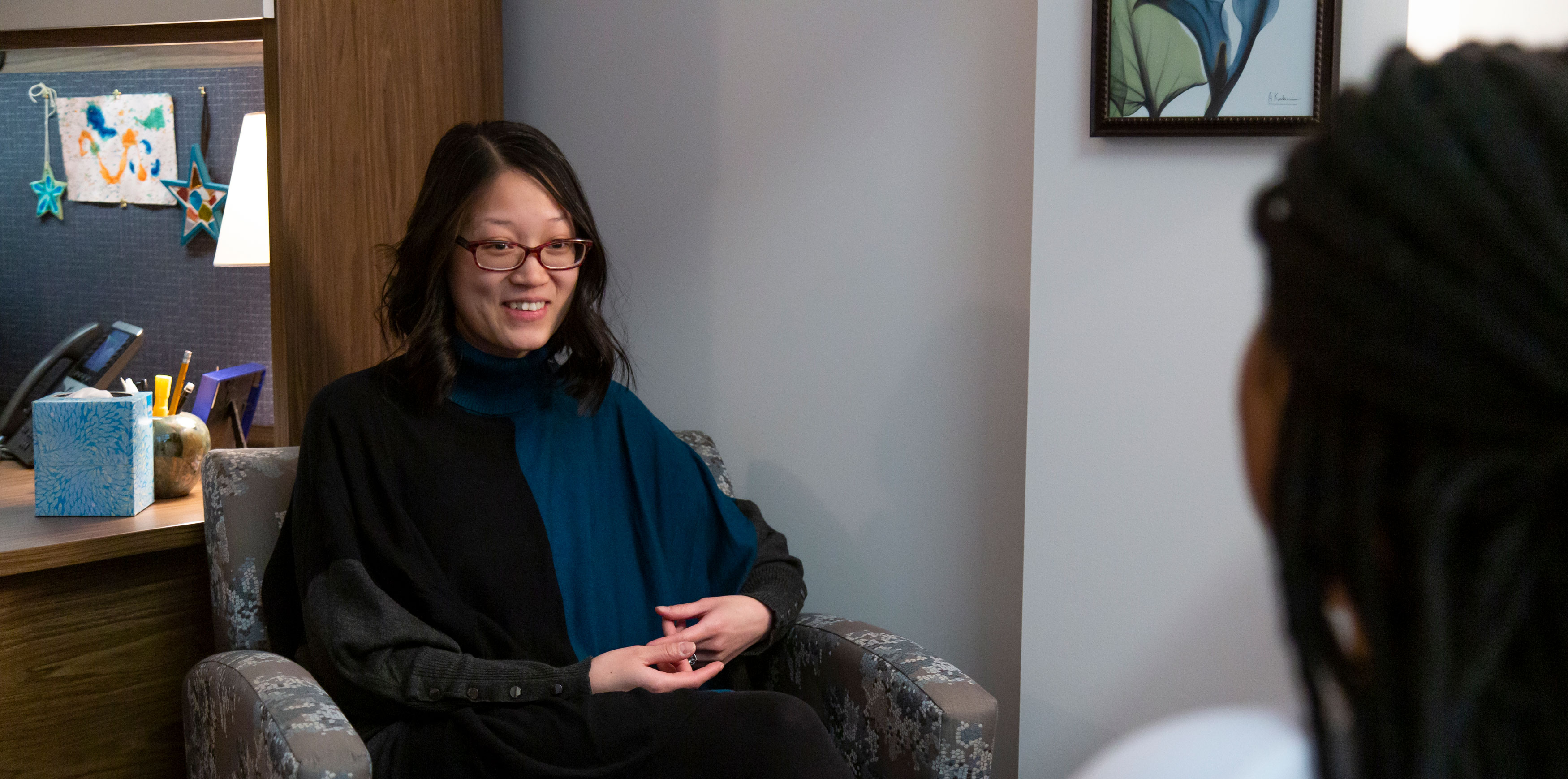
Your first appointment with CAPS is typically a 15- to 20-minute phone conversation with a clinician.
You’ll discuss the reason(s) you’re seeking mental health services and what kind of services you’re interested in. Then the clinician will recommend next steps — whether that be services with CAPS or a referral for community-based care.
You can review the CAPS Staff Directory to learn more about our clinicians.
CAPS provides brief, focused individual treatment for a variety of concerns that often affect students’ personal, academic and work life.
During your first counseling appointment, you and a clinician will meet to discuss your concerns and needs, as well as the nature, focus and frequency of sessions.
CAPS’ primary goal is to work with students to address their immediate concerns through short-term therapy and, as needed, to connect them with additional resources, both on and off campus.
CAPS’ Trauma & Resilience Specialist provides brief, focused individual treatment and advocacy support for people who have had traumatic experiences that are affecting their personal and/or academic lives.
Counseling is available even if the event(s) happened off campus or before you were a student at UAlbany.
During your first appointment, you will meet with the Trauma & Resilience Specialist to discuss your concerns and needs, and to plan for your short- and long-term care.
Many students are balancing school with other commitments, like relationships.
If your main concern is communication and other relationship difficulties with your partner(s), then relationship counseling may be the right choice for you.
Students are eligible for relationship counseling if all parties in the relationship are registered UAlbany students.
Participating in a group is a great way to:
Make connections
Feel supported
Learn life skills
Navigate emotions
Feel empowered
Manage stress
Maintain wellness
Psychiatry services are provided by the CAPS Psychiatrist. UAlbany students may also use the free SUNY Student Tele-counseling program and CAPS can help you with a referral.
A provider will meet with you to assess your needs, determine if medication may be a useful treatment for you and develop a medication treatment plan. We encourage you to ask any questions you may have about medications.
If you’re also working with CAPS clinician for individual, couples or group counseling, your psychiatric provider will work with that clinician to coordinate your treatment.
Psychiatric appointments are 15 to 30 minutes long. Typically, you’ll meet with your provider once or twice a month at first, then less frequently once you've found a medication and dosage that works well for you.
Note: CAPS cannot provide 24/7 urgent or emergency psychiatry services. Students with urgent concerns regarding their medication should confer with their primary care physician or urgent care — or, in an emergency, call 911. For additional guidance, please refer to our Emergencies page.
Psychiatric providers don’t perform diagnostic evaluations for Attention-Deficit/Hyperactivity Disorder (ADHD).
However, they may be able to prescribe ADHD medication if you provide CAPS with documentation of a comprehensive assessment that led to a diagnosis of ADHD or a letter from a licensed practitioner who has been treating you. That letter must include:
Diagnostic and psychoeducational testing is designed to answer questions you may have regarding your academic achievement and progress and/or your emotional and behavioral functioning.
If you’re interested in testing or learning more about testing, you should first meet with a CAPS clinician to discuss your needs. Make an appointment.
The clinician will determine whether to make a referral to the CAPS Assessment Committee for psychological assessment. The committee reviews all referrals and determines if/what assessment and testing procedures are appropriate.
Several concerns are commonly addressed through assessment, including:
Learning disabilities
Attention concerns
Emotional and behavioral concerns, such as depression, anxiety and psychological conflicts that may contribute to difficulties in school and/or with family and peers
An assessment that uses various testing methods may help determine the source of your concerns and help us formulate a helpful diagnosis, recommendations and referrals.
There are some assessment concerns that are better addressed by off-campus, local providers. Assessment concerns for which CAPS would most likely provide you with a referral include:
Court-mandated assessments
Testing for Autism Spectrum Disorder and other neurodevelopmental disorders
Evaluations for Traumatic Brain Injury or other neurological conditions
Assessment of eating disorders, including the level of intensive care needed
Bariatric evaluations or evaluations for assisted reproductive services
Career testing or fitness of duty evaluations
Custody or forensic evaluations
Vocational or disability evaluations
Evaluations for standardized testing accommodations
Review our “Referrals to Local Providers” section below for more information.
The STEPS programs offer personalized feedback on alcohol and cannabis use.
STEPS focuses on alcohol, while STEPS 2.0 focuses on both cannabis and alcohol. STEPS-R is available for students who have already completed STEPS and/or STEPS 2.0.
Students may participate voluntarily or be referred to the program following a disciplinary sanction related to alcohol and/or other drugs.
Information you share as part of any STEPS program is kept confidential by CAPS. This includes survey responses and information discussed during your appointment. For students who are required to participate in STEPS due to a sanction, only information about your completion of the program is shared, with your consent.
Please email [email protected] with any questions.
CAPS Connect is a program that helps residential students who have experienced suicidal thoughts or behaviors get the help and support they need.
CAPS Connect is required for on-campus residents who display suicidal behavior(s), such as:
Making a suicide threat, verbally or in writing,
Making plans or preparations for suicide
Inflicting serious injury on yourself
Within 10 days of your referral, you’ll participate in one or two 2-hour consultations with a licensed psychologist from CAPS.
During your session(s), the psychologist will:
Assess your present level of suicide risk
Evaluate your willingness and ability to refrain from suicidal threats and behaviors in the future
Recommend psychiatric, psychological, academic and/or other support services, as needed
Help you develop a Connect Plan — a plan for coping with difficult emotions and experiences, and for accessing the services you need to keep yourself safe
Clients are assured of confidentiality in accordance with ethical and legal standards. Your visits and conversations do not become part of your academic record.
We will need to contact your support system to help you, so please bring the following to your appointment:
Name(s), address(es) and phone number(s) for your parent(s)/guardian(s)
Name, address and phone number of any current mental health treatment provider
We will forward your Connect Plan — a plan for coping with difficult emotions, accessing the services you need and keeping yourself safe — to the individuals you identify, so they can help you follow your plan.
We will let Residential Life know once you have successfully completed the CAPS Connect Program. If Residential Life refers you to CAPS Connect and you fail to complete the program, you will be referred to Community Standards.
CAPS is typically able to treat students with the following concerns:
Mild to moderate anxiety or depression
Social anxiety, loneliness or difficulty connecting socially
Relationship concerns, such as conflict with a roommate, romantic partner or friend
Adjusting to college or a new culture
Exploring sexual orientation, race or gender identity
Experiences of oppression and/or discrimination
Low self-esteem or self confidence
Academic stress or learning concerns
Body image or eating concerns
Family-related concerns
Lifestyle habits, such as sleep, eating, technology, and alcohol and/or other drug use
Grief and/or loss
Stabilization and support after an upsetting or traumatic experience
Students sometimes need or want more intensive, longer term or specialized care that exceeds what CAPS can provide. In those cases, CAPS can help the student find community-based care.
Concerns that are most often beyond CAPS' Scope of Care include:
Eating disorders
Severe mood or anxiety disorders
Psychotic disorders
Chronic suicidal risk and/or behavior
History of multiple psychiatric hospitalizations
Moderate to severe alcohol and/or other drug problems
Moderate to severe PTSD, or an interest/need for intensive or specialized post-trauma treatment
Severe OCD
Moderate to severe personality disorder
Other concerns that require a highly structured, intensive or specialized treatment program
There are also other instances in which we will refer a student to community-based care, such as:
Students who want or need long-term individual therapy and/or ongoing weekly therapy sessions.
Students whose assessment and testing needs fall outside our scope of care. (See the “Assessment & Testing” section above for more information.)
Students who don’t keep their scheduled CAPS appointments, either by repeatedly canceling/rescheduling appointments and/or by having three no-shows in one academic year.
Students who are unable or unwilling to provide enough information for CAPS staff to adequately assess their needs.
If you need a referral, please make an appointment.
You can also use the ThrivingCampus and/or Psychology Today referral databases to connect with a provider best suited to your needs.
Visit the Health & Well-being homepage for in-person and virtual events, workshops and programs for students and other campus community members, as well as opportunities for classes, student organizations and other groups to partner with us on programming.
Counseling & Psychological Services (CAPS) often assist in University administrative processes that involve medical and mental health records.
However, those processes are managed by separate offices. Please contact the offices listed below with any questions and visit their websites for detailed instructions:
All CAPS clinical services are confidential. Our staff follow legal and ethical standards, which prohibit the sharing of any clinical information.
This means that, unless we have written permission from the student, CAPS does not provide anyone with information about a student and does not let others know if a student is receiving CAPS services.
We are required by law to maintain records of our contacts with you. These records are maintained securely at CAPS and are not a part of academic or other University records.
The only exceptions to confidentiality are when a person’s life is in danger, when there is child or elder abuse, or when a court issues a subpoena for your clinical information.
Students may request a copy of their records in person or via mail, email or fax.
To request records in person, you must show your student ID or government-issued ID.
To request records via mail, email or fax, please follow these instructions:
Complete the Authorization to Release Records Form.
Scan or take a photo of your student ID or government-issued ID.
Send those two documents to CAPS and include your email address and phone number.
Email: [email protected]
Fax: 518-442-3096
Mailing Address:
Counseling & Psychological Services
Health & Counseling Services
1400 Washington Avenue
Albany, NY 12222
Questions? Please call CAPS at 518-442-5800.
CAPS does not provide assessments or documentation for Emotional Support Animals (ESA).
Please see the University’s Animals on Campus Policy for further information regarding campus policies and procedures on Assistance Animals.
Prior to seeking an evaluation, interested students are encouraged to contact Disability Access and Inclusion Student Services for guidance on ESA eligibility, requirements and documentation.
1400 Washington Avenue
Albany, NY 12222
United States
Have an urgent mental health concern or emergency? Please visit our Emergencies page for 24/7 resources.
CAPS is open on weekdays, year-round.
Fall & Spring Semesters: 9 a.m. to 4:30 p.m. Monday through Friday
Summer & Winter Sessions: 8 a.m. to 3:30 p.m. Monday through Friday
The Health & Counseling Services building is on the Uptown Campus. The building is located on the south side of Dutch Quad, at the ground level facing the athletic fields. Download a campus map.