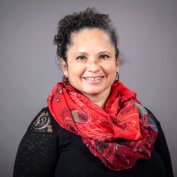
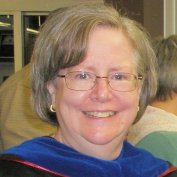
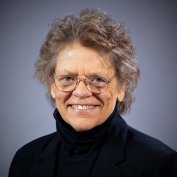
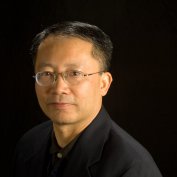
Micki
Friedlander, Ph.D.
Director of Doctoral Training
Thanks for your interest in our doctoral program! I'd like to highlight some aspects of the doctoral program that are, in my opinion, exceptional.
First, all our faculty are committed to training in both clinical work and scholarship. With respect to clinical training, not only do we personally supervise students' first practica (in vivo and on video), but many of us are practicing psychologists ourselves -- therapists in private practice and consultants to community agencies. Thus, we bring not only expertise but also an understanding of the health care system to our work with students. With respect to scholarship, we are active researchers, nationally and internationally recognized. We offer research assistantships to all incoming doctoral students, and the mentorship that takes place in these research teams is invaluable.
First-year students collaborate on projects with more advanced students, and many present their work at conferences and publish studies in well-respected journals. Students who are interested in pursuing academic careers find that the faculty encourage and support their independent research efforts, and University funding is available to support graduate student research, and conference travel to present research.
Second, we've been successful, I think, in creating a friendly, warm, cohesive atmosphere in the program. The faculty are attuned to students' individual needs, and we are committed to providing a welcoming atmosphere for students of all races, ethnicities, cultures, ages, and lifestyles. Our class sizes are small and interactive, and we facilitate collaboration on group projects. Incoming students are given a "buddy" (an assigned friend) to help them get settled.
Also, we know how to have fun. In Fall, 2005, we hosted an alumni reunion to celebrate our 25 years of (full) APA accreditation and the many accomplishments of our 187 PhD grads. One outgrowth of the first reunion in 2000, which came about due to the excitement generated by having current and former doctoral students meet, was the launch of our Alumni Mentoring Project. Interested doctoral students are put in contact with alumni who have volunteered to be mentors, matched by common interests and career goals. Mentors offer not only tips on academic and professional matters but serve an important support function (e.g., how to balance work and play in graduate school!). Since many of our alumni have remained in the Albany area, these mentors are able to meet with students personally. Others keep in touch by phone and e-mail. As each class graduates, they will be asked to mentor a new first-year student.
Third, we've devised a doctoral program that is sensitive to students' professional development. Our coursework is developmental, progressing from basic skills (e.g., in assessment, research design and statistics, counseling theory and practice, and career development) to more advanced, integrative work in seminars. On the practical side, we begin with pre-practicum (for first-year students without master's degrees), which is an experiential, interviewing skills course. Second-year students see clients at the Psychological Services Center, our training clinic (shared with the clinical psych program), which serves the community. The Center provides individual, couple, group, and family therapy, career services, and psychodiagnostic assessments. Third- and fourth-year students continue their practica in college and university counseling centers, community agencies, and hospitals (Veterans' Administration, state and private psychiatric centers, rehab clinics and general hospitals), supervised by affiliated faculty, all of whom are licensed psychologists. Some continue to work at the psychological services center doing court-ordered family assessment and psycho diagnostic test batteries. With all these clinical experience, our students do very well in the national internship match.
Fourth, we have an excellent track record in funding doctoral students. Since ours is a full-time program, we aim to fund all students throughout their time with us. Although we can't guarantee funding beyond the current year (since we are a state school that depends on the NY state budget), virtually all PhD students who request funding have received some aid. Typically, first-year students have research assistantships, second-year students have research or teaching assistantships (they teach our undergraduate courses in counseling theories, multicultural issues, and sport psychology) or work in the Career Development Center or Middle Earth, the University's peer counseling center. Third-year students tend to have clinical or administrative assistantships, and more advanced students can have supervisory assistantships.
Fifth, We are exploring several new opportunities for international study (in China, Trinidad/Barbados, and Portugal). One already existing, unique, and exciting aspect of our program is the opportunity for students to study in Spain. We have developed an exchange program with the Universidad de La Coruña , in Galicia, northwestern Spain (on the Atlantic coast!). Our students take part in their Postgraduate Course in Family Intervention, which is a series of seminars taught by professors from Europe and the U.S. The program also offers opportunity for research collaboration and clinical work with families in La Coruña.
Sixth, we are continually involved in evaluating and improving our program. Students are encouraged to be active in the Doctoral Student Association, in our annual Diversity Conference (which is planned, organized, and run by doctoral students), in the Program Evaluation Committee, and in various other ad hoc Departmental and University committees. Many of our students use the leadership skills they develop in these activities in their later professional pursuits.
Finally, our graduates are quite successful in getting licensed as psychologists (in many different states) and in finding post-docs and other employment. The majority of grads work in clinical settings (community agencies, hospitals, counseling centers), but a large proportion are employed full- or part-time in academic institutions. See the letter from alumni link for some personal accounts.
I welcome all inquiries about our program. You can also take a look at Frequently Asked Questions. My phone number is (518) 442-5049. My e-mail address is mfriedlander@uamail.albany.edu
Micki Friedlander, PhD
Professor
Director of Doctoral Training