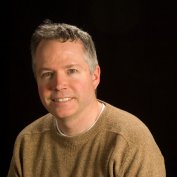
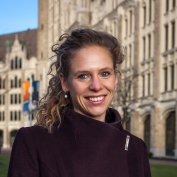
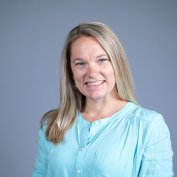
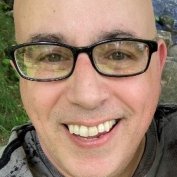
Norma Poll, Ph.D.
Senior Research Associate
Association of American Medical Colleges

Since I grew up in New York City, it initially was a challenge to adjust to Albany in 1997. While only 2 hours from home, the adjustment was more than just moving to a small city. It was moving into a predominately White, middle class environment - graduate school, which was foreign for a Nuyorican from the South Bronx. However, the smaller community within the University at Albany’s Department of Counseling Psychology helped to make Albany feel more like home. It was evident in the classroom, the variety of assistantships, research activities and through mentoring that the faculty was committed to nurturing all students and their diverse interests.
I had many enriching clinical experiences including the University Counseling Center and St. Mary’s Hospital, where I used my bilingual skills. With faculty support, I pursued my interests in public policy, public management and qualitative research by taking additional courses and completing two public policy fellowships. Also, in collaboration with graduate students in other departments, we started a multidisciplinary graduate student organization focused on Latino issues, and a bilingual publication in which the faculty served as guest editors.
The Counseling Psychology faculty and staff provided a “secure base” from which to explore, learn and succeed. After completing my internship and obtaining my license to practice in New York, I embarked on a different route in policy and research. Currently, I work as the Senior Research Associate in the Division of Diversity Policy and Programs at the Association of American Medical Colleges. Each day, I realize that the Counseling Psychology program provided me with a solid foundation in research and practice which enables me to work in a variety of areas to support diversity and cultural competence initiatives in the health professions. I am grateful for that!
Nicholas Ladany, Ph.D. (1992)
Professor and Chair
Department of Psychology
Lehigh University
Email: nil3@lehigh.edu

I was a student in the University at Albany's Counseling Psychology program
from 1986-1992. More than anything else, I remember the extraordinary number
of research opportunities available to me and other students. In fact, the
only thing more plentiful in Albany was the snow (this of course comes from someone
who grew up in Washington, DC!). The research projects on which I worked pertained
to counselor supervision, research methodology and statistics, and health psychology.
By the time I graduated, I had been mentored by, and published with, four of
the faculty. Moreover, I learned the consequences of saying "yes!" I
also had diverse practicum training experiences in sites such as the Psychological
Services Center (community mental health agency), Siena College (counseling center),
Middle Earth (counseling center), Berkshire Farm Center (inpatient adolescent
facility), as well as internship at the George Washington University Counseling
Center. My overall training served as an excellent foundation when it came time
to look for a "real job." My first job after graduating was a visiting
faculty member in the Counseling Psychology Program at the University of Maryland.
I then spent three years at Temple University as an Assistant Professor and am
currently at Lehigh University as a Professor. My current research
interests are counseling and supervision processes and outcome, using both quantitative
and qualitative methodologies. Clearly my training at Albany was instrumental
in preparing me for my past and current professional work. I'm happy to talk
with anyone interested about my experiences and can be reached by e-mail at the
above address.
Elizabeth Skowron, Ph.D. (1994)
Associate Professor
Penn State University
What stands out most for me about my experience as a graduate student
at Albany is the faculty's commitment to training and willingness to develop
mentoring relationships with students holding a variety of interests. Likewise,
my research/science and psychotherapy/practice training were equalMarch 12, 2008lly-recognized experts in their
areas of research, the opportunities for collaboration and student-initiated
research abound. At the same time, the faculty invest in providing students with
outstanding and diverse clinical training...and they deliver. Practicum training
is supervised by program faculty, all of whom have ongoing private practices
or do community consultation. Practicum training includes excellent ratios of
client contact to supervision time and individual plus small group supervision
to enhance skill development. Quality over quantity!
When I left Albany and headed out to my internship training site (the
Palo Alto Veterans Administration Medical Center in California), I was a little
concerned about being only one of two counseling psychology interns there. My
concerns were unfounded, however, and as the year progressed, I was extremely
pleased to see that my training in case conceptualization, assessment, and intervention
strategies, vocational development, and clinical supervision matched up well
against the other interns who had also trained in quality programs.
In the years since graduating, I have worked as a post-doctoral fellow
(at Langley Porter Psychiatric Institute, University of California--San Francisco)
and as a faculty member in APA-accredited clinical and counseling psychology programs.
During each new experience, I found myself reflecting with much gratitude upon
my years at Albany and the quality training that has served me so well in my
career.
Joyce Dewitt-Parker, Ph.D. (1999)
Staff Psychologist
University at Albany Counseling Center
One of the many reasons why I chose the Counseling Psychology Program
at SUNY-Albany is that the faculty is comprised of psychologists who truly embrace
the scientist-practitioner model. In fact, many faculty members continue to remain
active within the local community as practitioners and consultants, in addition
to being active at the national level. I found the faculty to be sensitive to
multicultural issues and very supportive of my personal and professional development.
I began doctoral training in 1994, with a Master's Degree and six years of mental
health experience. I successfully completed internship with the Albany Medical
College Psychology Internship Consortium and received my doctorate in August,
1999. I joined the University Counseling Center of UAlbany as a Staff Psychologist
on September 1, 1999.
Jennifer Hotaling, Ph.D. (2000)
Licensed Psychologist, State Psychiatric Center
Albany, NY
I was a student in the University at Albany’s Ph.D. program in Counseling
Psychology from 1994 to 2000. Through the program, I was able to work in a variety
of settings and interact with a number of area psychologists. By the time I went
on internship, I had a solid education and a broad range of experiences. In 1999-2000,
I completed my internship at the Brockton Veterans Affairs Medical Center/Harvard
Medical School. There, with more excellent supervision, I continued to gain personal
and professional experience. After a year working in community mental health
in order to gain experience and supervision for licensure, I was licensed in
August 2001. In September 2001, I started my current job at a state psychiatric
hospital, working on a geriatric/medical unit for people with chronic mental
illness. I am very happy working with an interesting population and an excellent
interdisciplinary team.
Timothy U. Ketterson, Jr., Ph.D. (2000)
Center for Research on Telehealth
& Healthcare Communications
Dept. of Clinical and Health Psychology
University of Florida
Gainesville, FL 32610-0165
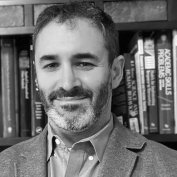
Currently (1/03), I am in my second year as a Research Assistant Professor
in the Clinical and Health Psych Dept at the University of Florida. My
appointment is in the Center for Research on Telehealth and Healthcare Communication
(CRTHC) where I collaborate with my colleague and mentor, Robert Glueckauf,
Ph.D., on most, if not all, center-related projects in some way. Check
out our Center website (www.floridatelecare.com) and read the "about us" section
for more details on me, our staff, and current projects.
I consider myself to be a geropsychology-trained "(clinical)
health psychologist" with a major interests in aging (and human development
from a life-span developmental perspective), health promotion, program evaluation
/ outcomes research, issues surrounding the use of emerging technologies (e.g.,
videoconferencing, the Internet) to deliver mental health and health promotion
interventions / health information. Grant administration, supervision of
project staff (i.e., undergraduates, masters-level students in rehabilitation
counseling, counselor education, clinical psychology (en route to the Ph.D.),
pre-doctoral interns, and post-doctoral fellows), grant writing, manuscript preparation
/ writing, brainstorming regarding research design, database construction and
management, data analysis / interpretation, idea generation for potential grant-funded
projects, problems solving related to grant management, and public speaking /
networking throughout the state an at the state capitol are all part of
my job. Also, I have been able to co-teach, along with my Center
colleagues, an undergraduate survey course on "Telehealth and Healthcare
Communications." We will be developing a Program Evaluation course
soon, which should prove to be quite interesting as well.
While mine is not necessarily a glamorous job, it is interesting
to me (for now). I feel as if I am contributing both to science and community,
and it does keep me "off the streets" as Dick Haase was known to
say. Ultimately, I'm still unsure where I'll end up in the grand scheme
of things but life in Gainesville and UF is good. I also have entertained
a career as a VA researcher / clinician, which would be an ideal "fit" for
me. Currently, I am heading up a sub-project (an outcomes core)
on an NIH PPG at the Gainesville VA Brain Rehabilitation Research Center
(BRRC) which is one of 13 national centers of excellence within the VA system. So,
in the end, to borrow a concept from Carl Rogers, I guess I am always "...in
the process of becoming" and I kind of like it that way.
I suppose I should add a statement about the high quality of the
training I received in Counseling Psychology at UA and the wealth of opportunities
(a.k.a. breadth of training experiences) that were offered me. I
value my UA experiences very highly and would strongly recommend prospective
students consider applying to the program.
Lucy Cardella, Ph.D. (2001)
Project Coordinator, The Abacus Group
Cranston, RI
The University at Albany's Counseling Psychology program afforded me the
opportunity to develop critical thinking skills both as a clinician and researcher,
assume leadership roles, create my own specialty track in health psychology,
and grow professionally through challenging experiences. This was conducted in
the context of highly collegial relationships with both faculty and students.
I'd like to share with you significant aspects of my experiences.
As a returning, nontraditional student, I arrived at the program with
some skills and knowledge, having been a practicing school psychologist for a
number of years. First and foremost, I felt that faculty respected the level
of professional experience that I brought while continuing to assist me in further
development and expansion of my clinical skills. The clinical experiences gained
in the program not only provided a solid foundation of skills, but allowed me
to broaden and deepen my knowledge in the area of health psychology. My three
years at the Psychological Services Center (our primary training center), as
a practicum student, graduate assistant, and assistant director, were integral
to my evolution as a clinician and also afforded me supervisory opportunities.
The flexibility of the department was evidenced by their willingness to allow
me to seek out clinical health psychology training via a practicum at the Glens
Falls Hospital in their Chronic Pain Clinic and Comprehensive Cancer Center.
Additionally, a previous student created a practicum opportunity at the Stratton
Veteran's Affairs Medical Center in neuropsychology in which I also participated.
Lastly, my experiences as an assistant health educator at the University Counseling
Center rounded out my preparation in health psychology.
The doctoral program promoted the development of research skills, not
only throughout coursework, but within exceptional opportunities that I would
like to highlight. First, I participated in a research team that focused on student
research. This was invaluable to me in developing my dissertation idea and learning
critical thinking about research as I refined my own research and listened to
the ideas of peers. Secondly, a proseminar dedicated to the development of a
dissertation proposal were integral to the development of research skills. Not
only did this course provide the necessary structure to proposal development,
it gave me access to a seasoned researcher who assisted me in refining my research
and critical thinking skills through his own vast knowledge and through the creation
of a peer proposal review process. Lastly, I was able to garner project director
skills via my assistantship at the Evaluation Consortium (a Educational Psychology
center that conducts program evaluations) and via the coordination of faculty
research projects. To a student who primarily worked as a clinician and had trepidation
about developing a research proposal, these experiences were invaluable. They
were also the envy of my friends who were in other doctoral programs without
all of these opportunities!
Leadership roles were also plentiful and well-respected by both the student
and faculty community. The faculty requested student feedback on various topics.
I represented my class in providing feedback on the doctoral qualifying examinations.
Additionally, I acted as a student mentor to first year doctoral students and
participated in the review of doctoral program applications.
This training promoted my development as a well-rounded professional and
prepared me for future positions. My training continued as an intern and post-doctoral
fellow in clinical health psychology in the VA Connecticut Health Care System.
Through these experiences, I worked with a variety of patients, especially those
with chronic medical conditions, and developed and conducted health promotion
programs. Additionally, I further refined my supervisory skills and research
skills. The culmination of this journey is a research position in a cutting-edge
field, e-health technology and communication, in a private consulting firm started
by five psychologists. However, where the journey began is integral to where
I ended up. I am grateful for the chance to have been a part of the University
at Albany doctoral program.