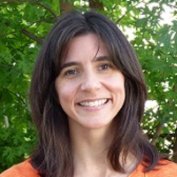
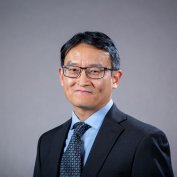
| Kristen Campbell
Wilcox is a Visiting Assistant Professor in the
Educational Theory and Practice Department at the
University at Albany. Her areas of research interest
are in the use of qualitative methods at the intersections
of language, culture, and cognition in multicultural
contexts. In this vein, she has investigated the
impacts of high stakes tests in diverse educational
settings and best practices at the elementary and
middle school levels. Her analysis of the ways language,
culture, and cognition come into play in college-level
second language classrooms received the Department
of Educational Theory and Practice Outstanding Dissertation
Award in 2005. She has taught English as a second
and foreign language at the Kindergarten through
doctoral levels in the United States and Puerto
Rico, in addition to coordinating second and foreign
language programs in a Brazilian K-12 International
School.
Selected
Publications:
Wilcox, K.C.
(2009). Cognitive dimensions of writing across subject
areas: A summary of ongoing research with ELLs.
Idiom, 39(1), 10-21.
Wilcox, K.C. (2008). Book
Review: Pathways to Multilingualism: Evolving Perspectives
on Immersion Education. Teachers College Record.
Wilcox, K.C. (2008). What
makes high schools work: Findings from the 2007-8
high school best practice study in New York State.
Albany, NY: Albany Institute for Research in Education,
University at Albany.
Wilcox, K.C. (2008). White
Plains High School case study. Available at http://www.albany.edu/aire/.
Wilcox, K.C. (2008). Warrensburg
High School case study. Available at http://www.albany.edu/aire/.
Wilcox, K.C., & Angelis,
J. (2008). What makes middle schools work: Findings
from the 2006-7 middle school best practice study
in New York State. Albany, NY: Albany Institute
for Research in Education, University at Albany.
Wilcox,
K.C., & Baker, L. (2007).
Methodological approaches toward the study of
best practices in elementary schools. Cambridge
Scholars Press.
Wilcox, K.C. (2007). Conceptualizing
culture in ESL classrooms. Idiom, 37(2).
Freeman,
M., Mathison, S., & Wilcox, K.C. (2006). Performing
parent dialogues on high-stakes testing: Consent
and resistance to the hegemony of accountability.
Cultural Studies: Critical Methodologies,
6(4), 460-473.
Wilcox, K.C. (2005). What
makes elementary schools work. Albany, NY:
Albany Institute for Research in Education, University
at Albany.
Wilcox, K.C. (2005). Cultural
dissonance in the ESL classroom: A study of two
college classrooms. Unpublished Dissertation,
University at Albany, Albany, NY.
Wilcox,
K.C. (2005). New York Framework Case Study:
Ulysses Byas. Available at http://www.just4kids.org/
Wilcox,
K.C. (2005). New York Framework Case Study:
Gotham Avenue. Available at http://www.just4kids.org/
Wilcox,
K.C. (2005). New York Framework Case Study:
Traphagen. Available at http://www.just4kids.org/
Wilcox,
K.C. (2005). New York Framework Case Study:
George M. Davis. Available at http://www.just4kids.org/
Wilcox,
K.C. (2004). Doing the Best on the Tests: A
Suburban Elementary School's Response to High Stakes
Tests. Available at www.crsep.org.
Mathison, S., Freeman, M.,
& Wilcox, K. (2004). Creating a Culture
of Preparedness: One Suburban Middle School's Experiences
with High Stakes Testing. Available at www.cresp.org.
Mathison, S., Freeman, M.,
Wilcox, K., & Sauer, L. (2002). High stakes
testing in K-12 schools: An annotated bibliography.
Available at www.eval.org.
Wilcox, K.C. & Ryder,
R. (2002). Standardized testing and improving educational
opportunity in Brazil. The Educational Forum,
66(3), 214-219.
Peer-reviewed
Journal Articles:
Wilcox, K. C. (in press). Civic responsibility in
higher performing middle schools. Education and
Urban Society.
Wilcox, K. C. (2009). The impact of student beliefs
on the effectiveness of video in developing cross-cultural
competence. CALICO Journal, 27(1).
Wilcox, K. C. (2007). Listening to dissonance in
ESL classrooms. Critical Inquiry in Language Studies.
4 (4). 265-282.
Freeman, M., Mathison, S., & Wilcox, K. C. (2006).
Performing parent dialogues on high-stakes testing:
Consent and resistance to the hegemony of accountability.
Cultural Studies: Critical Methodologies, 6(4),
460-473.
Wilcox, K.C. & Ryder R. (2002). Standardized
testing and improving educational opportunity in
Brazil. The Educational Forum, 66(3), 214-219.
Books
and Book Chapters:
Wilcox, K.C. & Angelis, J. (2009). Best Practices
from Higher Performing Middle Schools. TC Press.
Wilcox, K. C. (2008). Re-authoring: Language learners
and shifting identities. In M. Mantero, C. P. Miller
& J. L. Watzke (Eds.), Readings in language
studies (Vol. 1, pp. 25-43). St. Louis, MO: International
Sociey for Language Studies, Inc.
Wilcox, K. C., & Baker, L. (2006). "What
works" in best practice research: Methodological
approaches toward the study of best practices in
elementary schools. In M. Firmin & P. Brewer
(Eds.), Ethnographic and qualitative research in
education (Vol. 2). Newcastle, UK: Cambridge Scholars
Press.
Presentations:
"Creative
Methods in ESL Classroom Research". Invited
presentation for the Annual International TESOL
Conference, Seattle, WA, 2007.
"School Ethos and Best Practices in Elementary
Schools". Invited presentation for the
Annual Meeting of the American Educational Research
Association (AERA), Chicago, IL, 2007.
"Listening to Dissonance in ESL Classrooms".
Invited presentation for the International Society
of Language Studies Annual Conference (ISLS), Honolulu,
HI, 2007.
"Conceptualizing Culture in the ESL Classrooms".
Invited presentation for the New York State TESOL
Conference, Saratoga Springs, NY, 2006.
"Methodological Approaches toward the
Study of Best Practices in Elementary Schools".
Invited presentation for the Annual Ethonographic
and Qualitative Research in Education (EQRE) Conference,
Cedarville, OH, 2006.
"Using the Listening Guide Method for
Interpreting Second Language Classroom Data".
Invited presentation for the Annual Ethnographic
and Qualititave Research in Education (EQRE) Conference,
Cedarville, OH, 2006.
"Video in the Second Language Classroom:
A Design for Developing Cross-Cultural Competence".
Invited presentation for the Annual TESOL Conference,
San Antonio, TX, 2005.
"Hegemony in English Language Teaching".
Invited presentation for the Annual Meeting of the
American Educational Research Association (AERA),
Montreal, Canada, 2005.
"Cultural Dissonance int he College ESL
Classroom". Invited presentation for the
Annual New York State TESOL Conference, Syracuse,
NY, 2004.
"Eliciting Children's Experiences with
State Tests: Challenges and Rewards".
Invited presentation for the Ethnographic and Qualitative
Research in Education Annual Conference (EQRE),
Albany, NY 2004.
"Thinking Critically about 'Critical Thinking'
in Teacher's Beliefs about State Standardized Testing".
Invited presentation for the Annual Meeting of the
American Educational Research Association (AERA),
San Diego, CA, 2004.
"I Hear When. I Don't Hear What":
Performing Parental Dialogues on High Stakes Testing.
Invited presentation for the Family, School, Community
Partnership SIG business meeting at the Annual Meeting
of the American Educational Research Association
(AERA), Chicago, IL, 2003.
Turning the Tables in the ESL Classroom.
BRAZTESOL convention, Curitiba, Brazil, 2000.
Fall 2009
Courses:
ETAP 501, Class #26580 - The Teaching of
English to Speakers of Other Languages (3
Credits)
Design of lesson plans, construction of test items:
analysis of content to be taught, collection of
resources used in teaching, analysis of linguistic
development of students, techniques for developing
and evaluating audiolingual, reading, and writing
skills. Includes an "application module"
with students learning English as a second language.
ETAP 652F, Class #24918 - Teaching World
Languages in a Secondary School (3 Credits)
Focus is on current research, theory, and practice
in world language instruction for adolescents. Designed
for beginning and advanced classroom teachers, the
course promotes inquiry into major contemporary
issues concerning world language instruction; developmental
needs, standards and assessments, methods for promoting
engaged and critical reading and speaking, and the
role of culture.
ETAP 777, Class #23896 - Qualitative Research
Methods
(3 Credits)
Qualitative research methods and issues with focus
on ethnographic techniques; participant observation
and interviewing: analyzing, interpreting, and collecting
data. Attention to problems generic to fieldwork;
emphasis on formation of research questions (entry
into field settings, ethical issues in fieldwork,
qualitative analysis and theory building). |