|
ETAP Faculty
Carol
Rodgers
Associate Professor
OFFICE
: ED 108
PHONE
: (518) 442-5003
FAX: (518) 442-5008
EMAIL: rodgerca@sover.net
|
|
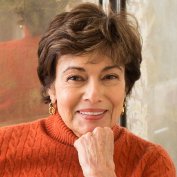
Carol Rodgers is associate professor of education
in the department of Educational Theory and Practice.
Before coming to SUNY Albany in 2000, she taught
for 20 years in the Masters of Arts in Teaching
Program at the School for International Training
in Brattleboro, Vermont. Her teaching and research
interests include reflective practice, the historical
roots of reflection in the work of John Dewey and
early progressive teacher education efforts, reflective
teacher education and professional development.
She is currently interested in understanding how
teachers learn to shift their attention from themselves
and their teaching to their students and their learning.
Education
- B.A. Bates College 1976
- M.Ed. University of Massachusetts, Amherst
1984
- Ed.D. Harvard Graduate School of Education
1998
Last
Affiliation
- School for International Training, Brattleboro,
VT
Field of Specialization
- Education and the Development of the Practice
of Reflection
Selected Publications
Rodgers, C. (2002) Defining reflection: Another
look at John Dewey and reflective thinking, Teachers
College Record. Vol. 4, Number 4, pp. 842-866.
Rodgers, C. (2002) Seeing student learning: Teacher
change and the role of reflection, Harvard Educational
Review. Vol. 72, Number 2, pp. 230-253.
Fall
2008:
ETAP 621, Class #3818 - Understanding Learning
nad Teaching (3 Credits)
This course is an introduction to what it means
to observe, see and make sense out of learning in
educational environments. It asks participants to
analyze what happens in these environments (learning
and teaching, student interactions, teacher-student
relationships, etc.) and take concrete action based
on that analysis.
ETAP 811, Class #8739 - John Dewey and
the Roots of Progressive Education (3 Credits)
Introduction to Dewey, and his relevance to contemporary
and teacher education. A la Dewey, experience is
woven into theory and theory into experience. Themes
include: experience, reflection, community, continuity
and interaction, democracy, and Dewey's definition
of education. Group and individual projects. Readings:
Selected works by Dewey and some secondary sources.
|
|