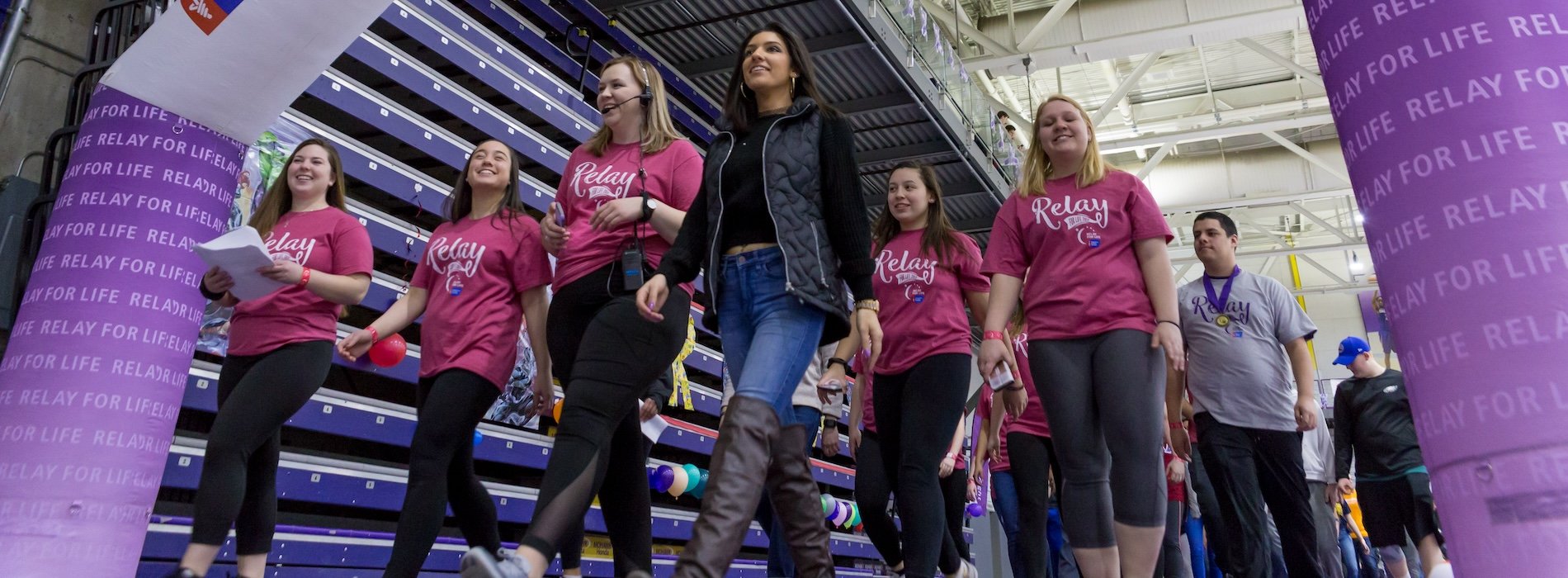



Community engagement in the United States, and indeed across the globe, is more important than ever. Social welfare retrenchments, globalization, economic insecurity and changing levels of social capital have challenged the most marginalized people to have their voices heard and needs met. Community engagement is one of the central mechanisms for fulfilling the promises of a democratic society.
At the Community Service Fair, you can meet representatives from 50+ of our partner organizations to learn how you can engage in meaningful service for academic credit!
Date: Wednesday, October 7, 2026
Time: 10 a.m. to 2 p.m. (Partners may arrive after 9:15 a.m.)
Location: LC Concourse
Partner organizations are invited to join us for our CPSP Fair. It's a great way to recruit new talent for community service opportunities and to network with one another! Each organization is provided a complimentary 6 foot table and 2 chairs, plus coffee and pastries, and are encouraged to bring promotional materials, candy or small give-aways to share with prospective volunteers. If your organization wishes to attend, please fill out the CPSP Partner RSVP form.
Students can register for the event on Handshake. Walk-ins are also welcome!
Contact Sheri Stevens, Director of CPSP, or Jenny Leighty Horn, Assistant Director of CPSP at [email protected] or 518-442-5683 to reserve a table at the Fair or for answers to your questions.
For more than 50 years, the Community and Public Service Program (CPSP) has been central to community engagement efforts at the University at Albany. Born out of the highly turbulent student protests of the late 60s, the first community service project was completed by University at Albany students in 1970.
In 1971, University at Albany's Community Service Project moved from the Office of Innovative Education to the School of Social Welfare. Dr. Charles O'Reilly and faculty member Hedi McKinley organized the structure of the Community Service Project. While the CPSP is administered differently now, the idea of student service to the community and civic responsibility is still its central feature. Organizations and students collaborate for an integrated field learning and work experience.
You can register for RSSW community service courses and earn credit either by volunteering in-person in Albany or in your hometown, or volunteering virtually for RSSW credit.
CPSP experience helps students integrate classroom learning with future academic and career goals. CPSP staff are available to help students select appropriate placements. Students may choose to volunteer at one of nearly 500 not-for-profit and public organizations in the Capital Region. Each student is supervised on-site and the field supervisors are encouraged to communicate regarding student progress directly to the CPSP Office.
Organization placements include working in homeless shelters, hospitals and healthcare facilities, schools and government organizations. Whether students help the homeless, assist those living in nursing homes, or work with computer databases in New York State departments, they're providing valuable service to the Capital Region.
To learn how to get credit for community service, review this website, stop by Social Sciences 112 or call 518-442-5683. The courses count for elective credits for students in all academic disciplines. The CPSP is a program of the School of Social Welfare.
For more information about the courses listed below visit the UAlbany undergraduate bulletin.
Student Testimonials
Alumna Testimonial
1400 Washington Avenue
Albany, NY 12222
United States
Monday-Friday 11 a.m.-4 p.m. or by appointment.