Edward Cornelius Delavan (1793-1871) [Section 53 Lot 10]
Major leader in the Temperance Movement, Hotelier, Land Speculator around Erie Canal
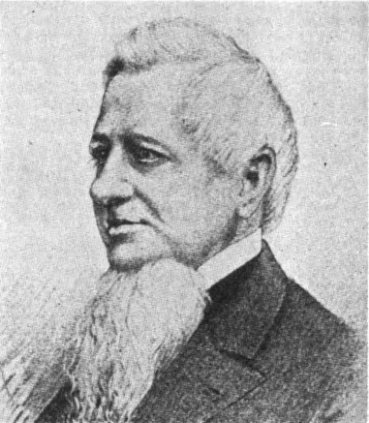
Edward Cornelius Delavan was born in 1793 to Stephen Delavan and Hannah Wallace. Following the death of his father in 1802, Edward, his mother, and three siblings moved to Albany. He attended Reverend Samuel School in Lansingburgh and worked as an apprentice in the print shop Whiting, Backus, and Whiting.
He eventually took a position in his brother’s hardware store, first as a clerk and later a partner. In 1815 he moved to Birmingham, England as a supply agent for the business but returned in 1820 taking a position in New York City as a wholesale wine merchant. While in New York City he married Abigail Marvin Smith, of Lyme Connecticut, together they had five children.
Looking at the financial prospects of the Erie Canal, Edward purchased large tracts of land around it. He also served as a founder of the Canal Bank of Albany in 1829. His investments in the Erie Canal led him to be very financially well off and retired in Saratoga County in 1833 at age 40.
Around 1829 Edward was recruited by Reverend Nathaniel Hewitt who was spearheading the anti-alcohol movement. Before this time temperance was solely looking at hard liquors, and Edward argued that “wealthy must give up wine… before ordinary American would quit drinking cheap hard liquor.” He established the New York State Temperance Society, and legend has it that he poured the collection of his wine cellar in the street.
Edward also argued against the use of communion wine during religious services, resulting in him leaving the Presbyterian Church to become an Episcopalian. He recruited Dr. Eliphalet Nott, President of Union College as a follower. Edward was a major donor and trustee of the college, and Nott may have been persuaded by him for financial reasons.
Expanding outreach, he promoted temperance by visiting France and Italy disapproving of their culture of alcohol. Being one of the first owners of a steam-powered printing press, he commissioned and distributed graphic lithographs of alcohol-diseased stomachs to almshouses, prisons, schools, and hospitals. In 1846 was the first person to do a mass mailing to every household to New York State. During the Civil War, he sent pamphlets to Union soldiers.
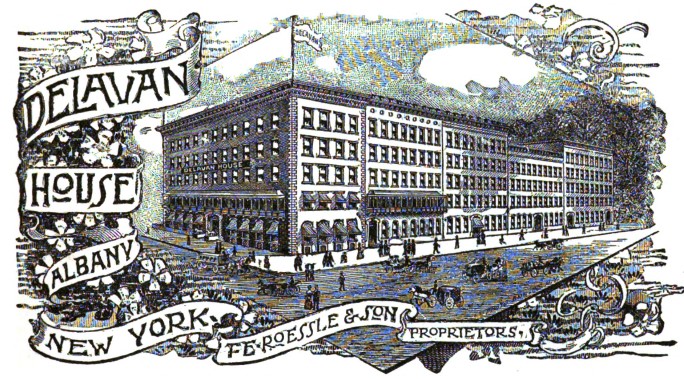
In 1845, Edward built the Delavan House, one of the first temperance hotels. Though marketed as a dry establishment, management was able to introduce liquor through a loophole, though never publicly disclosed. Stephen Myers, one of Albany’s key figures in the Underground Railroad, worked at the hotel and was able to help employ runaway slaves in the hotel.
The following year he successfully lobbied the New York State Legislature to adopt a local prohibition, which 80% of the towns voted in favor, though the following year many towns reversed this law. In 1855 New York adopted a statewide prohibition, though the courts overturned the ruling a couple of months later. Edward shifted his stance to “voluntary abstinence.”
In 1848 his wife died and remarried in 1850 to Harriet Anne Schuyler. Harriet was the daughter of Cornelius Cuyler Schuyler, and Harriet Lane Hillhouse, and was the great-great-great-granddaughter of Pieter Philip Schuyler. Together they had three children and resided in Ballston Spa.
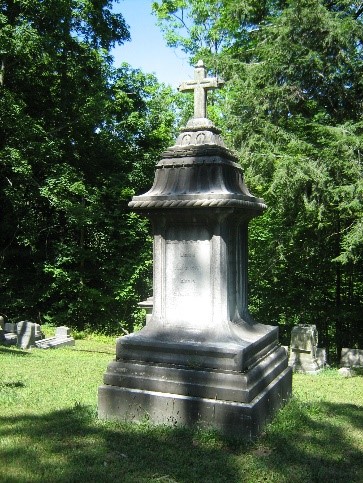
Edward Delavan died on January 15, 1871, in Schenectady at the age of 78. He is interred in the E. C. Delavan family plot next to his first wife, Abigail. He left nothing to the temperance movement though his legacy led to the founding of towns on his honor in Illinois, Wisconsin, and a village in Cattaraugus County, N.Y.
The Delavan House buried down on December 30, 1894, killing 19. Albany author William Kennedy later fictionalized the incident in his novel The Flaming Corsage. Today Tricentennial Park occupies the area that was once the Delavan stood.