Senator Lugar, Expert on International Affairs,
is Keynote Commencement Speaker

By Christine Hanson McKnight

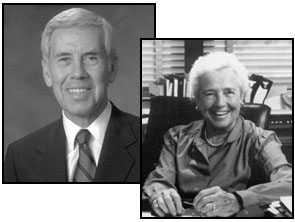
Richard Lugar, the senior U.S. senator from Indiana, will deliver the keynote address and also receive an honorary degree at the University�s 153rd Commencement on Sunday, May 18.

Matilda White Riley, a world-renowned figure in the field of sociology who is credited with having revolutionized our understanding of age and the aging process, will receive an honorary degree at graduate ceremonies, which begin at 2:30 p.m. in the Recreation and Convocation Center.

Lugar, a Republican who is best known as an advocate for U.S. interests in the international arena, will receive an honorary Doctorate of Law degree during the undergraduate ceremonies, which begin at 10 a.m. at the Pepsi Arena in downtown Albany.

First elected to the Senate in 1976, Lugar has been a longtime champion of excellence in education and won a seat on the Indianapolis Board of School Commissioners in his first run for public office. A Rhodes scholar, he is a trustee of his alma mater, Denison University, and vice chairman of the board and a former instructor at the University of Indianapolis.

Lugar is also recognized as a leading expert on economic development, housing and other urban issues, and currently serves as chairman of the Senate Agriculture Committee. He continues to serve on the Foreign Relations Committee, which he formerly chaired.

�Senator Lugar is a dedicated, effective and highly thoughtful statesman who has been a leader in both public policy and education,� said University President Karen R. Hitchcock. �We are delighted that he will be our Commencement speaker and receive an honorary degree.�

Riley will be recognized with an honorary Doctor of Humane Letters degree and present remarks during the ceremony for graduate students. She is the senior social scientist at the National Institute on Aging, which is part of the National Institutes of Health in Bethesda, Md.

A member of the prestigious National Academy of Sciences, she was a founder in the late 1960s of the sociology of aging and age structure. At the time, aging was seen as a biological process that was inevitable and irreversible, and the prevailing image of being old was to be frail and dependent. Riley dismantled that stereotype and showed that the realities of aging were far more positive than the public�s perceptions. Aging and Society, a three-volume set produced by her and her colleagues, remains a landmark exploration of the social dimensions of aging after more than three decades. She remains an active scholar in her mid 80s.

�Dr. Riley has been a pioneer throughout her career, and has contributed in fundamental ways to our understanding of the dynamic qualities of aging within social structures,� said President Hitchcock. �We are honored to award her an honorary degree.�

The University expects to award an estimated 2,322 undergraduate, 1,353 master�s degrees and certificates of advanced study and 174 doctoral degrees during its Commencement exercises.

SUNY Reorganization Proposed

A proposed reorganization plan designed to improve the efficiency, effectiveness and professionalism of the State University of New York System Administration was released on March 14 by SUNY officials.

The re-engineering report, developed by System Administration officials and campus representatives, is aimed at making the administration a stronger �partner� with the campuses.

�Our goal is to help free the campuses from unnecessary bureaucracy and duplication of effort so as to enhance the high quality of education they provide State University students,� said Trustees Chairman Thomas F. Egan. �Many details of the plan need further discussion and my colleagues on the Board and I will be carefully reviewing the proposals as we move forward to implement them.�

The recommendations reflect what officials called �extensive input� from many campus presidents, including President Hitchcock. More than a dozen campuses contributed directly to the plan, along with every major division in SUNY administration. The plan, in the works for approximately two years, is now at a point where it can be presented to the Board and other key individuals for further discussion and modification.

The goal is to have System Administration focused on policy, priorities, mission definition, advocacy, resource allocation, and accountability, in order to further the goal of educating students and supporting the research efforts of faculty. The plan would reduce the Administration�s transaction processing and other operations outside the policy arena.

The report is a direct outgrowth of Rethinking SUNY, the University�s primary planning document adopted by the Trustees in 1995. The preface of that report said the purpose of the reorganization effort is one of �increasing efficiency by empowering campuses to directly manage more of their academic and financial affairs and by eliminating current disincentives to the prudent use of campus and system resources.

�As a result,� the report stated, �campuses will have greater ability to achieve efficiencies of operation and to focus on their academic quality. With new management delegation comes also greater campus responsibility and accountability.�

In furthering the University�s mission of providing the highest quality educational services with the broadest possible access, the report set forth a number of proposed principles, including:

A major element of this restructuring proposal is the transfer the responsibility of student issues to the campuses. In streamlining the organizational structure at System Administration, the plan identifies three vice chancellors with policy responsibilities � the Provost and Vice Chancellor for Academic and Student Affairs, the Senior Vice Chancellor for Finance and Management, and the Vice Chancellor for University/Government Relations, along with three other senior officers all reporting directly to the Chancellor.

�The University has begun to brief internal staff at this preliminary stage, and we will keep them informed as we progress,� said Vice Chancellor for University Relations Scott W. Steffey. �Some of the recommendations do have labor union implications. We have offered a full briefing to the unions and have shared with them copies of the report. We want to work very closely with them to minimize the impact of the proposed changes while still accomplishing our goals of a stronger, more focused System Administration.�

It is too early to assess the full impact this plan would have on System Administration jobs, he said. �At this point, this is just a plan,� said Steffey. �Nothing has been adopted. It is not at the level of detail to specify the impact on jobs.� He also stressed, �We will not make decisions in haste. We will do all the needed analysis before we move forward. We expect that a number of positions will be relocated to other campus entities of the State University.�


Bruno to Receive Medallion

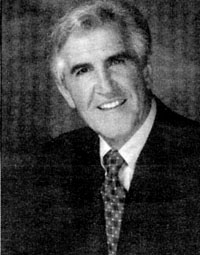
State Senate Majority Leader Joseph Bruno, R-Brunswick, will receive the Medallion of the University during undergraduate ceremonies on May 18. The Medallion is the highest award for distinguished service which the University bestows. It recognizes Bruno�s �extraordinary public service and leadership on behalf of higher education and commitment to the fundamental values of American society.�

Bruno recently played a leadership role in the University�s acquisition and development of a high-technology campus in East Greenbush (new home of the School of Public Health), and has contributed in innumerable ways to the support of the University, including funding for the Center for Environmental Sciences & Technology Management and the new library.

First elected to the Senate in 1976, Bruno became majority leader in 1995. He has been a leading proponent of business and personal income tax reductions as a way of turning New York�s economy around. Prior to his election for the Senate, he was co-founder and chief executive officer of the Coradian Corp., a telecommunications firm, from 1959 to 1990.
