
 By Mary Fiess
Campus Sets Legislative Priorities
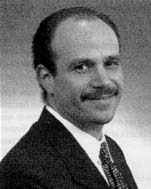
The University, for the first time, has released its 1997 Legislative Priorities publicly, in a pamphlet that has been sent to every New York State Legislator.
“The University at Albany has received positive national attention over the past several years, most recently in a recent study published by the Johns Hopkins Press which termed us a leading public research university,” said David Gilbert, the University’s Director of Governmental Relations since November.
“With the acquisition of the new East Campus, and the construction currently underway on the Library and the CESTM building, it is clear that our elected officials also recognize the value of the University at Albany to the State.”
The pamphlet, “University at Albany: 1997 Legislative Priorities At a Glance . . .” is also available campus-wide, and has been sent directly to University Senate members, employee unions, and members of the region’s business community. It was developed through a consensual effort, said Gilbert.
He noted that the pamphlet is part of President Hitchcock’s advocacy program, and is intended to help keep all members of the University community informed on campus goals and plans. “At President Hitchcock’s request, I have reached out to the faculty and staff to develop a balanced legislative agenda that includes their suggestions and needs,” he said. “Our initial priorities include construction of new buildings to be used teaching and research, and legislative support for special academic initiatives.”
The “Legislative Priorities” include:
Leasing Authority for Campus Projects
Through legislation, the SUNY Trustees would be authorized to enter into lease agreements with The University at Albany Foundation for certain campus properties, including include two dormitories on the downtown campus with The College of Saint Rose, and expansion of the ground lease from five to ten acres for an addition to the Center for Environmental Sciences and Technology Management (CESTM) building.
CESTM Expansion
“The CESTM facility was originally designed to have three wings, two of which are now in their final stages and which will house facilities for the Atmospheric Sciences Research Center and the basic research facilities of the Center for Advanced Thin Film Technologies,” said Gilbert.
“The third wing, designed to help pilot manufacturing facilities for computer chip technologies, will help attract $25 million annually in industry- and government-funded research, and eventually attract computer chip manufacturing plants that would employ up to 2,000 professionals and technicians.”
In addition, Gilbert said that his office has also been working with the faculty of Center for Advanced Thin Film Technology to secure funding for a pilot manufacturing and workforce training facility at the CESTM site.
“ This initiative combined with state support for our high technology business incubation programs will serve to strengthen the University’s ties to the community in which we reside,” he said.
Capital Projects
The University is working closely with members of the SUNY Trustees, the SUNY Construction Fund and the Legislature on several expansion projects in order to accommodate a student enrollment of 16,000-plus — more than 5,000 beyond what the main campus was designed to handle when built 30 years ago.
“The first phase of the University’s ælife sciences initiative’ is to invest $38.5 million in the chemistry building in order to eliminate overcrowding and labs ill suited for current technology,” said Gilbert.
The Science and Technology library is currently being built by the SUNY Construction Fund behind the main Campus Center.
Other projects now proposed in the University’s Legislative priorities include are a $13 million Public Safety/Service Complex, a $7 million Intramural/Recreation Facility, and nine separate projects valued at $7.75 million and funded through the Clean Water/Clean Air Bond Act of 1996.
“The Public Safety offices are currently housed in the temporary architect’s shack built when the campus was being constructed,” said Gilbert, “and this is woefully inadequate. Among other things, the building lacks much of the high technology equipment recommended for public safety operations on a campus this size, and it storage facility is outdated and a potential environmental hazard.
“The intramural/recreational facility would be aimed at replacing the bubble, which is at the end of its useful life, with a standard construction facility. And the Clean Water/Clean Air funds would bring this 30-year old campus up to today’s stricter environmental regulations. New low-emission boilers, new petroleum storage tanks, and a dredging and cleaning of the pond would be among the targeted projects.”
Support for Special Academic Initiatives
The National Center on English Learning and Achievement is now supported by a $12.5 million federal grant to conduct research on improving student achievement. “The state’s teachers, however, have expressed a strong need for assistance in several areas,” said Gilbert. “We would propose the establishing of four teacher networks and a technology demonstration site at Albany to allow teachers and students to directly benefit from this research.”
The University proposes that funding support the High School Science and Training Program to focus on programs for the state’s high schools; that funding be restored to the Center for Minority
Health Research Training and Education; and that, for the purposes of qualifying for the University’s Caseworker Education Program, the cities of Albany, Schenectady and Troy be reclassified as a single unit (thereby reaching the 125,000 minimum population requirement).
State-Wide High Tech Business Incubation Assistance
“Most business incubator space in new construction is left unfinished in its interior,” said Gilbert. “Our efforts to recruit high technology companies — at great benefit to the state — will be strengthened if there was a one-time infrastructure pool, or a revolving fund, that incubator programs could draw upon for necessary renovations to laboratories and work spaces.”
In addition, a proposed “Statewide High Tech Business Incubation Grant Fund and High Tech Business Incubation Prototype Fund” would focus on alleviating high technology startup companies’ early stage equipment costs. The funding would also create a pool of funds to help these companies build prototypes, and conduct feasibility or proof-of-concept studies.
System-Wide Issues
This includes support for new administrative efficiencies at both the SUNY central system and campus levels; limited tuition flexibility for campuses; and budget restorations for the Tuition Assistance Program, graduate research funding; and general state support of base operating aid.
“Creating a comprehensive and effective legislative program is a long term endeavor,” said Gilbert. “After six months, we have made tremendous progress in informing the University community to the potential for even more collaborative projects with both the State and Federal Governments.
“We have also raised the profile of the University at the State Capitol and in Washington. I look forward to continuing my work with the faculty and Administration to further expand the legislative agenda of the entire University in the future.”
 By Greta Petry