
 By Melanie Schwartz
Carpenter Named to Key U.S. Health Advisory Post
 By Claudia Ricci
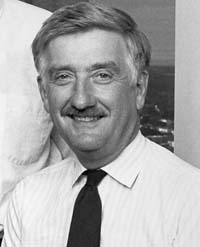
Secretary of Health and Human Services Donna Shalala has appointed David O. Carpenter, dean of the School of Public Health, to serve on the prestigious National Advisory Environmental Health Sciences Council. As part of the 12-member Council, Carpenter will advise the Shalala and the directors of the National Institutes of Health and the National Institute of Environmental Health Sciences on matters related to environmental research and the effects of pollution on human health.
Carpenter, who has served as dean of the public health school since 1985, has had a long-standing involvement in environmental research. For the past ten years, he has served as lead investigator for the Superfund project at the Akwesasne reservation. In that position, he coordinated an extensive multidisciplinary research program into the human health effects of PCBs and related pollutants at Akwesasne, a reservation which is home to 12,000 Mohawk Indians located in far northern New York State on the St. Lawrence River.
A neurophysiologist by training, Carpenter began his research career doing basic investigations of the mechanisms involved in the uptake of calcium by cell membranes. Several years ago, he applied this basic research to investigations of the way in which heavy metals, including lead, mercury and aluminum, interfere with calcium uptake in membranes. This research has led him to test numerous hypotheses on how heavy metals may cause a variety of nervous system disorders, including strokes, as well as Alzheimer’s, Parkinson’s, and Lou Gehrig’s Disease.
At Akwesasne, Carpenter coordinated research into numerous facets of the extensive environmental pollutants that contaminate the reservation’s air, water and soil. The Mohawks living at Akwesasne have traditionally relied on fish and wildlife as a source of nutrition, but in recent years they have been concerned about the industrial sources located near the reservation.
One of their major concerns is the General Motors’ Foundry in Massena, which has been identified as a federal Superfund site. Over a period of many years, the foundry released huge quantities of PCBs into the environment. These and related pollutants now contaminate the soil, water, air and wildlife at Akwesasne, making it impossible for the native peoples to safely maintain their hunting and fishing traditions.
In a series of three major funding cycles, the latest of which provided $13.2 million for five years of study, Superfund researchers under Carpenter’s supervision have conducted a wide-ranging investigation of the Mohawks’ exposure to the pollution, as well as the effects of PCBs on animals, the ecosystem and the development of engineering techniques to assist in clean-up. The researchers are studying, among other things, the way in which children’s growth, maturation and cognitive development may have been affected by the presence of toxic chemicals polluting Akwesasne. Part of the Superfund research is also directed at investigating clean-up methods for the site.
The research at Akwesasne is part of the nationwide Superfund program administered by the National Institute of Environmental Health Sciences. The intent of the program is to address clean-up of sites on the U.S. Environmental Protection Agency’s Superfund List, the federal government’s tally of hazardous waste sites that deserve top priority for remediation.
Carpenter, who is one of only a handful of researchers from the Capital Region ever to be appointed to an NIH Advisory Council, has a long-time involvement working with the National Institute of Environmental Health Sciences. He says he looks forward to his new responsibilities.
“This exciting appointment is reflective of the leadership that we in the School of Public Health have taken on issues of major importance to the University at Albany and the New York State Department of Health, our parent institutions,” Carpenter said. “We have been particularly aggressive in addressing issues related to environmental health, particularly the relationship between pollution and the health of children. I hope to continue to work toward the advancement of these important causes in my new advisory role.”
Part of his work on the advisory council will consist of making recommendations to Shalala on how NIH should conduct environmental research, training and health-information dissemination programs throughout the U.S.
Carpenter received his M.D. from Harvard Medical School in 1965. He opted for a career in laboratory research rather than medicine. After 15 years at the National Institutes of Health in Bethesda, Mary., Carpenter moved to Albany in 1980 and served for five years as the director of the Wadsworth Laboratories, a branch of the New York State Department of Health. He championed the development of practice-based public health education, a move that eventually led to the establishment of the University’s School of Public Health, where he was named dean.