
Briere Re-Translates Anti-Racist Crusader

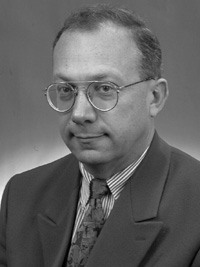
Jean-Francois Briere of the Department of French Studies has recently collaborated with Thomas Cassirer on a English translation of On the Cultural Achievements of Negroes by Henri Gregoire, a French Catholic priest.

The book, originally published in 1808, was first translated into the English language by David Bailie Warden in 1809. Briere and Cassirer decided on a new translation because they found the Warden text inadequate. "It was too hasty, and even one chapter was missing," said Briere.

The inspiration for this new translation came from Sidney Kaplan, for whom the book is dedicated, a former member of the English department at the University of Massachusetts. Kaplan is credited for introducing African American Studies to the University of Massachusetts and originally saw the need for a new American edition.

Kaplan originally approached Cassirer with the idea, who then turned to Briere, whose specialty is French colonial history. Briere wrote the introduction and together they revised the entire manuscript.

Briere points out that Henri Gregoire was one of the first people in the early 1800s to support human rights and the abolition of slavery. "There was, at this time, a rise in new theories attacking racial unity of origin," he said. "This book was a counterattack against all theories of scientific racism."

Gregoire maintained that all races were inherently equal in a time when scientific studies were attempting to prove that blacks were biologically inferior to whites. "People believed that the white Europeans were on top and the black Africans were at the bottom. This was a very important book for Gregoire because he was one of the first to publically attack these theories," said Briere.


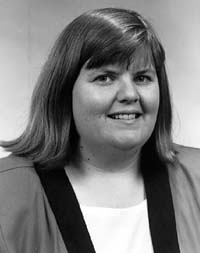
Virginia Goatley of the Department of Reading in the School of Education, along with co-writer Susan McMahon of the University of Wisconsin, has received the Harold E. Mitzel Award for Meritorious Contribution to Educational Practice Through Research from the Journal of Educational Research for their article on "Fifth graders helping peers discuss texts in student-led groups."

According to the journal editors, "The award honors the manuscript, published in the preceding volume of The Journal of Educational Research, that has been deemed by a panel of scholars as having contributed significantly to improved understanding or to the development of better practices in the public schools."

Goatley, who joined the University faculty last fall, has for several years worked closely with students having difficulty learning to read and write, many of whom have been labeled "learning disabled."

She is currently researching methods of instruction that would facilitate learning for these students

She has also published articles on her research in Reading Research Quarterly and the Teacher Research Journal, and edited a book, The Book Club Project: Exploring Literature -Based Reading Instruction.


Center for Technology in Government Releases
Making Smart IT Choices

Making the correct information technology decisions is one of the toughest obstacles that government agencies have to face while expediting business practices. In order to take the mystery out of these technology decisions, a group of six researchers at the Center for Technology in Government (CTG), a research center at the University at Albany, have just released Making Smart IT Choices, a guide to ensure that government investments are made wisely. The center's mission is to solve problems related to public service through the use of information technology in state and local government.

"The handbook is a practical, down-to-earth guide that includes tools for project planning. It outlines how to select products, to evaluate the situation, and identify stakeholders," said Claire McInerney, information coordinator of CTG.

The book can be used by any group of managers who must address and resolve an information-intensive problem. The Center uses the handbook to support workshops for managers and staff of government agencies and will be introducing it at the Government Technology Conference this fall.

"Information Technology (IT) decisions are complicated and fraught with risk because they entail much more than just technology," CTG Director Sharon Dawes said. "Good choices match technology with policy goals, customer needs, and organizational capabilities. These assesments take time and effort, but they definately pay off." The book includes exercises along with case studies based on recent situations where CTG has helped in making cost-effective and productive decisions.

The Center for Technology in Government has helped agencies as diverse as the Department of Motor Vehicles, the Office of Mental Health, and the Adirondack Park Agency examine their information problems and work out solutions. A complete copy of the handbook is available for downloading from CTG's Web site at http://www.ctg.albany.edu. Bound copies can be ordered through e-mail at [email protected] or by calling 518-442-3892.