
Thirty years after achieving glory with Napoleon’s army in Russia, Louis Rose finds himself, in March 1836, at the Alamo, trapped with about 200 other Texas settlers hopelessly trying to fend off attack from a Mexican army division of nearly 2,000. He is liked and respected by the other soldiers because of his age and history (they called him “Moses”).
When the final attack comes, all the settlers will be killed, many tortured beforehand. Only Rose will not, according to legend. Like the other soldiers, he was given the choice of leaving before the ultimate battle. Only Rose accepts, knowing he may spend the rest of his life trying to cope with hatred, suspicion, and threats because of the decision.
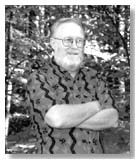
It is a tale full of adventure and passion, revolving around historical incidents surrounding the Alamo and its aftermath, which Rainbolt first learned about as a boy in Texas.
“In grade school we had whole courses in Texas history, and I was always taken with it,” said Rainbolt. “And the Alamo was always a big part of the mythology. Moses Rose, either as fact or legend, was part of the Alamo mythology. Did he exist? Did he really leave even if he did exist? Scholars still debate these questions.
“But the goal for me was to build on the legend in order to, first of all, present a good read. And then to also to explore the different ways of observing history, and to raise questions about what really is heroism.”
The germination of the book began with a magazine article Rainbolt — a free-lance writer, former journalist and media consultant, now a Ph.D. candidate at the University in history — was writing in the late 1980s on the topic of New Yorkers at the Alamo. One of the victims was George Kimble, who with wife Prudence, would become George and Mary Kimbro in Moses Rose — George typifying the vainglorious young warrior willing to die, she the widow whose destiny and Rose’s will intertwine.
In talking over that article with Robert Miner of the Department of Communication, Rainbolt said the subject of Louis Rose, then just an Alamo footnote, always came up. “Finally Bob said, ’It sounds like you should do a book on this guy.’”
After a few years of research, including the studying of diaries and other written accounts from the period, Rainbolt undertook four years of drafts and rewrites before his final product. Even though the post-Alamo “runaway scrape” eastward of Texans from the Mexican army, and incidents involving white man and Indian tortures are based on fact, Rainbolt cautions that “the book is not meant to be history, revisionist or otherwise.
“The aim was always to be persuasive as a novelist.”
Vinny Reda
•••
The Institute of Cypriot Studies has published another book in its series, Sources for the History of Cyprus. Edited by Alexander Griskin of the National University of Australia, the book, A Pilgrim’s Account of Cyprus: Bars’kijj’s Travels in Cyprus, contains the travelogue and drawings of an 18th Century Russian monk.
•••
Lawrence Wittner of the Department of History has won the Warren Kuehl Prize from the Society of Historians of American Foreign Relations, for his book, One World or None: A History of the World Nuclear Disarmament Movement Through 1953.
•••
Richard Hamm of the Department of History has been awarded the Adams Prize of the Society for History in the Federal Government for his book, Shaping the Eighteenth Amendment: Temperance Reform, Legal Culture, and the Polity, 1880-1920.
•••
Richard Felson of the Department of Sociology saw his book, Violence, Aggression, and Coercive Action, co-authored with James Tedeschi, be the subject of an author-meets-critic session at the American Society of Criminology last Spring.
•••
Robert Yagelski of the Department of English published two articles this past year in highly respected journals. His “A Rhetoric of Contact: Tecumseh and the Native American Confederacy,” was in the Fall 1995 Rhetoric Review, and his “Virtual Connections and Real Boundaries: Teaching Writing and Preparing Writing Teachers on the Internet,” written with Sarah Powley, appeared in the 1996 issue of Computers and Composition.
•••
The School of Education’s Richard L. Allington and Anne McGill-Franzen co-authored a prominent article in the Aug. 7 issue of the journal Education Week on making effective changes to the Individuals with Disabilities Education Act, “Why is Congress Caving in on IDEA Reform?”