
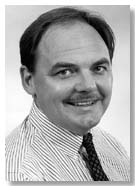
Andrei Lapenis became a member of the Department of Geography & Planning faculty this Fall Semester.
Lapenis has had experience working as a research scientist in the earth science group in the department of physics at New York University (1992-1996), as an adjunct professor in the department of geography and geology at Hunter College (1995-96), and as a researcher at Russia’s State Hydrological Institute.
Born in what is now St. Petersburg (then Leningrad), Russia, he received his masters degree at State Leningrad University in 1980 and his Ph.D. from the State Hydrological Institute, also located in Leningrad, in 1986.
Floyd Henderson, chair of the Department of Geography and Planning said, “Lapenis has strengths in climatology and cold-area regions along with having general strength in geography. He will be a critical link to adding to our physical geography component and he will be a central addition to our research and programmatic efforts with the Department of Earth and Atmospheric Sciences.”
Most of Lapenis’ research has focused on developing the Paleocalibration Technique to estimate global climate sensitivity, of critical importance to current efforts to forecast future anthropogenic climate change.
He has been an invited speaker at a number of meetings; has membership with three professional societies, and has contributed more than 30 articles and chapters for publications.
•••
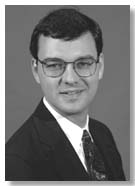
Benjamin Fordham is a new faculty member this Fall in the Department of Political Science in the Rockefeller College of Public Affairs and Policy.
Fordham has most recently held a postdoctoral position at Princeton University (1995-96), a postdoctoral position at the Triangle Institute for Security Studies (1994-95) and was a visiting instructor at Duke University (1993-94).
He received his bachelor’s degree, magna cum laude, from Georgetown University in 1988, and his doctoral degree in 1994 from the University of North Carolina, where he studied from 1988 to ’93 under a Joseph E. Pogue Fellowship. He was cited for the University’s most outstanding research paper by a graduate student in 1993.
His work focuses on the economic and social origins of foreign policy, and their influence in generating the policy alternatives and ultimate choices that determine foreign policy, in particular national security policy.
“Fordham is extraordinarily well-trained in international relations,” said Frank Thompson, dean of the Graduate School of Public Affairs. “He is also an accomplished researcher and he has a book coming out with University of Michigan Press on the Truman Administration’s building of political support for its Cold War policies.”
Fordham has experience as a graduate instructor and a teaching assistant during his years at the University of North Carolina, and has written articles for many publications and professional conference papers.
Linda Chavis