
The new ways of thinking about and measuring intelligence have been compiled in what one leading psychologist calls “æmust’ reading for anyone engaged in the assessment of human cognitive abilities.”
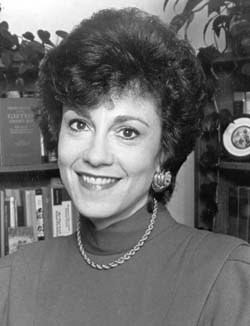
Contemporary Intellectual Assessment: Theories, Test, and Issues (Guilford Publications, 1996) is a newly published work that combines the talents of more than 40 leaders in the field of educational psychology. Edited by Judy Genshaft, Interim Vice President for Academic Affairs, along with Dawn Flanagan of St. John’s University and Patti Harrison of the University of Alabama, the work explores the history of intellectual assessment, new theoretical perspectives, new tests and techniques for assessment, and the new issues and directions now confronting the intellectual assessment field.
“You become aware through these readings that æintelligence’ is based on how it is defined,” said Genshaft. “If you define it differently, then you need new instruments to measure with. The people is this book have a host of very different theories on what intelligence is as opposed to what has always been assumed.”
Largely unchallenged in this century have been the most prominent tests for intelligence, the Wechsler test and Stanford-Binet Scale.
“The book is about different concepts and theories, and also about the test-developers who have put these theories into practice,” said Genshaft.
The work reflects that, in recent years, traditional theories of intelligence and measures of intellectual functioning have come under increased scrutiny by practitioners and resear-chers. These new investigators seek a broader understanding of cognitive abilities and personal competence, enhanced diagnostic and treatment utility, and a more culturally sensitive practice.
“It is the idea that people’s capabilities are broader than are reflected by the way people have been measuring in the past,” said Genshaft. “So it’s conceptualizing in different ways. Howard Gardner (of the Harvard Graduate School of Psychology), for instance, believes tests should better reflect the inclusion of artistic ability, motor skills, and other æintelligences.’”
The 27 chapters provide the most comprehensive set of knowledge to date for practitioners to effectively use the latest science in the field and to make up-to-date, empirically supported interpretations of older tests.
Genshaft sees the book as having great value as well for psychologists and researchers, but says it will most often find its way into the hands of students preparing for careers in education.
Vinny Reda