
 Could you spot the millionaire living next door? Is he the guy in the Gucci loafers
putting his Louis Vuitton luggage in the trunk of his Mercedes 500 SL Roadster,
impatiently glancing at the Rolex on his wrist while his wife with the Lalique
necklace strolls outside to drive him to the airport?
Could you spot the millionaire living next door? Is he the guy in the Gucci loafers
putting his Louis Vuitton luggage in the trunk of his Mercedes 500 SL Roadster,
impatiently glancing at the Rolex on his wrist while his wife with the Lalique
necklace strolls outside to drive him to the airport?
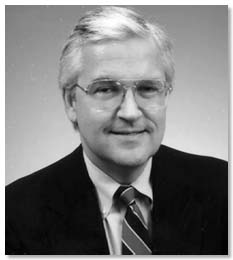
Probably not, say a professor of marketing at the University and his former mentor and instructor at Albany, in The Millionaire Next Door: The Surprising Secrets of America’s Wealthy (Longstreet Press, 1996).
William D. Danko of the School of Business and former faculty member Thomas J. Stanley have conducted the most extensive research ever done on who the wealthy are and how they got there. More than 20 years of their studies, culminating in 1,000-person survey done from May 1995 to January 1996, revealed surprises as to how most current millionaires became so, and why many people — even with enormous incomes — never become wealthy.
“What have we discovered in all of our research?” write the authors. “Mainly, that building wealth takes discipline, sacrifice and hard work . . . If you are willing to make the necessary trade-offs . . . you can begin building wealth and achieving financial independence.”
The authors strike their main points in entertaining yet concise fashion, one chapter aptly and adamantly entitled “Frugal, Frugal, Frugal,” another dealing with time management, one with the need for a personal sense of independence (two-thirds of U.S. millionaires are self-employed); one imploring you to “Find Your Niche,” and another that stresses that millionaires as a rule value financial independence far more than they do high social status or the material trappings of success. They also invest wisely and consistently.
“It’s really a consumer-behavior book,” says Danko, who adds that the Vanderbilt-Rockefeller sort of rich folk make up less than 20 percent of the millionaires of today, and were factored out of the study. The median family income for the other 80 percent, say the authors, is just $130,000.
“This book is about the æordinary’ millionaires that it is within our power to become. Tom Stanley and I are not financial planners, but from de-briefing all these people in our studies, there are too many common denominators to ignore. There are rules to follow.”
Stanley left his job as a full professor at Georgia State University, because he found his niche as a writer of marketing books for the affluent, and as an advisor to corporations that deal with the affluent. How is Associate Professor Danko doing?
“Well, I’m doing what I love to do,” he said, “and in terms of my pursuit of millionaire status I’m not there yet but I’m following the rules. Frankly, I’m well on my way to achieving that status. In fact, I find many faculty are, because of the retirement plans and benefits provided by a university contract.”
Vinny Reda
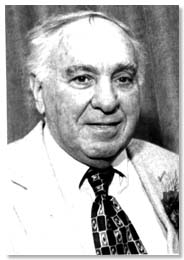
Donald Cohen, professor emeritus of social welfare and co-founder and co-chairman of the Health Policy and Administra-tion Consortium of the Capital Area, has won a “Third Age” Achievement Award for contributions to the community.
In an effort to recognize the outstanding contributions that older people make in the communities of the Capital Region, the Senior Services of Albany Foundation, through the sponsorship of the Community Health Plan Senior Advantage, has launched the “Third Age” Awards and selected eight winners. Cohen is the recipient in the “Education” category.
“Our newly created æThird Age’ awards create an opportunity to recognize older people who are making a difference,” said Ann Di Sarro, executive director of Senior Services of Albany. “We believe our winners are an exceptional group who represent achievers.”
Cohen taught undergraduate and graduate courses in the School of Social Welfare at the University for more than 25 years. He taught the first course on health policy (before the creation of the School of Public Health), and helped found the Department of Judaic Studies. He also worked with SUNY campuses statewide to set up a cultural exchange program with universities in Israel and been a visiting professor at the universities of Belgrade and Beijing.
Under his guidance the consortium’s bi-annual event brings together local and state government leaders, professors and students for a common dialogue about health policy.
In addition to his academic achievements, Cohen has played a vital role in the Albany community. Active with Temple Beth Emeth, he regularly volunteers and serves food at its soup kitchen, and helps to recruit additional volunteers, including former students and University colleagues. He is a member of the AARP committee that started the Learning Tree program, which provides creative outlets and connections for seniors.
At Albany he founded the Chapel House Interfaith Center and is now on the board of the Interfaith Partnership for the Homeless.
Other Third Age Award winners include art curator Leslie Urbach, senior athlete Patricia Peterson, businessman Henry Quellmalz, community activist Reszin Adams, medical doctor Richard T. Beebe, community volunteer Mary Breslin, and the late Philip J. Thompson, former director and treasurer of Albany Memorial Hospital.
Award winners will be honored at a dinner on Thursday, Nov. 14, at 5:30 p.m. at the Desmond. For information or to purchase tickets, contact Eileen Handelman at 465-3322.