
•••
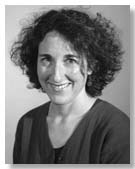
In Mastering Slavery: Memory, Family and Identity in Women’s Slave Narratives (1996, New York University Press), Jennifer Fleischner draws upon a range of disciplines, including psychoanalysis, African American studies, literary theory, social history, and gender studies, to analyze how slave narratives — in their engagement with one another and with white women’s antislavery fiction — yield a far more amplified and complicated notion of familial dynamics and identity than has generally been thought.
Her study exposes the impact of the entangled relations among master, mistress, slave adults and slave children on the sense of identity of individual slave narrators. She explores the ways in which these autobiographers created mixed, dynamic narrative-selves out of the social, psychological, biological — and literary — crossings and disruptions slavery engendered.
“The conditions and motivations for these writings has never been fully understood,” said Fleischner, a Department of English faculty member, but also a former Mellon Faculty Fellow in Afro-American studies at Harvard University and a special candidate at Columbia University’s Center for Psychoanalytical Training and Research.
“The narratives were writing primarily for white audiences — mostly white, middle-class readers that the writers hoped would begin to get involved in the abolition movement,” said Fleischner, who co-edited Feminist Nightmares: Women at Odds (NYU Press). “So there is that political context.
“But there is also another motive. Each author is writing a statement about her individual experience, carrying with it a sense of her own idiosyncratic, personal place within this world. And, in terms of literary theory, these narratives stand as a an important part of the beginning of Afro-American literature. And it came out of a larger tradition of autobiography in British and American literature of the 19th and 20 Centuries.”
Fleischner’s efforts have been lauded by Henry Louis Gates, Jr., W. E. B. Du Bois Professor of the Humanities and chair of the Afro-American studies department at Harvard University. “A stunning achievement, an instance in which a heretofore ’marginal’ literature is revealed in its astonishing complexity by a critical method not before applied to those very texts.
“The result is a study that will be heralded, I venture to say, both as one of the very best critical studies in African American literature and one of the best explorations of race and psychoanalysis.”
Fleischner sees the broad scope of her work across disciplines as natural for her and our times. “One of the things happening in all areas now is the use of interdisciplinary work. And for me, the work began from a multi-disciplinary approach that is natural for me. My interests are in autobiography, Afro-American studies, and psychoanalysis. And I am also an Americanist.”
Vinny Reda