Lawrence Schell
Distinguished Professor
University at Albany
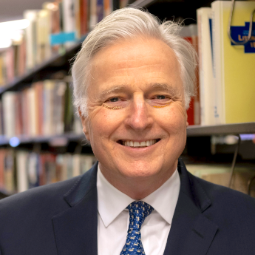
Lawrence M. Schell is a Distinguished Professor in the Department of Epidemiology and Biostatistics Department and in the Department of Anthropology at the University at Albany, and a Clinical Associate Professor of Pediatrics at the Albany Medical College.
In 2005 he established the Center for the Elimination of Minority Health Disparities and has served as its director continuously reflecting his interest in urban health and disadvantaged populations. The CEMHD has been funded by the NIMHD since 2004. Currently it is executing a program of transdisciplinary training in minority health disparities research funded with 10 million dollars from NIH and 1 million from the Hearst Foundations.
His research is in the general area of biological effects of urban-living on human populations. It focuses on three intersecting areas: pollutant exposures particularly metals and organochlorines, child health and development, and health disparities. His work on pollution began in 1986 with an initial study of a socioeconomically depressed sample of expectant mothers, approximately half African-American, in Albany NY to understand the relationships of lead exposure, maternal characteristics, and diet to newborn size and infant development. Through this work he saw that minorities and other disadvantaged communities were unequally exposed to toxicants and other untoward influences on child health. As the work on lead was underway, he began working with the Akwesasne Mohawk Nation. Over the next twenty years his team conducted three studies with the Nation. Results from these studies pertain to adolescent size (overweight and obesity), sexual maturation, thyroid function, and cognitive-behavioral status of 10-17-year old’s, as well as immune function and women’s reproductive health. The work with the Mohawk has been a 25-year collaboration and has involved multiple papers co-authored with Mohawk collaborators. This work is sometimes cited as a model of collaborative and mutually respectful research between scientists and Native Americans.