President's Spring Report to the Faculty
May 8, 2002
Thank you so much, Ed... and, good afternoon everyone.
And, to all of you, congratulations on a very productive academic year. The University at Albany has moved forward in so many ways. And, we have worked together to address the particular challenges that have confronted us this year. Therefore, let me begin this Spring Report to the faculty, as I always do, with thanks to you all for your exceptional commitment to this exceptional institution.
And, our very special thanks go out to those among us who have epitomized the values we all share.
When the Collins Fellow Award was established, this University made a statement that service... exceptional, institution-wide service... should be recognized and celebrated. Over the years, those so honored have exemplified the kind of devotion to our University and its students which has allowed us to move forward even in times which challenge our ingenuity and resolve. This year, three such outstanding faculty will be honored and thanked for all they have contributed to our University.
First, please join me in congratulating a faculty member who has quietly and selflessly made a tremendous difference... whose consummate professionalism has enriched our institution beyond measure... Professor Peter Bloniarz.
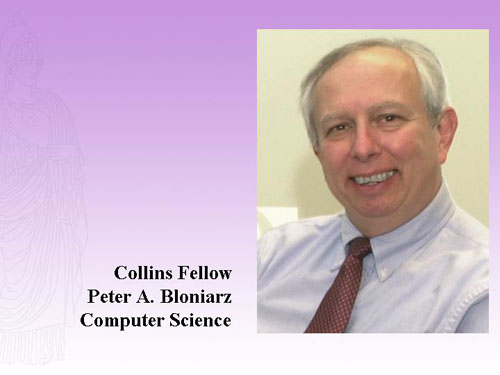
Unfortunately, Peter could not be with us today; he is at a conference in Chicago.
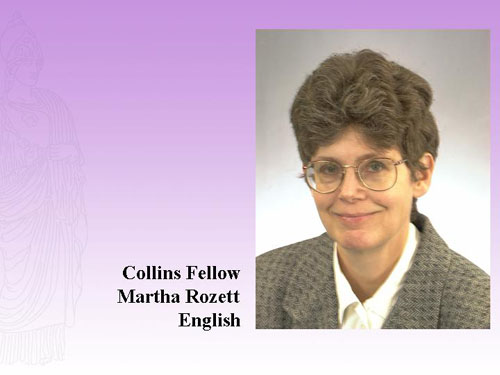
Our next Collins Fellow has, for some 29 years, made innumerable contributions across the entire spectrum of University activities. She has served her department, college and university with remarkable devotion and skill. Join me in congratulating, Professor Martha Rozett.
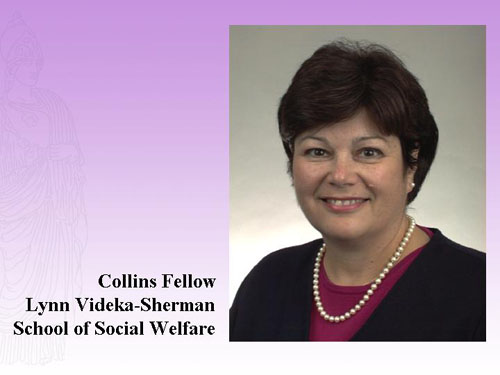
Our third Collins Fellow has, over and over, taken on some of our University's most challenging assignments... always with success. She has, through her wisdom, talent and compassion, earned the respect and gratitude of us all. Professor Lynn Videka-Sherman.
Now I am honored to introduce our colleagues who have been selected for the 2002 President's Awards for Excellence. I know you will agree that this year's award recipients are truly outstanding... not only in the performance of their particular professional responsibilities, but also in their deep commitment to our University.
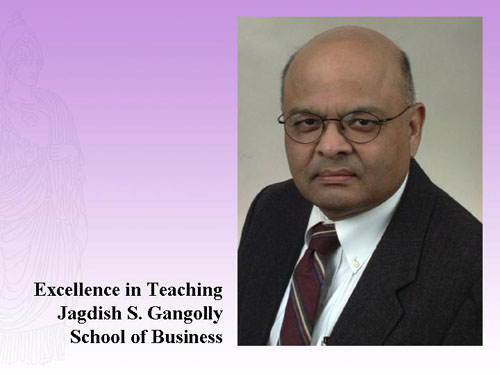
Our first award honors those who excel in teaching at all levels of our educational program. Would this year's recipients of the President's Award for Excellence in Teaching please rise to receive our congratulations:
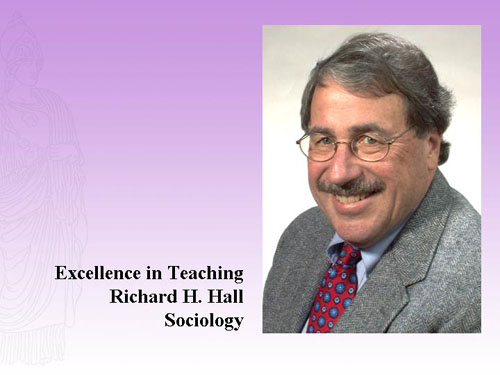
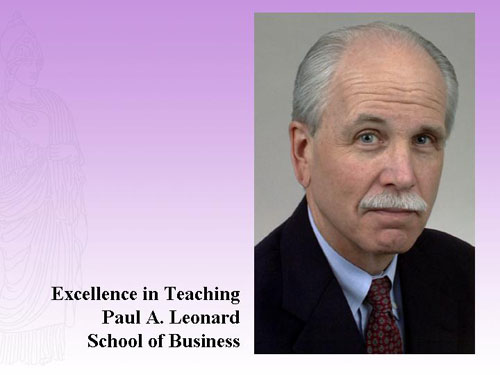
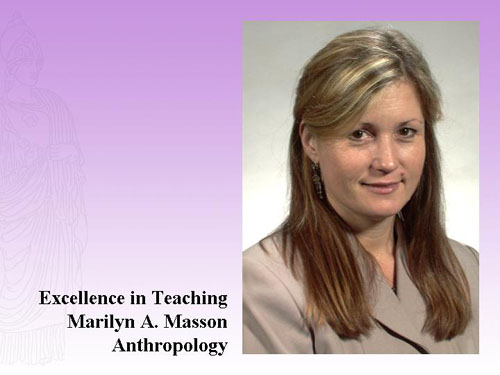
The next category is the President's Award for Excellence in Support Service, which honors excellence among the members of the classified service staff, those who mean so much to the quality of life of our University. I invite the recipients to rise, and please join me in congratulating them:

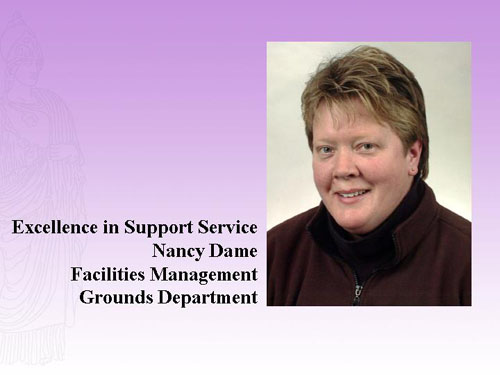
Next is the President's Award for Excellence in Professional Service. This award recognizes the contributions of members of the professional staff who contribute so much to the lives of our students, our faculty and the entire campus community. Would the recipients please rise to receive our congratulations.
There is a fourth Award for Excellence in Professional Service this year, presented to a very special woman, Joanne Casabella.
Thankfully, Joanne received this honor shortly before her most untimely passing. Our deep sympathy to the family and friends of this exceptional woman. She will be missed. 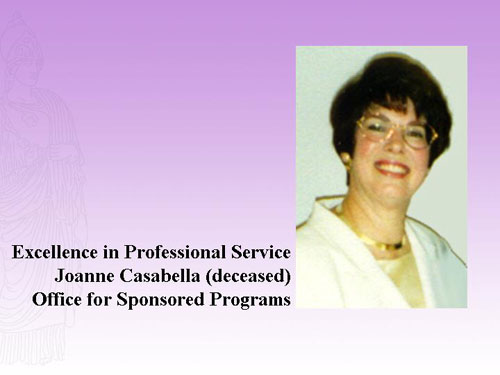
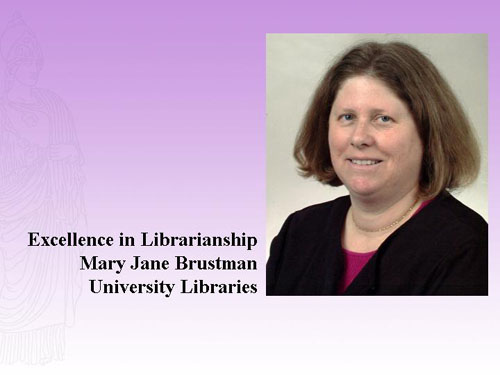
Next is the President's Award for Excellence in Librarianship for outstanding contributions by a member of the library faculty. This year's recipient is Mary Jane Brustman Associate Librarian at the University Libraries.
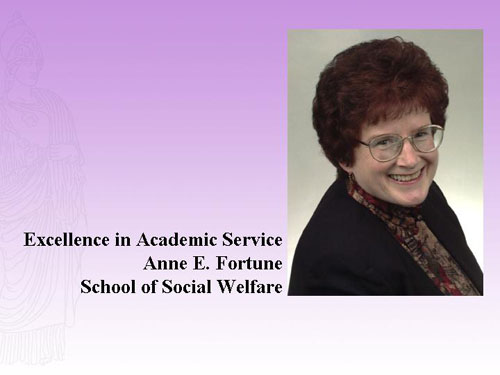
The President's Award for Excellence in Academic Service recognizes the extensive contributions of faculty members to a variety of university-wide initiatives and their leadership in assuring the quality of the university's academic programs. Please join me in congratulating this year's recipients:Anne Fortune, School of Social Welfare
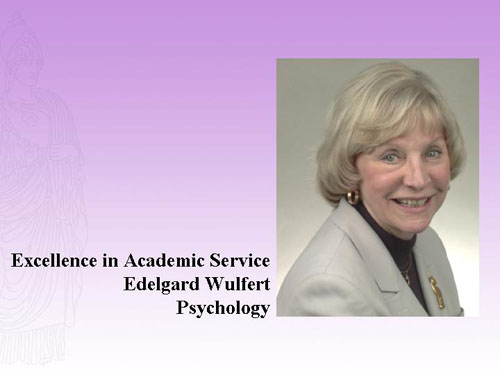
Edelgard Wulfert, Department of Psychology.
Our next award celebrates the research achievements of our faculty and their invaluable contributions to their disciplines. Would the recipients of the President's Awards for Excellence in Research please rise and receive our congratulations:
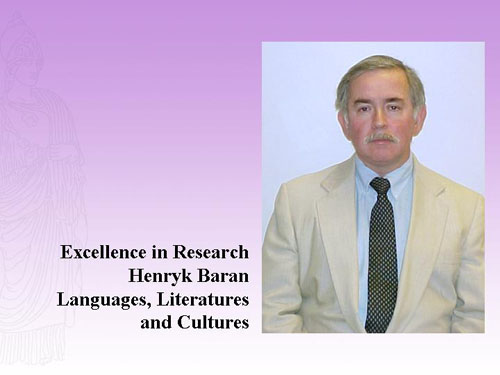
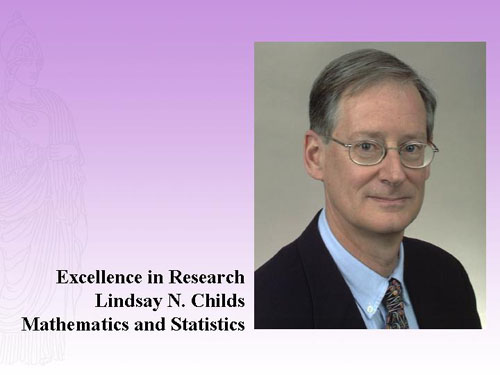
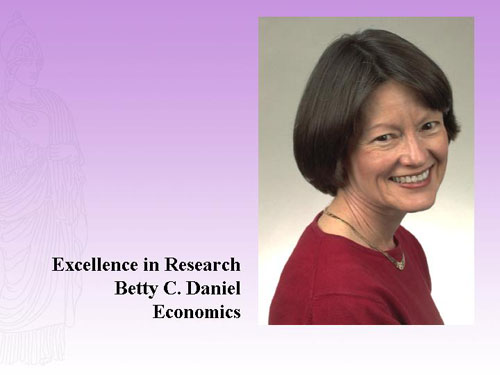
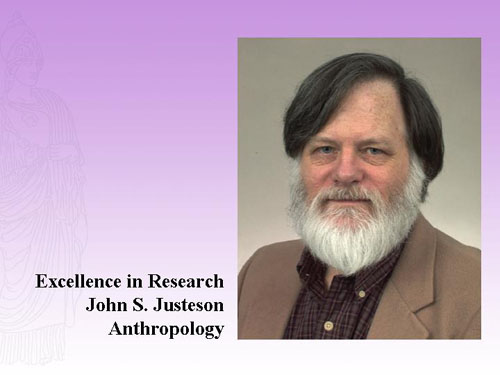
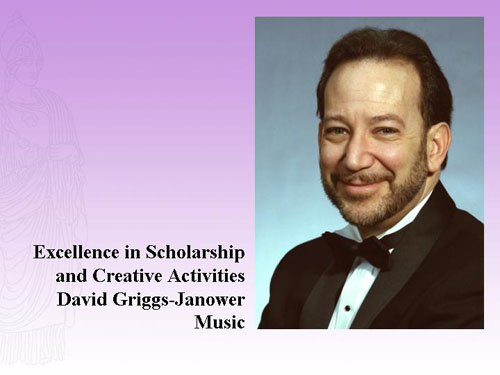
Our final Award, newly established just this year in parallel with a newly-established Chancellor's Award, recognizes Excellence in Scholarship and Creative Activities. The first recipient of this new Award is widely recognized for his exceptional talent, creativity and devotion to his students. Please join me in congratulating David Griggs-Janower.
It is also a tremendous pleasure for me to acknowledge four of our colleagues whom the Board of Trustees has promoted this year to the highest academic ranks within the State University of New York. The faculty members so honored clearly represent the highest ideals of our profession. Please join me in congratulating:
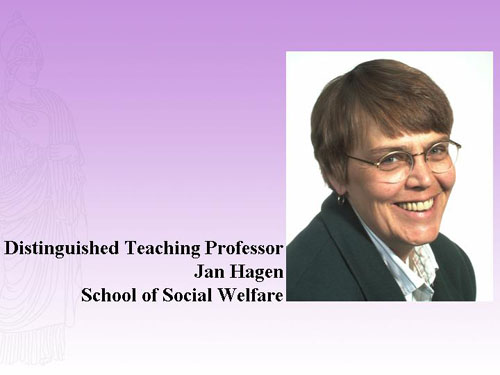
Distinguished Teaching Professor Jan Hagen, School of Social Welfare
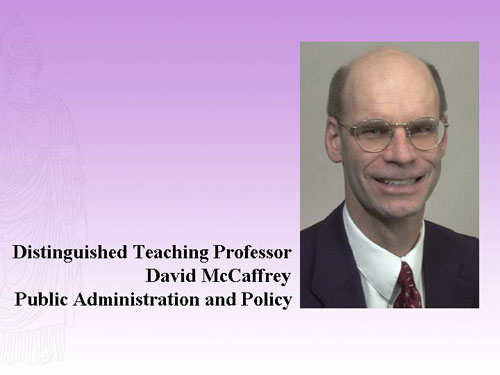
Distinguished Teaching Professor David McCaffrey, Public Administration and Policy
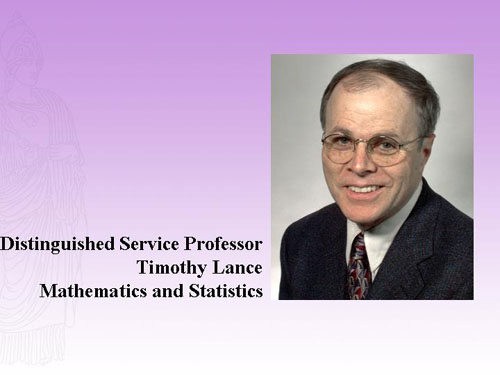
Distinguished Service Professor Timothy L. Lance, Mathematics and Statistics
And finally,
Distinguished Service Professor Timothy L. Lance, Mathematics and Statistics
And finally,
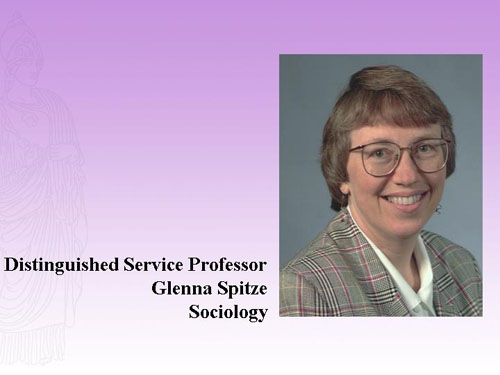
Congratulations to you all!
Please join me in, once again, saluting all of these exceptional colleagues.
As all of you know, over the last several years our University has engaged in a number of planning and institutional evaluation activities: our University Strategic Plan, completed in 1998; the Master Plan developed to articulate our needs in the area of physical facilities and infrastructure; the Self-Study Report, 1990–2000, prepared for our decennial review by the Middle States Association of Colleges and Schools; and, the Memorandum of Understanding in response to the State University of New York's Mission Review Process.
All of these activities were carried out by institution-wide committees involving scores of faculty, staff and students who examined the institution's strengths, clarified the many challenges facing UAlbany, and enunciated the values and goals which would guide us as we sought to move our institution forward. These Plans and Reports provide a consensus view of our strengths and opportunities, even as they articulate areas which require improvement and creative new approaches.
Several years have passed since we, together, established the strategic goals which would guide us... goals which addressed the quality of our student body, enhancement of our faculty ranks, research productivity, expansion of our institutional resources and the quality of our outreach and engagement with our various communities.
It is timely, I feel, to take a few moments to review the status of the various strategic initiatives we have undertaken to achieve our goals in these areasto reflect on both the progress we have made, as well as areas of continuing need. I will then discuss the potential impact of the still evolving state budget on our future progress in these critical areas... a budget which will certainly create challenges, but a budget we are prepared, together, to manage.
First, the strategic goal of enhancing student quality
As you know, the academic profile of our student body had begun to slip in the mid-90s. All of our planning groups and faculty councils agreed at the time that we needed to mount a sustained, multifaceted and integrated campus-wide effort to reverse this trend... to attract and retain more highly-talented and motivated students.
When coupled with our related goal of increasing the size of our student body to some 20,000, it was clear that virtually every part of our institution would need to be involved. Enrollment management strategies needed to be more sophisticatedmore competitive with our peer institutions; the rigor and range of our academic offerings had to be responsive to the needs and expectations of a more talented student body; a high-quality learning experience making full use of computing and related technologies needed to be enriched and maintained; academic support services, ranging from freshman advising and career development to study groups and tutoring, needed to be more responsive to student needs; the living/learning environment here at UAlbany, a major factor in student satisfaction and retention, needed to complement and extend our university's formal academic programming — from orientation, to in-residence learning, to the appearance and livability of the residence halls, toyesthe quality of the food, to intramural sports and Division I athletics, to a revitalized... and personalized... commencement experience; and, finally, effective evaluative mechanisms were essential.
In terms of enrollment management, we have invested in a more robust recruitment and marketing function, as well as the kind of professionalized advising center so critical to student retention.
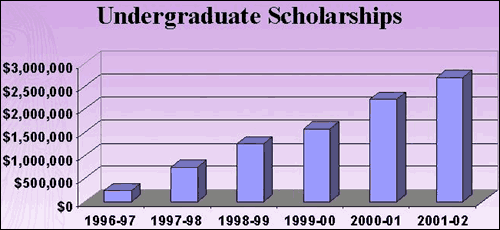
Targeted institutional investment in merit scholarships for high-achieving undergraduates — both in-state and out-of-state, has increased some ten-fold since 1996; and, while less dramatic,
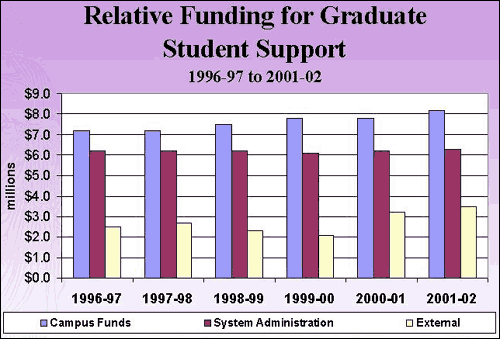
funds for graduate stipends have also increased over the same time periodsome $1 million in additional external funds from private giving, grants, contracts and industry partnerships, and a comparable increase in reallocated institutional funds. In contrast, SUNY-derived funding did not grow during this period, until 2000, when an additional $500,000 was allocated. Clearly, a major effort is still required if our stipend levels are to be nationally-competitive.
Following nearly six years of strategic investments and focused enrollment strategies, the student body, especially at the undergraduate level, is beginning to reflect significant change.
Overall, campus enrollment has grown 7.7% — from 15,973 to 17,204... predominantly at the undergraduate level.
And, at the same time, the academic profile of our entering freshman has also increased.
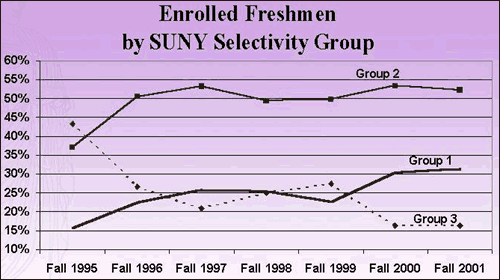
Using SUNY criteria, students in Groups I and II, the highest selectivity groups, have increased as a percentage of our enrolled freshmen — a trend which continues for the entering fall, 2002 class.
While increased investments in enrollment management initiatives and scholarships certainly have had a major impact on our institution's accomplishments in attracting an increasingly talented student body, study after study has shown that such talented students are best attracted — and retained — by the excellence and rigor of a university's academic program.
In order to enhance our academic programs, difficult choices have been made over the last several years. Institutional investments for new faculty and student support have been targeted to programs with the clear potential for achieving or improving national rankings.
Curricular initiatives designed to enhance recruitment and retention have also been supported. Project Renaissance, our innovative, interdisciplinary, freshman living/learning general education experience, has increased retention for participating students from 85% to 92%. Honors programs have been expanded; the General Education program has undergone major revision; exciting new undergraduate interdisciplinary programs in such areas as urban studies and planning, earth and atmospheric sciences, international studies and bioethics have been developed — with more to come; graduate level programs in forensic molecular biology, biodiversity, conservation and policy, and women's studies; and, the establishment of a new graduate school in nanosciences and nanoengineering — such innovative curricular highlights are simply illustrative. Such curricular enrichment has played a significant role in attracting and, then, retaining an increasingly talented student body. The fact that such a student body has increasingly high expectations for their learning experience here at Albany has obvious budget implications, a point I'll return to in a moment.
Indeed, our students' expectations in such areas as technology, academic support services and the quality of the living/learning environment here at Albany must also be met... and, much progress has been made. Teaching spaces are being expanded and refurbished; global electronic resources are available in our new science library; universal internet access is being made possible through ResNet and the podium wiring program; and, 43 new "smart" instructional sites are now available. The Center for Excellence in Teaching and Learning has been a change agent for new pedagogies that emphasize technologies; indeed, some 250 course sections serving 11,000 students utilize some form of web-based instruction.
As the data indicate, it is clear that such a multifaceted, coordinated, and strategic approach can be successful as we continue to address our long-term goal of enhancing student quality here at the University at Albany.
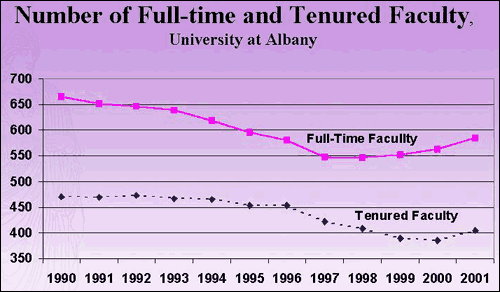
Clearly, recruiting and retaining high-achieving students is dependent on recruiting and retaining a world-class faculty. As you all know, due to a series of reductions in state funding, UAlbany lost more than 100 faculty during the first half of the 1990s. That trend was arrested in 1997 and reversed in subsequent years by making faculty recruitment the first priority for budget allocation.
Utilizing a number of different strategies, my commitment to you that we would achieve an annual net increase in faculty has, to date, been met. Since 1998, some 48 new full-time faculty have joined us here at UAlbany.
Such hirings have been made possible through major reallocation of institutional resources from non-academic to academic units, as well as through the identification of new, non-state revenue streams. Retention of faculty has also been addressed through targeted and proactive salary management, and the enhancement of our research facilities.
In keeping with our Strategic Plan, many of these hires were in programs of current or potential national prominence. This hiring strategy, while requiring difficult choices, has enabled us to build critical mass in a number of our strongest disciplines. And, building such strength has also enabled us to identify additional new, non-state revenue streams, as well as increase our research productivity.
Indeed, initiatives to enhance our institutional research productivity are closely intertwined with those to recruit and retain world-class faculty. Facilities and research infrastructure need to be competitive with our peer institutions, and incentives such as unit-level access to indirect cost recovery funds needed to be developed. Further, the development of interdisciplinary research programs reflective of our faculty strength and responsive to societal need has proven to be an extremely effective strategy in enhancing our research productivity, even as it has enhanced our physical and fiscal resources.
Our faculty are garnering increased numbers of prestigious fellowships, editorships, visiting professorships and Awards. Indeed, please join me in congratulating our own Professor William Kennedy for his recent election to the prestigious American Academy of Arts and Sciences.
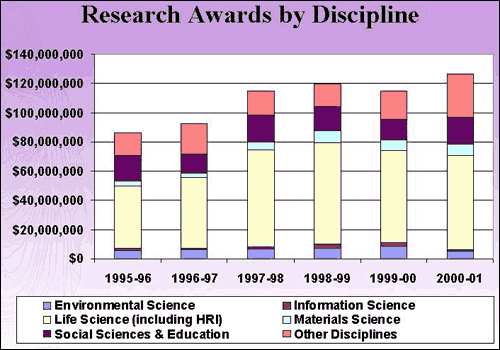
And, across all our disciplines, extramural support for research has increased 46.6% since 1995, growing to $126.6 million in 2001.
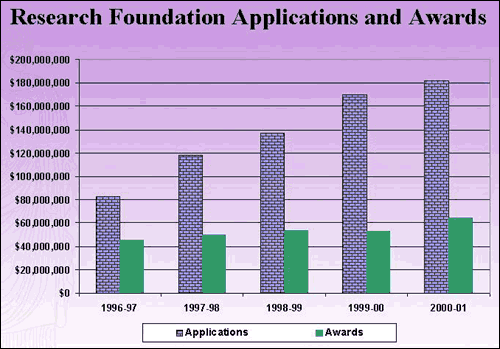
Indeed, the projection we made in our MOU with SUNY of a 5-7% annual increase in sponsored funds over the next several years is, I feel, realistic given the increasing size of our faculty's grant applications and subsequent awards.
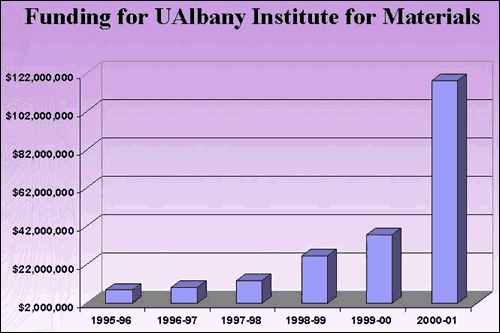
Further, the development of multi-investigator, large program grants in areas of research which reflect state and national needs clearly has proven to be an effective strategy for attracting considerable extramural resourceshere illustrated for the University at Albany Institute for Materials.
Such large research initiatives help to stabilize our campus' overall research infrastructure, recruit graduate students and postdoctoral trainees and attract new partners whose investment in our programs helps to enhance our national competitiveness.
Clearly, enhancing our faculty ranks and expanding research productivity require a major expansion in institutional resources. New and robust revenue streams are needed if we are to continue to grow, even at times of limited state tax dollar appropriations.
Over the last several years, a particularly successful strategy has involved the alignment of our research strengths with areas of regional, state and national needs and priorities. Such a strategy has increased our resources in a major way, even as it has deepened our engagement with our many communities.
The fact that our strengths in advanced materials and nanotechnology aligned well with national and state-wide growth in the microelectronics industry has led to major new resources for research programs, graduate student and postdoc support, new buildings, sophisticated equipment, research personneland, importantly, faculty lines.
Aligning our tremendous strengths in gerontology with the needs and priorities of our region and state has attracted considerable private support, opening up major opportunities for research, education and community engagement.
Aligning our programs in public health and biomedical-related research with state and regional business needs yielded an entire new campus for the University.
Aligning our programs in East Asian Studies and Business with increasing demands by multinational business partners for well-educated, culturally-sensitive, multilingual graduates has generated scholarship support and new faculty lines.
And the list could go on...
This recognition of, and responsiveness to, societal need — from economic development to the care of the elderly to changing workforce needs to literacy to demographic analysis — has greatly enhanced the quality of our relationships with the communities we serve. And, through the partnerships developed, we have been enriched both intellectually and financially. This strategy has enabled us to grow in a major way, despite a no-growth SUNY operating budget environment.

Facilities obtained over the last five years through a combination of non-SUNY state funds, federal funds, private gifts, grants and innovative financing have increased our space by some 1,248,000 gross square feet... 705,000 of which is new academic and research space.
These same strategies have increased our property holdings by some 88 acres.
Our government, business and community partners have made investments which have transformed our University.
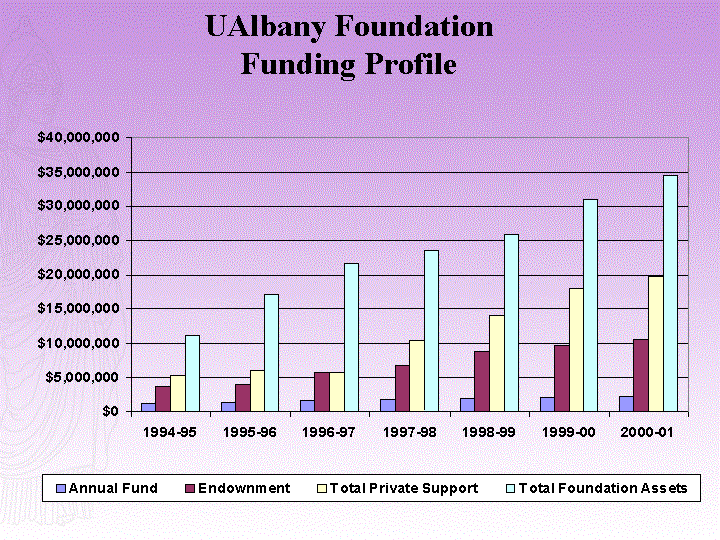
Advocacy with our alumni and university partners has also had a major impact on generating new, non-state revenues. There has been a 265% increase in annual private philanthropic support, growing from about $6 million in 1995 to $19.7 million in 2001... not counting the precedent-setting $100 million IBM gift obtained a year ago. Our endowment, while more than tripling over the same time period, is unacceptably low for an institution of our size and quality. Increasing this critical aspect of our private support must be a key priority as we move into our comprehensive campaign.
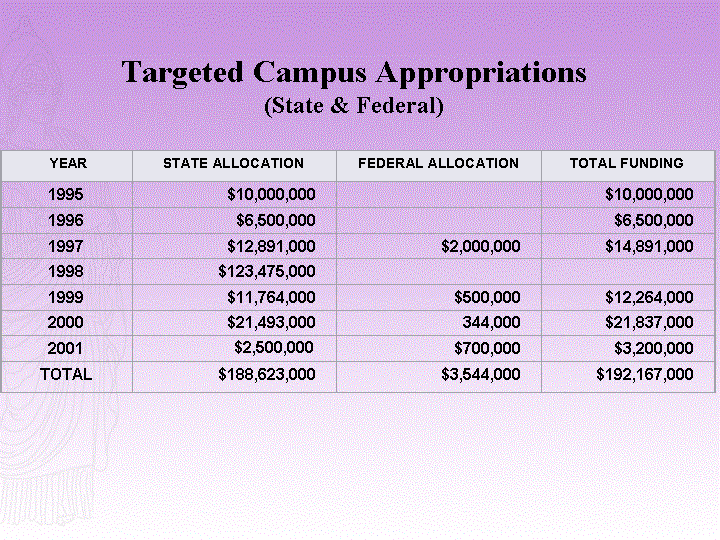
Further, by identifying and promoting faculty programs which are responsive to state and federal priorities, some $189 million in special state funding and $3.5 million in special federal funding have been obtained since 1995. This new funding has provided competitive support for our graduate students, increased our research staff, and increased our faculty lines. Further, this funding has enabled our campus to expand its facilities in a major way.
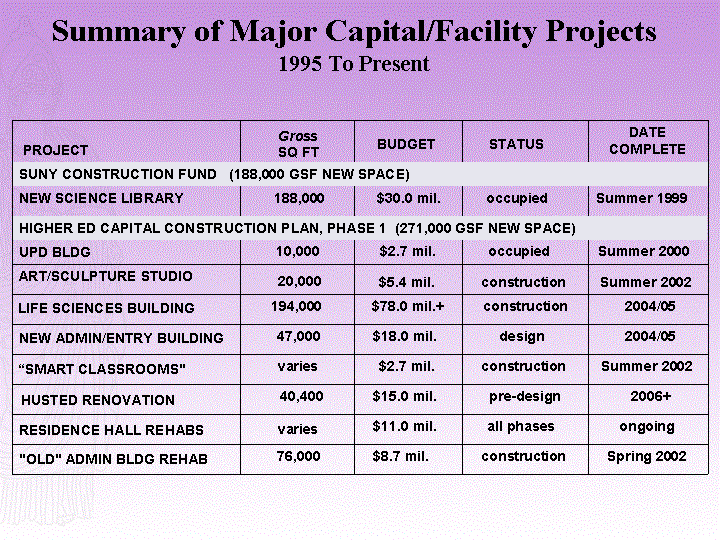
Advocacy with the State for long overdue expansion of our academic facilities has resulted in $120 million in state construction funding for academic facility priorities.
These SUNY-supported building projects, coupled with the major new properties and buildings made possible with non-SUNY resources, will address many — but not all — of our university's urgent space needs. Major renovations on the podium and the downtown campus are urgently needed, and space for new buildings on both the uptown and downtown campuses is severely limited.
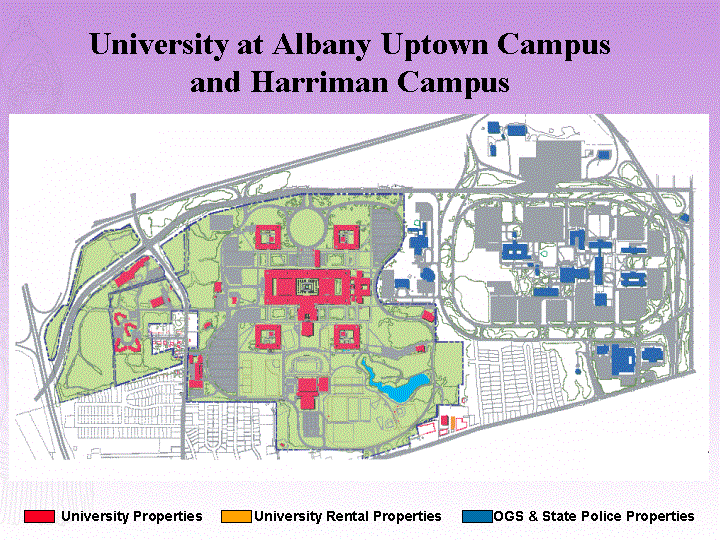
We were, therefore, extremely pleased when the Governor recently announced a public-private partnership involving the transformation of the 350 acre Harriman State Office Campus to a research and technology park which will be connected to our uptown campus.
As at our East Campus and CESTM, university faculty and students would be co-located in state-of-the-art facilities with private sector colleagues in related areas of research, greatly expanding our facilities and research infrastructure in a manner totally consonant with regional and state needs. Many faculty and staff worked closely with us over the last two years to help advocate for this once-in-our-institution's-lifetime opportunity to expand our physical resources in such a major way... we are deeply grateful to you all.
Through the implementation of a number of interwoven and complimentary strategic initiatives, UAlbany has grown considerably over the last several yearsgrown in physical and fiscal resources, grown in faculty, grown in research productivity, grown in student quality, grown in technological capability and grown in regional, state and global impact and reputation. New and more engaged partnerships with our various constituencies have expanded our resources even as they have enabled us to be more responsive to societal needs.
Our challenge now is to manage this growth in the context of an increasingly constrained state budget.
Many factors have contributed to the challenges faced by New York... from the impact of September 11, to a nation-wide economic downturn resulting in decreased tax revenues, depressed market values and increased unemployment.
Such New York State budget challenges must also be viewed in the context of recent trends in SUNY funding. Despite an increase of 22.78% in the Higher Education Price Index since 1995, there has been only limited additional state tax support, and no tuition increase over the same time period.
In terms of the budget environment here at UAlbany, the substantial growth we have experienced due to the successful implementation of our strategic initiatives has greatly advanced our institution. However, this very success challenges our state-derived resource base. Increased numbers of high-achieving students and productive faculty place increased demands on our facilities and operating budgets. And, the new buildings required to support expanded research and instructional programs create additional operating expenses not covered by state resources.
However, while the costs of such growth are not being covered by traditional state resources, non-state revenues are growing and will continue to be critical in supporting campus program expansion.
Finally, like our national peers, we face a series of escalating infrastructure costs which must be managed.
Over the past several years, a number of strategies have been utilized to mange the pressures on our budget caused by planned campus growth.
An operating reserve was established so that funds would be available centrally to meet unanticipated needs without impacting academic programs. Cost-saving measures in such areas as utilities have been implemented and, as already described , non-state revenue streams have been greatly expanded. Indeed, a new incentive budget model will, we hope, expand our revenue streams even further. Finally, last year all campus units participated in reallocation of resources to meet increased budget demands in areas of strategic importance.
Such reallocations reflected the priorities enunciated in our Strategic Plan and, in consultation with URPAC... the University Resource and Priorities Advisory Committee... investments were directed toward initiatives which helped address such shared institutional goals as increasing faculty lines, supporting distinctive academic programs, and increasing graduate stipend levels, among others.
Given flat, or decreasing, state funds, particular attention has been given to developing strategies to increase and diversify our institution's revenue streams. As I have already described, substantial new funding to support faculty lines, students, operating costs and new facilities has been obtained by aligning institutional strengths with the needs of our various communities. Service-provider corporate partnerships have also provided new resources for scholarships; and special state and federal appropriations totaling over $190 million have supported the development of major new programs, increased student support and new facilities and equipment.
Targeted fees, established in consultation with our students, have enabled us to continue to provide critical services to our students.
And, as already detailed, enhanced private philanthropy and considerable success in expanding revenue streams from federal and state grants and contracts and industry sources have greatly enhanced our programs of research and instruction.
Despite all these strategies to manage growth-related costs and increase non-state revenues, the 2002-2003 budget year will be particularly challenging. Due to significant tax revenue short falls and 9/11 recovery efforts, a "no-growth" state budget strategy has been proposed, even as we face major, unavoidable cost increases in negotiated salaries, inflation and utilities.
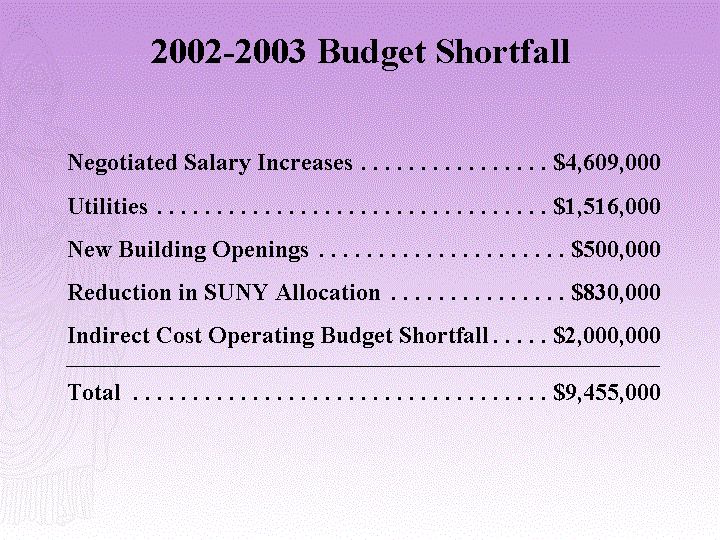
This is the situation: Our campus faces a possible $9.5 million shortfall. Increased costs due to unfunded negotiated salary increases, utility costs and expanded operating costs as the sculpture studio and new arts and sciences space come on line are compounded by a reduction in our enrollment-based SUNY allocation due to system-wide enrollment increases, and a major shortfall in our indirect cost recovery.
As we plan for a shortfall of this magnitude, we know that we must address as much of it as possible with permanent base funding so as to decrease the impact of this year's shortfall on the out-years. On a positive note, we also anticipate that, over time, negotiated salary increases will be funded and a new tuition policy will be instituted.
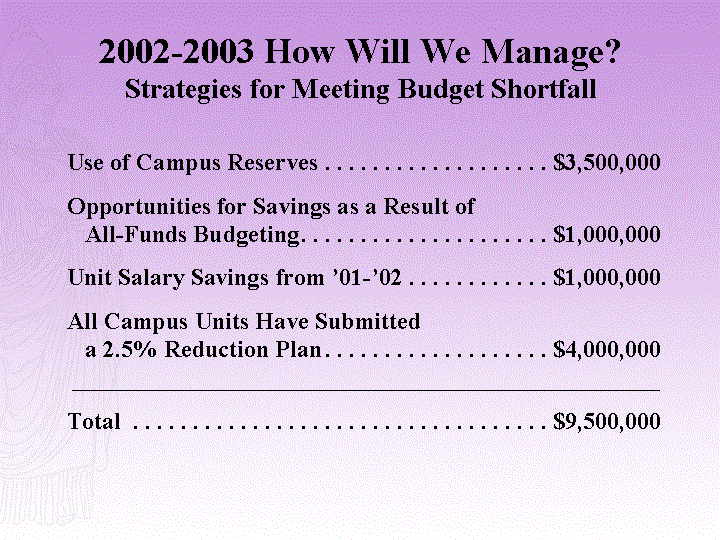
Given these assumptions, we plan to address the projected 2002–2003 budget shortfall, first, by applying campus reserves established over time for just such an eventuality, and by utilizing the savings generated by effective management of our various funding sources, as well as the savings resulting from delayed hiring during the 2001–2002 fiscal year. Finally, all campus units are participating in a 2.5% reduction plan, an effort which will continue to be discussed with URPAC.
All of these unit plansplans which include moving expenditures to non-state resources, deferring hiring, etc... are being evaluated on the basis of principles congruent with our Strategic Plan. Indeed, when implemented, reductions will most likely not be uniform across our various units.
To the extent possible, reduction plans will preserve instructional programs, full-time faculty lines, student support, health and safety programs, investments in external fund raising and some level of cash reserves. These priorities are in keeping with our Strategic Plan and, with continued investment, will position us to take advantage of future programmatic and funding opportunities.
While the fact that we have developed cash reserves and substantial non-state revenues will lessen the overall impact of the potential 2002–2003 budget shortfall, there will certainly be negative consequences of the budget reductions currently proposed by our various units. Instruction, rates of faculty hiring and campus services are likely to be affected.
However, we clearly can manage these reductions, and manage them in ways which will not significantly hinder the forward momentum of our University. Our financial base is strong, and non-state revenues are growing. These facts, coupled with the likelihood that a rational tuition policy will be instituted in the near future, bode well for the ongoing evolution of our University and its excellent programs of research and teaching.
As does the spirit and dedication of the faculty, staff and students here at UAlbany. Just yesterday, almost 600yes, 600faculty, staff and students participated with our wonderful Grounds Department in Spring Cleanup Day. The largest number ever! The uptown and downtown campuses have been transformed — new flowers, new sod, new mulch and a drastically reduced pine cone and pine needle count.
As I went around trying to thank everyone, I was struck with the feeling of pride all shared in our University, a pride that transcended an individual's particular job description or unit. In fact, on Indian Quad I met a group from the Student Loan Services Center located on our East Campus; they had joined us here for the day because they cared... cared about the University as a whole.
And, as we approach our 2nd Annual special Commencement Weekend, I also want to thank you all for, once again, organizing and implementing a culminating event for our students which will let them know how proud we are of their accomplishmentswill let them know that we are a better place for their presence. I still receive thanks for what you all accomplished last year... thanks for clearly showing our students that we are as proud of them as we are proud of this wonderful University... thanks that rightfully belong to you.
It is just that kind of institutional pride, just that feeling of individual responsibility, that will enable us to manage any challenges this 2002–2003 budget presents... and manage these challenges in keeping with the strategic goals and priorities that have guided us over the last several years.
This is a time for coming together; a time for informed dialogue and collegiality; a time for extensive communication across all our units and campuses... communication that is constructive and sensitive to the issues and particular needs of very different campus constituencies.
This "almost-past" academic year has been particularly remarkable given the growth and overall advancement of our University in the face of, at the least, constrained budgets. It has been a year of great accomplishment, and it has been a year of challengeschallenges that require a mutual commitment to openness and fairness — a commitment to engaged communication.
Increasing the opportunities for such campus-wide communication and sharing will be my personal priority for the coming year. For instance, it has been over three years since I accepted the Strategic Plan from the university-wide strategic planning committee. It is time, I feel, to examine our progress in the context of our institutional goals, and to assess the adequacy of the strategies we have put in place. Therefore, I will be scheduling six campus-wide fora over the next academic year, each designed to provide the opportunity for open discussion of each of our six strategic goals. In addition, I will be working with each of the Deans to arrange faculty meetings for me to hear your views on the ways these university goals are impacting your particular programs and issues. I look forward to these opportunities for open exchange and dialogue, and hope you all will participate in as many as your schedule allows.
In closing, let me express my sincere thanks to those members of our University who have given so much to all of us during the past year:
Our Vice Presidents, each of whom has led with wisdom, creativity and commitment.
Our Deans and Chairs, who have provided such dedicated and insightful leadership.
Our governance leaders; members of our university-wide committees; the heads of our employee unions; and the officers of our student organizations.
Thank you all so much for all you have contributed to our University.
I recently was called upon to prepare a Report reflecting on the past five to six years here at UAlbany. I would like to end my remarks to you today with the same words I used at the end of that Report:
"...the faculty at UAlbany are among the nation's best; they are committed to sharing both knowledge and a love of inquiry and discovery with their students. This is the reason UAlbany moves forward; this is the reason I have such faith in the continued growth in excellence of this exceptional institution."
Again, to all of you, thank you, and have a wonderful summer.