School of Public Health
The School of Public Health offers graduate training that addresses some of the most challenging health issues of our day, including AIDS, drug abuse, genetic diseases, women's health, workplace hazards, environmental crises, health care reform, and the health problems of poor and minority populations.
The result of a unique partnership between the University at Albany, the New York State Department of Health, and Albany Medical College, the School has a faculty of approximately 200, the majority of whom are engaged in laboratory research, scholarly investigation, or policy making activities in the New York State Department of Health, including the renowned Wadsworth Center for Laboratories and Research.
Public health internships, available in many different public or private health agencies, enable students to integrate practical experience with course work. Many students who work full-time in professional careers take courses at the School part-time. Graduates of the School of Public Health find job opportunities within state and local health departments, hospitals, federal agencies, research laboratories, health care consultancies, community and advocacy groups, and other health-related organizations.
Biomedical Sciences, Ph.D., M.S. Areas of specialization include biochemistry, molecular biology; and genetics; cell and molecular structure; neuroscience; and Immunology and Infectious Disease. The curriculum emphasizes the application of biological, chemical, physical, and medical sciences to solve important public health problems.
Biometry and Statistics, Ph.D., M.S. The Department emphasizes the application of statistics in the areas of public health. Current research includes the areas of atmospheric pollution, health policy and planning, clinical trials, nutrition, dental surveys, protein structure, and laboratory quality control.
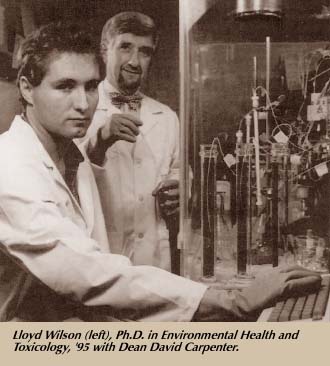 Environmental Health and Toxicology, Ph.D., M.S. Specializations are available in environmental chemistry, toxicology, and environmental and occupational health. The curriculum emphasizes the application of classical biological, physical and medical sciences to help solve environmental and public health problems.
Epidemiology, Ph.D., M.S. Research specializations include tuberculosis, AIDS, Lyme Disease, birth defects, occupational and environmental epidemiology and prevention; STDs, nosocomial infections, and outbreak investigations.
Health Policy and Management, M.S. The Program offers a broad perspective on political, social, psychological, and institutional forces shaping health and health policy, together with a strong set of analytic, normative, and quantitative skills for assessing and improving those policies. Faculty research interests include but are not limited to: universal health insurance, quality of care assessments, Medicaid, access to care for the poor, hospital reimbursement methods, hospital regulation, maternal and child health, adolescents at risk, ethical issues in health policy, maternal fetal conflicts, minority health issues, and legal aspects of health policy.
Public Health, Dr. P.H., M.P.H. An innovative professional education program offering broad-based coursework in the areas of knowl edge basic to public health, followed by practice in applying that knowledge through internship experiences. Concentrations are offered in behavioral science, biomedical sciences, biostatistics, environ mental health, epidemiology, and health administration.