Research
Interest
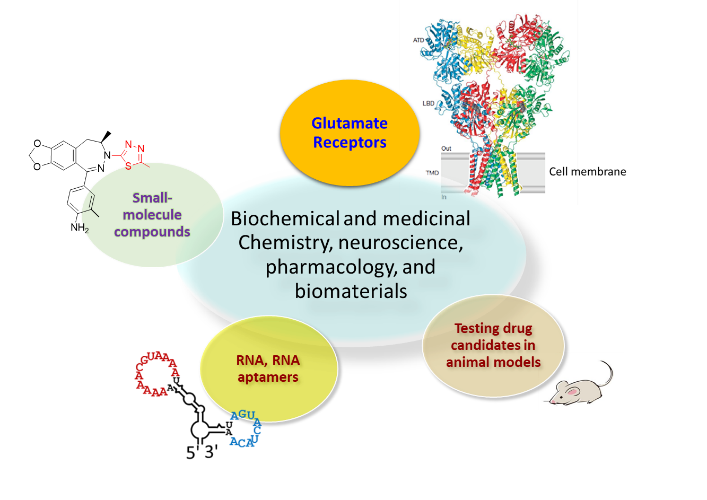
We study membrane proteins. The activity of virtually every cell is regulated by extracellular signals, such as neurotransmitters, hormones, and sensory stimuli. These signals are transmitted into the cell interior via membrane receptor proteins. Understanding how these membrane proteins mediate signal transmission and transduction is our primary research interest. In particular, we are interested in the structure and function relationship, the kinetic and molecular mechanism of protein function by protein-protein and protein-drug interactions. We also attempt to develop better inhibitor/potentiators to regulate membrane protein functions. In the long term, we hope that our research will provide not only insight into the mechanisms of action of these molecular machines, but also clues for design of molecular devices which can be used (i) for studying signal transduction pathways and (ii) as diagnostic/detection tools for disease treatment. We use an interdisciplinary approach in our research, including rapid kinetic techniques suitable for membrane proteins, biochemical and biophysical chemistry, molecular biology, electrophysiology and neuroscience.
Current
Research Projects
Our current research centers on glutamate ion channel
receptors. These receptors mediate synaptic neurotransmission and are
indispensable in the brain activity, such as memory and learning. Excessive
receptor activation, however, leads to neurodegeneration. Inhibitors of
glutamate receptors are thus promising agents to treat neurodegenerative
diseases such as amyotrophic lateral sclerosis (ALS). Upon binding to glutamate,
the glutamate receptor rapidly changes its conformation and opens its ion
channel pore to allow small cations such as sodium ions to flow across the
cellular membrane, thus transmitting an electrical signal between neurons.
Because the receptor channel opens in the microsecond second (ms)
time region and desensitizes even in the millisecond (ms) time domain, a rapid
kinetic technique must be used that not only has a sufficient time resolution
but also is suitable for studying these channel proteins embedded in membrane.
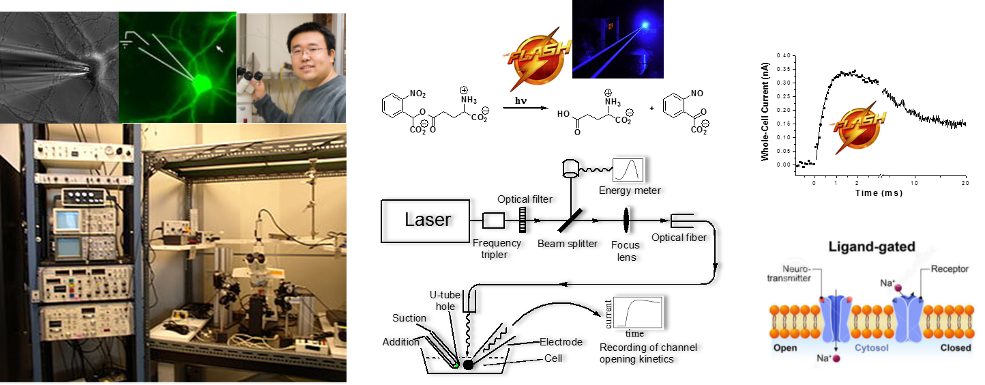
We use a laser-pulse photolysis technique, which permits glutamate to be
liberated from γ-O-(α-carboxy-2-nitrobenzyl)glutamate (or caged
glutamate) with a time constant of ~30 µs. This technique, combined with
electrophysiological recordings, serves as a unique functional tool so that we
can investigate the mechanism of channel formation, inhibition and regulation
within the µs-to-ms time domain. The following are some projects we are working
on.
1.
Kinetic Mechanism of Channel Opening
We
are characterizing the kinetic mechanism of receptor channel opening using the
laser-pulse photolysis technique. Knowing the kinetic mechanism of channel
opening enables a more accurate prediction of the time course of the open
channel as a function of glutamate concentration, which determines the
transmembrane voltage change and in turn controls synaptic neurotransmission.
Furthermore, characterizing the channel-opening rate constants is required to
define the integration of nerve impulses that arrive at a synapse or that are
generated at a synapse from different glutamate receptors, yet responding to the
same chemical signal, i.e., glutamate.
2.
Structure-Function Relationship
In
this study, we are particularly interested in the effect of structural
variations (either by nature such as RNA splicing and editing or by genetic
engineering) on the receptor function in the µs-to-ms
time domain.
For instance, a
single leucine-to-tyrosine substitution in AMPA-type glutamate receptors renders
the homomeric channel virtually non-desensitizing. In contrast, the wild type
receptor desensitizes rapidly. Our
study shows that the mutant closes its channel much more slowly. Thus, the
mutation is primarily responsible for turning the receptor into a very stable
open state.
3.
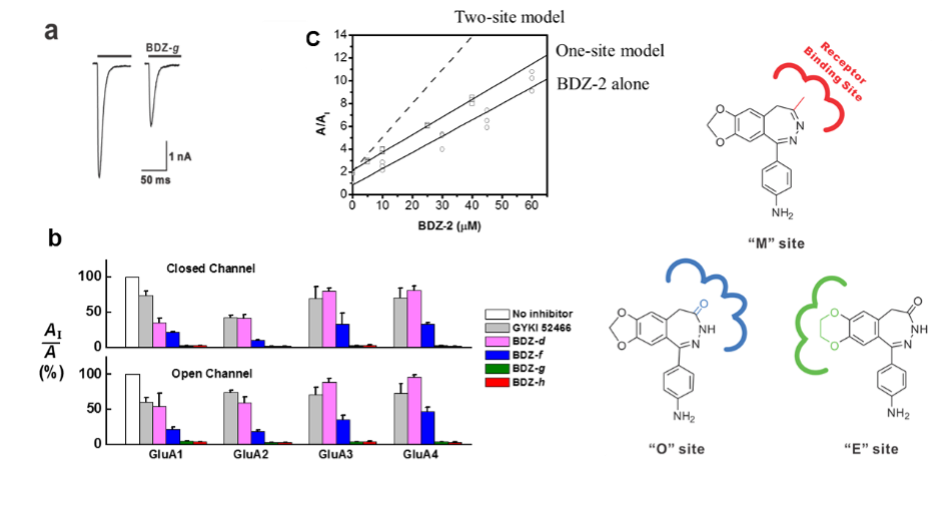
Mechanism of Inhibition
Excessive
activation of glutamate receptors, such as AMPA type, is known to induce
calcium-dependent excitotoxicity that leads to neurodegeneration. Therefore,
developing specific receptor inhibitors has been a long pursued therapeutic
strategy. We are investigating how synthetic inhibitors block the receptor
channel opening in the µs-to-ms
time region. We are also using these compounds as mechanistic and
structural probes to investigate the location and properties of the sites of
interaction between inhibitors and receptors.
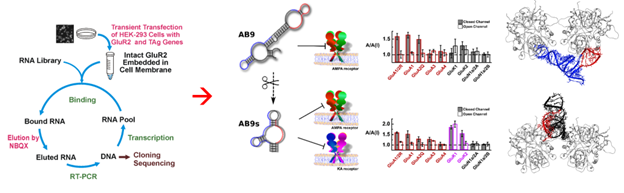
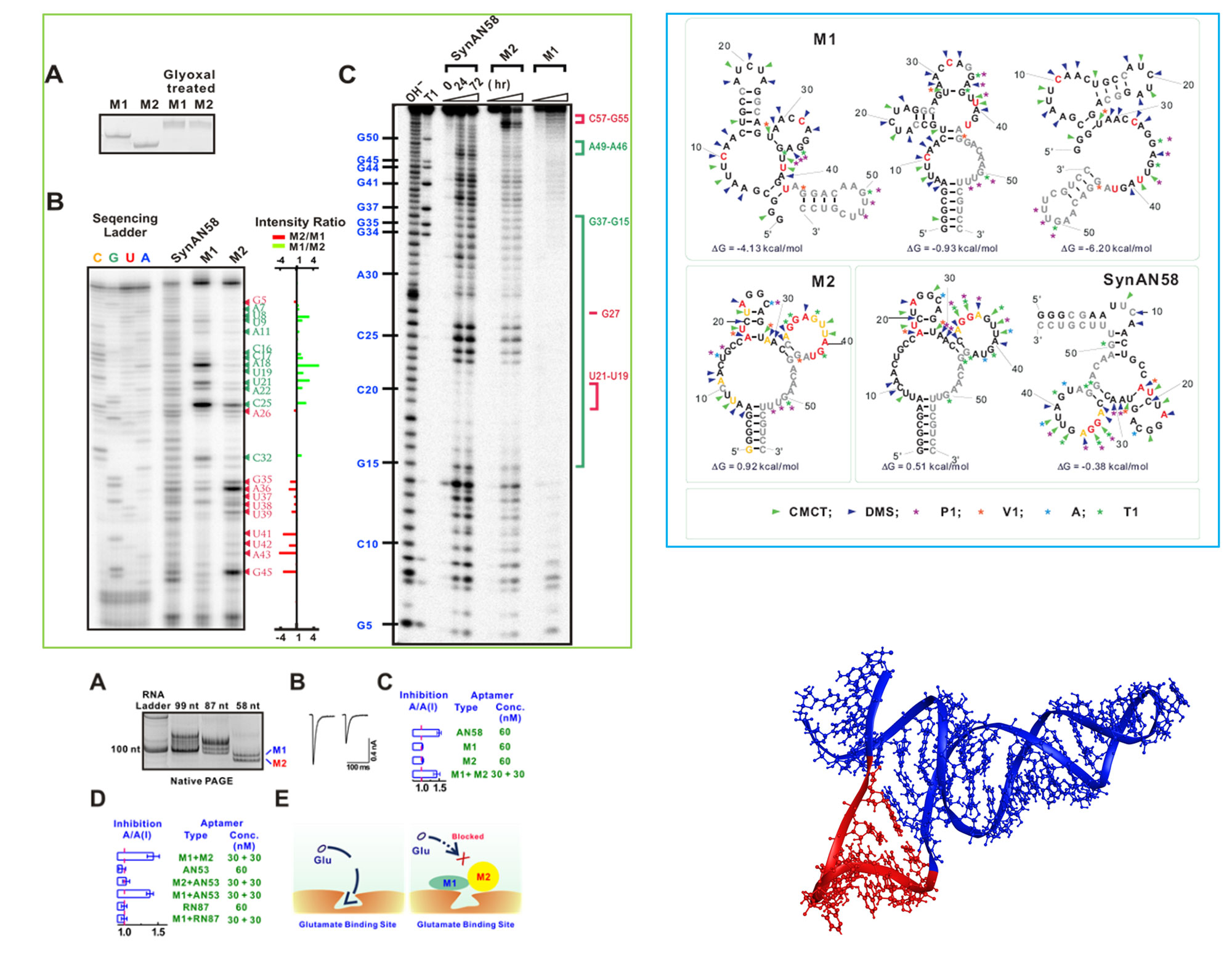
4.
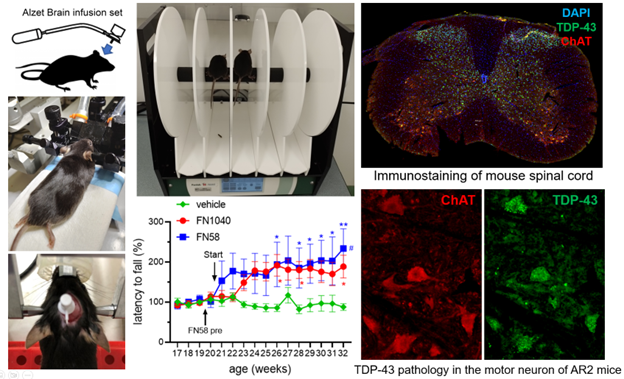
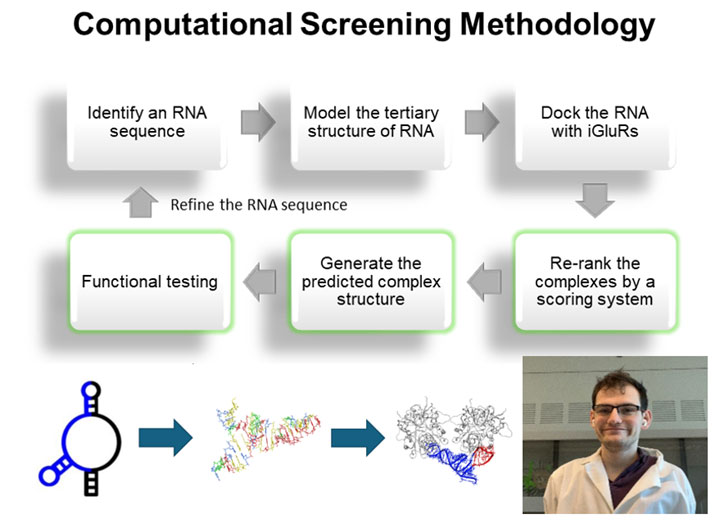
Developing Nucleic Acid-Based Drug Candidates for Potential Treatment of
Neurodegenerative Diseases
Unlike
traditional chemical synthesis, we are using a molecular biology approach called
SELEX (systematic evolution of ligands by exponential enrichment) and are
developing a new class of inhibitors from combinatorial nucleic acid libraries.
Some inhibitors we identified have both nanomolar affinity and novel mechanism
of action. They are unique templates for design of drugs and diagnostic reagents
with higher affinity and selectivity.
5.
Structural Studies
We
are also using NMR to determine the structures of chemical inhibitors and
nucleic acid inhibitors in the absence and presence of the S1S2 AMPA receptors.
The S1S2 receptor is a partial receptor protein containing the extracellular
binding domain. These studies are coupled with biochemical characterization of
the interface between the protein and the small molecules using techniques such
as footprinting. Our goal is to develop more effective and powerful small
molecules for regulating receptor function.
Examples
of our studies and results can be found in the publication list.