transcending silence

Safari users may need to refresh this page for navigation panels to open.

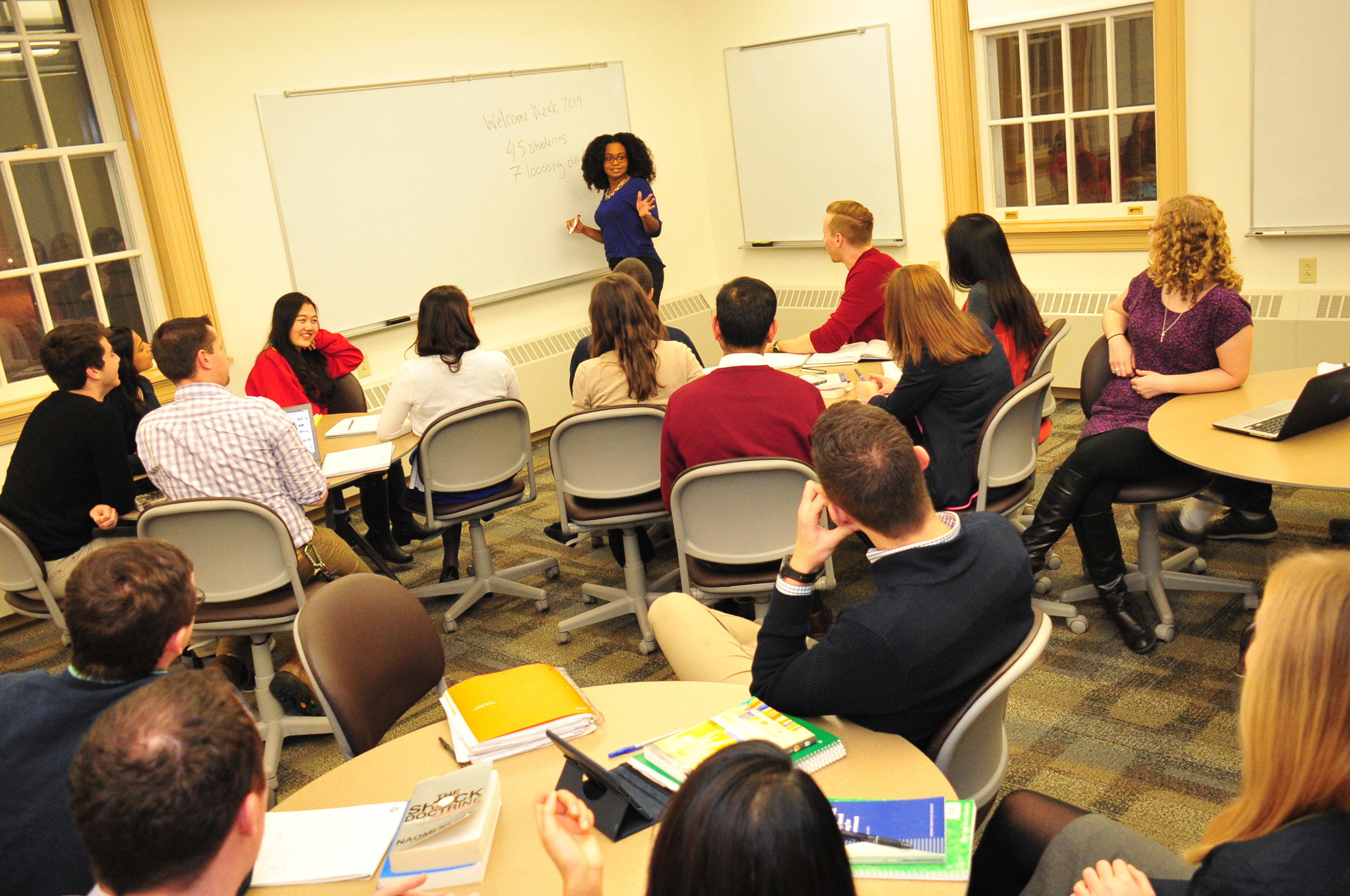
First stage: As editors, students enrolled in AWSS 342X (Electronic Publishing in Women's Studies) review and edit submissions as part of their final project for the class. When submissions are received, the entire editorial board reviews and discusses them during the weekly editorial board meetings, following criteria established by the Journal (see below for details). There are three possible outcomes from this stage of review: acceptance with minor changes; revise and re-submit; rejection with detailed explanation for the decision. This "blind" review process takes approximately two weeks.

Second stage: Two editors are assigned to work with the author of each manuscript/creative project that requires substantive revision (revise and re-submit). This collaborative process usually takes approximately one month and may involve more than one revision. "Revise and re-submit" is not a commitment to publish.

Third stage: The entire editorial board reviews all revised manuscripts/creative projects. At this stage, the editors also become copy editors and the main goal is to ensure the production of a high-quality journal.

Authors retain the right to publish or disseminate their work in other venues, provided that they acknowledge its original publication in transcending silence...

We welcome submissions from all undergraduate students, regardless of their institutional or disciplinary affiliation. Recent graduates may also submit their work within one year of graduation, provided that the work is not produced as part of their graduate studies.

We seek submissions that focus on contemporary and/or historical issues.

Submissions should address issues that relate to social problems, group and/or personally oriented activism, in both the private sphere and public arena.

Research should demonstrate in its analysis the intersections of gender, race, class, and nation.

Submissions should be well polished and proofread thoroughly. The writer should avoid using unnecessary jargon.

Each submission should include a "personal statement" from the author, explaining their choice of topic, and how their personal perspectives influenced their work.

Submissions are acceptable in a variety of formats such as research papers, literary abstracts or commentaries, theme-oriented papers, book reviews, etc.

Submissions should be original, previously unpublished works, and not under consideration for publication elsewhere.

The maximum length is 6,000 words, including notes.

Citation format: Authors should pay close attention to parameters outlined on the Style Guide.

The journal reserves the right to make editorial changes to any manuscript accepted for publication to enhance clarity or style. Authors will be consulted only if the editing has been substantial, though they will be able to review their articles prior to publication if they so choose. Authors should return the corrected manuscripts to the journal by a specified deadline.

All submissions must include: one hard copy of the manuscript; a digital version of the manuscript in Rich Text Format and saved on a CD-ROM; an abstract of the paper; a cover sheet with the author's contact information, including name, e-mail and postal addresses, and phone number.

Except for the cover sheet, the manuscript should not include any identification. In other words, please do not embed your name in the header or footer of the document.

Creative and artistic forms should be thought-provoking and convey depth and understanding.

All of the guidelines for research essay submissions, except for the Style Guide, apply to creative works as well. To preserve the integrity of the anonymous review process, please make sure that your name does not appear anywhere on your creative project.

Submissions are accepted in a variety of genres, including short fiction, poetry, personal narratives, photography, drawings, documentaries or film shorts.

The maximum length for short fiction or personal narratives is 4,000 words. Documentaries or digital video shorts should not be longer than 15 minutes.

Please do not send us original copies of your video, paintings or photographs. Send us digital copies on a CD or DVD.

Formats:

  • Audio; We prefer audio files in mp3 format.
  • Video: We prefer video files in mp4 format.
    (If there are any questions, please feel free to contact us at wjournal@albany.edu.)
  • Drawings, paintings, photographs, poster art: JPEG.

The maximum length is 1,500 words.

All of the guidelines for research essay submissions apply to book or film reviews as well.

We are accepting submissions for the Fall 2009 issue. The deadline is October 16, 2009 (not a postmark date).

Please mail submissions to:

transcending silence...
c/o Department of Women's Studies
University at Albany, SS 353
1400 Washington Ave.
Albany, NY 12222

Sorry, we do not accept submissions by e-mail.

Submissions will not be returned.

The Style Guide may be downloaded here.