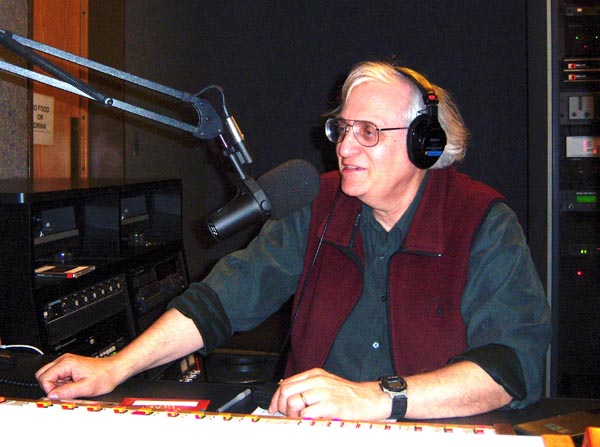
PRODUCING HISTORICAL DOCUMENTARIES AND FEATURES FOR RADIO

http://www.albany.edu/faculty/gz580/documentaryproduction

Course Syllabus and On-Line Resource Links
Fall 2006


HISTORY 390 [14920] & 530R [14924]
Prof. Gerald Zahavi
Dept. of History, University at Albany-SUNY
Classroom: LE G-24 (History Digital Classroom 4 - Science Library)
Course Schedule: Mon. 4:00-6:40
Office: Ten Broeck 202
Phone: 518-442-4780
Office Hrs: Mo 1:30-3:30 PM; Tu 2:00-4:00 PM
and by appointment
E-mail: gz580@albany.edu

COURSE INTRODUCTION:

For too long, historians neglected radio and other media as respectable instruments of communication; they were too public, too loud, too inhibiting, and too reductive of complex ideas and concepts about politics, the economy, gender, race, and culture. Of course, historians paid a price for their neglect: they rendered themselves culturally invisible. With a few exceptions, historians failed to cultivate audiences that extended far beyond their peers.

In recent years, though, this has begun to change. The History Channel, the documentaries of Ken Burns and other independent producers, and the immensely popular historical radio documentaries and interviews aired by National Public Radio (NPR), Public Radio International (PRI), and many local radio stations, have begun to bring more and more historians and more and more history into living rooms, neighborhoods, and into our car radios. This course (like its new sister course, Readings and Practicum in Historical Film and Video Documentary Production (http://www.albany.edu/faculty/gz580/histdocfilms), aims to contribute to this trend. It is part of the History Department's developing History and Multimedia program, a program devoted to bringing history to the airwaves, to the Internet, to television and theaters, and to the streets -- in essence, to make historical thinking a larger part of American life and discourse. More specifically, it is designed to train graduate and advanced undergraduate students in the use of radio and radio technologies to communicate historical ideas to broad audiences -- and to do it in a way that does not dilute or oversimplify serious historical scholarship.

This course focuses on teaching students the full range of skills needed to complete historical radio documentaries and features: developing story ideas and treatments, conducting aural and textual research in general and specialized archives, scriptwriting, recording and interviewing, logging/indexing tapes, editing and mixing audio elements, and much more. It will introduce students to the theory and practice of radio documentary production (exploring various formats and styles that have proven successful), giving plenty of attention to the aesthetic and technical aspects of the art: audio theory and technology; collecting historical audio source materials (including sound effects, actualities, and archival audio recordings); copyright, releases, and other legal matters; digital audio editing; mixing down and producing CD masters. We'll end by discussing distribution and promotion of the finished radio documentary (equivalent to how to get a history article or a book published).

In addition to working our way through the research and technical skills of historical audio documentary production, we'll also examine the history and politics of radio broadcasting -- focusing mainly on non-commercial radio where documentaries have been most frequently aired. We'll also critically examine what's been done with history on radio, listening to such recent productions as "Leonard Bernstein: An American Life," "Grandma was an Activist," "Rosewood Reborn," "The Yiddish Radio Project," "Remembering Jim Crow," "Mandela: An Audio History," "Blacklisted: A Personal History of the Hollywood Blacklist" -- as well as classics from more than a half-century ago.

Along with several assignments/projects, students will be expected to write a script and produce a 20-minute historical documentary over the course of the semester, one that would be worthy of being aired on radio. In fact, most will hopefully be showcased on the air and on the Internet. Productions will be broadcast on Talking History on WRPI-FM.

GRADING:

Grades will be based on class participation (20%), projects and short writing assignments (40%), and a final 20-minute audio documentary—including script (footnoted and with a bibliography), and recording of the final production (40%). Please type all writing assignments and submit them electronically . No paper submission!

ACADEMIC DISHONESTY:

The following statement of policy is required by the University at Albany: It is assumed that your intellectual labor is your own. If there is any evidence of academic dishonesty, including plagiarism, the minimum penalty will be an automatic failing grade for that piece of work. Plagiarism is taking (which includes purchasing) the words and ideas of another and passing them off as one’s own work. If another person’s work is quoted directly in a formal paper, this must be indicated with quotation marks and a citation. Paraphrased or borrowed ideas are to be identified by proper citations.

READINGS, RECOMMENDED TEXTS, AND AUDIO RESOURCES:

  • Susan J. Douglas, Listening In: Radio and the American Imagination . . . from Amos 'n' Andy and Edward R. Murrow to Wolfman Jack and Howard Stern (Times Books, 1999). Selections (available on electronic reserve.)
  • Audio programs and documentaries, articles, chapters, and additional readings are available on library reserve, on the World Wide Web, or on electronic reserve. Some items, due to copyright/fair use restrictions are ONLY available to enrolled class members on electronic reserve. Selective assignments will be made from the following texts/resources. More details on access to these readings will be provided in class.
  • Durand R. Begault, The Sonic CD-ROM for Desktop Audio Production (Academic Press, Inc., 1996).
  • Horst J. P. Bergmeir & Rainer E. Lotz, Hitler's Airwaves: The Inside Story of Nazi Radio Broadcasting and Propaganda Swing (Yale University Press, 1997). [Includes audio CD].
  • Howard Blue, Words at War: World War II era radio drama and the postwar broadcasting industry blacklist. (Lanham: Scarecrow Press, 2002). Selections (available on electronic reserve.)
  • Ralph Engelman, Public Radio and Television in America (Sage Publications, 1996).
  • David E. Reese and Lynne S. Gross, Radio Production Worktext, 3rd edition ((Focal Press, 1998).
  • Charles Hardy III, "Authoring in Sound," [Essay available on the WWW. See this entry for link. My thanks to Charles Hardy for permission to post the essay on the WWW.] Also, "'Thinking Sound' Tape Samples" selected by Hardy to illustrate various production and recording techniques/approaches are available on the WWW though links below.
  • Michele Hilmes and Jason Lovigilio, eds., Radio Reader: Essays in the Cultural History of Radio (Routledge, 2002).
  • Marcus D. Rosenbaum & John Dinges, eds., Sound Reporting: The National Public Radio Guide to Radio Journalism and Production (Kendall/Hunt Publishing Company, 1992).
  • Randy Thom, Audiocraft: An Introduction to the Tools and Techniques of Audio Production, 2nd edition (National Federation of Community Broadcasters, 1989). [A new digital production edition is currently in draft form and may become available during the course of the semester].
  • Linda Wertheimer, Ed., Listening to America: 25 Years in the Life of a Nation, as Heard on National Public Radio (Houghton Mifflin Company, 1995).
  • Uganda Radio Network ~ Handbook for the URN Advanced Radio Journalism Course in Political Reporting: http://www.iwpr.net/pdf/urn_hbook_01.pdf

WEB SITES

  • Talking History: Aural History Productions. Based at the University at Albany, a production, distribution, and instructional center for all forms of "aural" history. Its weekly radio show is broadcast over the air and via the internet. Contributing and consulting producers include: David Cohen (New Jersey Historical Commission), Dan Collison (On the Job Productions), Curtis Fox (The Past Present), Charles Hardy (West Chester University), David Isay (Sound Portraits), George King, James David Moran (The History Show), Joe Richman, George Liston Seay (Dialogue), and many more.
  • Radio College <http://www.radiocollege.org/>. An outstanding radio training Web site. We will use many articles posted on it in this course.
  • MATRIX (Recording & Audio Guides): http://www.historicalvoices.org/oralhistory/audio-tech.html
  • Joe Richman's Radio Diaries Web Site. Description from the Web site: "Radio Diaries, Inc. is committed to producing a new kind of oral history. We work with people to document their own lives for public radio; teenagers, the elderly, workers, prison inmates and people in the forgotten corners of America. Our mission is to find extraordinary stories in ordinary places, and preserve these voices for generations to come."
  • Transom.org [http://www.transom.org]. An outstanding radio production resource site, administered by Atlantic Public Media [http://www.atlantic.org], a non-profit organization, founded by Jay Allison. Based in Woods Hole, Massachusetts, it is devoted to serving "public broadcasting through training and mentorship, and through support for creative and experimental approaches to program production and distribution."
  • The Audio Dimensions of History: A Bibliography and Guide to Audio and Textual Guide to Audio and Textual Sources on Historical Documentary Production for Radio, General Radio Production Techniques, and related Topics and Resources. [This document will be updated and enlarged periodically. Students and others are encouraged to recommend additions to the list. The bibliography is intended to be a resource for scholars, students, and the general public.]
  • AIROS: American Indian Radio on Satellite. A radio distribution service created to "inform, educate and encourage the awareness of tribal histories, cultures, languages, opportunities and aspirations through the fullest participation of American Indians and Alaska Natives in creating and employing all forms of educational and public telecommunications programs and services, thereby supporting tribal sovereignty."
  • Current. The on-line version of Current, a biweekly newspaper that covers news about U.S. public TV and radio.
  • Soundprint. Homesite of a major documentary production center.
  • American Radio Works. A major producer of public radio documentaries: "AMERICAN RADIOWORKS is public radio's largest documentary production unit. American RadioWorks creates documentaries, series projects, and investigative reports for the public radio system and the Internet. ARW is based at Minnesota Public Radio in St. Paul and also has staff journalists based in Washington and New York."
  • Association of Independents in Radio (AIR). Major organization that promotes excellence in radio production work. Education and advocacy organization.
  • The Canadian Society For Independent Radio Production. An organization founded in 1998 to serve the needs of professional and amateur radio producers and sound artists in Canada.
  • Battery Radio <http://www.batteryradio.com/>. Battery Radio, headed by award-winning Chris Brookes, is an audio production company specializing in radio documentary features. Their work has been aired by stations around the world. Their studios are located in St. John's, Newfoundland (near the birthplace of radio).
  • David Isay's Sound Portraits WWW Home Site. Examples of excellent documentary production work; see also the quick guide to documentary production available at that site.
  • Documentary Sound. [http://wlt4.home.mindspring.com/adventures/documentary.htm]. Looking for specific sounds for a documentary? This Web site may help you find it. It's "a partial discography and guide to resources for documentary sound (son verite, field recordings, etc). These are things like recordings of the sounds heard at specific locations (beaches and forests, junkyards, highways), of animals/insects, of certain processes, etc."
  • Lost and Found Sound. "Lost and Found Sound: An American Record is a collection of richly layered stories—evocative and haunting—that chronicle, reflect and celebrate the changing century-that mark the turn in sound. A special series designed to air on public radio throughout 1999 and into the year 2000."
  • Canada's Version of Lost and Found Sound. [http://www.radio.cbc.ca/programs/thismorning/lfnsound/index.html]
  • InterWorldRadio [http://www.interworldradio.org/index.cfm]. InterWorld Radio is a source of daily news bulletins and broadcast quality features for radio stations and online listeners. You can listen on line, or download audio files.
  • This American Life. One of the best and most original shows on public/non-commercial radio. Features long-form and short-form documentaries and much, much more. Some history pieces, but mainly contemporary subjects.
  • Third Coast International Audio Festival. [http://www.thirdcoastfestival.org/]. "The Third Coast International Audio Festival is a celebration of the best feature and documentary work heard worldwide on the radio and the Internet. Organized by a team based at Chicago Public Radio, the festival includes a competition, nationwide broadcast, conference, website and Chicago-based listening series, making it the first of its kind in North America. The Third Coast Festival (TCIAF) was designed to bring extraordinary and format-breaking radio to broader audiences, drawing listeners to radio's powerful ability to document the world we live in. Our mission is to enrich the opportunities available to veteran and rookie producers who are working to perpetuate this craft in fresh and vital ways."
  • Listening Between the Lines [http://www.listeningbetweenthelines.org/]. Alan Lipke, Senior Producer/Project Director. Produces an ongoing series which "explores roots of and remedies for what may be America's most powerful and lasting predicament: the racial divide resulting from the longest, bloodiest, most successful campaign of domestic terrorism and propaganda in U.S. history. It highlights the historic (and heroic) role of minorities in fighting for democratic values and justice nationwide."
  • Race With History / Creative Change Productions [http://www.racewithistory.org/]. "The Race With History project seeks oral histories, music, dance, poetry and all forms of cultural expression that can help tell the untold stories of people whose roots are in Africa, Asia, Latin America, and all parts of the globe. Many such stories remain to be told, discussed, turned over in our minds for their meaning, like cave drawings or trail maps of broken twigs, like moss on the side of a tree or the drinking gourd in the sky." Creator and Producer: Alan Lipke; Executive Producer and Managing Editor: Jude Thilman.
  • Broadcasting History Links (from Elizabeth McLeod).
    "There's a lot of information available on the World Wide Web for those interested in the history of radio and television-- the programs, the personalities, the networks and the stations. Much of it is useful -- but there's also a lot of misinformation out there! The purpose of this site is to sift thru the mass of material found on-line and suggest some of the most worthwhile resources for the serious student of broadcasting history."
AUDIO ON THE WWW:

Please note most of the audio files available locally through this syllabus are encoded as "streaming" compressed audio files. That means that you will not have to wait for minutes or hours to download the whole file before starting to listen to it. Files begin playing as soon as usable audio packets have streamed down from the server to the client (your computer). However, you'll need appropriate audio streaming browser plug-in programs to hear audio files. Specifically, you'll need RealPlayer/RealOne compatible software. Whenever possible, I've also tried to provide you with MP3 versions of files that can be downloaded and played on an MP3 player. Most of you probably already have software capable of playing RealMedia and MP3 files installed on your computers, but they may be older versions that are incompatible with the present encoding. It's fairly easy and free to upgrade your older versions! For RealMedia files, click here and select "Free RealOne Player" to obtain RealOne software: RealOne.

EQUIPMENT AND SOFTWARE:

There are a variety of recorders now available for high quality audio recording: analog cassette, minidisc, DAT, CD-R, and hard-drive/flash card. There is also lots of "junk" out there that is absolutely inappropriate for recording production quality audio; if you have a cheap cassette recorder with a built in microphone at home that you think might be useful in preparing assignments for this course, forget it. Leave it at home. Chances are, it simply doesn't meet the technical standards necessary for radio production -- and using a recorder with a built-in microphone is never acceptable. Some pro-level analog and digital recording equipment (cassette and minidisk) will be available to you on short-term loan. Ideally, however, for more extensive recording and maximum flexibility, you should consider purchasing a good quality portable recorder and a stand-alone microphone (you can get them through local vendors or through professional audio suppliers such as B&H Photo-Video-Pro Audio Corp [www.bhphotovideo.com], BSW [http://www.bswusa.com], Bradley Broadcast [http://www.bradleybroadcast.com], Sweetwater [http://www.sweetwater.com], and Full Compass [http://www.fullcompass.com]). E-Bay is a good source of used equipment, though there are many other used equipment and auction sites now on the Internet.

Various software options are available to students for computer-based digital audio editing. Although we will utilize mainly Audacity -- a free program available for PC and Mac users -- and Cool Edit Pro (now known as Adobe "Audition") in class, some of you might already be familiar with Pro Tools or other digital editing suites. Feel free to use whatever you are most comfortable with. You can obtain information or purchase software at the following sites (as well as through third party vendors--some of whom offer educational discounts):

1) http://www.adobe.com/products/audition/main.html Adobe Audition. (formerly Synrillium's Cool Edit Pro).

2) Audacity <audacity.sourceforge.net>.

3) http://www.sonicfoundry.com or http://mediasoftware.sonypictures.com/ (Sony's Sound Forge and Vegas)

4) http://www.digidesign.com or http://www.protools.com (Pro Tools Free -- for Windows 98 and ME operating systems).


Course Outline

Class 1 (Monday, Sept. 11): "The Creative Treatment of Actuality": An Introduction to the Elements of Radio Documentary and Feature Production

Readings:
  • Michael Rabiger, Directing the Documentary, 3rd Edition (Boston: Focal Press, 1998), pp. 3-9. A superb guide to film and video documentary production, and much of what Rabiger writes is equally applicable to audio documentaries. Available on electronic reserve. Read it after we meet; I'll be referring to it in the introductory class. On electronic reserve.
  • Class 2 (Monday, Sept. 18): The Art and Range of Audio Documentaries and Features / Introduction to Audio Recording and Recorders

    Readings:

  • Susan J. Douglas, Listening In: Radio and the American Imagination . . . from Amos 'n' Andy and Edward R. Murrow to Wolfman Jack and Howard Stern (Times Books, 1999), pp. 3-39. On electronic reserve.
  • Randy Thom, Audiocraft: An Introduction to the Tools and Techniques of Audio Production, 2nd edition, pp. 1-24. On electronic reserve.
  • Recording Basics (from <transom.org>): see: <http://www.transom.org/tools/recording_interviewing/200101.basics.jallison.html> and <http://www.transom.org/tools/recording_interviewing/index.html>.
  • Chapter 20 ("Documentary and Feature Programmes") in Robert McLeish, Radio Production: A Manual for Broadcasters (Focal Press, 1999).[On electronic reserve.]
  • A. William Bluem, Documentary in American Television (New York, 1965), 60-72 ("Radio: The Forgotten Art"). On electronic reserve.
  • Lawrence Lichty and Thomas W. Bohn, "Radio's 'March of Time': Dramatized News," Journalism Quarterly 51 (Autumn 1974): 458-62, reprinted in American Broadcasting, eds. Lawrence W. Lichty and Malachi C. Topping (New York, 1975). On electronic reserve.
  • Edward R. Murrow, "'Orchestrated Hell' and 'Buchenwald'," in American Broadcasting, eds. Lawrence W. Lichty and Malachi C. Topping (New York, 1975). On electronic reserve.
  • Audio tours and in museums: http://talk.transom.org/WebX?14@437.NavGaDquNrZ.0@.eeb70a3/1
  • Listen To:
  • March of Time [www.otr.com/march.html]: early broadcasts from this early dramatic news series. Listen to one or two.
  • Edward R. Murrow. Edward R. Murrow broadcasts, including one from Buchenwald. Originally aired April 15, 1945. Listen to the Buchenwald selection.
  • "Freedom's People, 1941-42 (Opening Broadcast: Music)." Real Media | MP3. Time: 29:08. "Freedom's People" (1941-42), an 8-part series produced by the Federal Radio Education Committee in the U.S. Office of Education and broadcast over the NBC network, was the first major radio series focusing on African-American life, culture, and history. [NOTES: The stated goal of Freedom's People, was to "promote national unity and better race relations." The brainchild of Dr. Ambrose Caliver, a specialist in Negro education within the Department of Education, the program enlisted a wide variety of African American intellectuals, musicians, and actors -- including E. Franklin Frazier, Sterling A. Brown, Joe Louis, A. Philip Randolph, Fats Waller, Jesse Owens, Cab Calloway, Josh White, and Paul Robeson. This is the first broadcast in the series, aired in September of 1941. The series included all of the following segments: "Music" (Sept. 21, 1941); "Science and Discover" (October 19, 1941); "Sports" (November 23, 1941); "Military Service" (December 21, 1941); "The Negro Worker" (January 18, 1942); "The Education of the Negro" (February 15, 1942); "Creative Art" (March 15, 1942); "The Negro and Christian Democracy" (April 19, 1942). For more information on the incredible career of Dr. Caliver and his contributions to black radio and black education, and for more specific information on "Freedom's People" see: chapter 2 of William Barlow, Voice over: The Making of Black Radio (Temple Univ. Press, 1998); Walter Daniel, Ambrose Caliver: Adult Educator and Civil Servant (Syracuse University, 1966); and Barbara Dianne Savage, Broadcasting Freedom: Radio, War, and the Politics of Race, 1938-1948 (Univ. of North Carolina Press, 1999). For information on this particular recording contact Talking History/University at Albany, or the National Archives' Motion Picture, Sound, and Video Records LICON, Special Media Archives Services Division, College Park, MD. Additional recordings of "Freedom's People" have survived in various archives. There are a number at the Recorded Sound Division of the Library of Congress as well as in the National Archives].
  • Recommended Listening/Readings/Web sites: My thanks to Dale Willman and NPR for making the NPR programs available to the class. We will revisit these later in the semester, as well.
  • NPR's Morning Edition. "Will Rodgers" segment from first show, 1971. Available only on electronic reserve.
  • NPR's Morning Edition. "Apocalypse Now" selection from first show, 1971. Available only on electronic reserve.
  • NPR's Morning Edition ("Graffiti" selection from the first show, 1971. Available only on electronic reserve].
  • The Hindenberg TragedyL Real Media. | MP3. Time: 2:39.
    On May 7, 1937, the German zeppelin, the Hindenburg, landed at the Lakehurst Naval Air Station, New Jersey. As it was landing, it exploded into flames. Of the 106 people on board, only 62 survived. This very famous spontaneous and emotive account of the explosion and fire that destroyed the Hindenburg was made by Herbert Morrison, an American radio reporter, and his audio engineer, Charlie Nehlsen. Both were working for Chicago station WLS at the time and were experimenting with delayed broadcast on-the-spot recording (at the time, networks eschewed the use of recorded material). It wasn't until after World War II that Morrison and Nehlsen's technique became widely adopted by news broadcasters. For more information on the Hindenberg broadcast, see: http://members.aol.com/jeff1070/hindenburg.html.
  • Audio-Technica, "A Brief Guide to Microphones." On line at: http://www.audio-technica.com/cms/site/9904525cd25e0d8d/index.html. Also available on electronic reserve in PDF format.
  • Minidiscs and Minidisc Recording: http://www.minidisc.org/index.html.
  • Hearing Voices: radio documentaries, sound portraits and audio art created by independent public radio producers: Hearing Voices site.
  • Soundprint Documentary Archive: Soundprint documentaries.
  • Inventing the Poster Child: This show explores how the disability charity business was built and how people with disabilities are working to change it. It is part of a four-part series on the history of society's attitudes toward the disabled and the emergence of a disability civil rights movement. The homepage for the project contains audio excerpts as well as primary source documents used in the productions: The Disability History Project.
  • Charles Hardy III, "Recording Oral Histories: Field Recording Equipment and Its Use." (Draft, 1998) [available on electronic reserve].
  • Richard Kilborn and John Izod, An Introduction to Television Documentary: Confronting Reality, ch. 3 ("Shaping the Real: Modes of Documentary"). While this is not about radio or radio documentaries, many of the documentary modes discussed have parallels to aural documentary production. On electronic reserve. [WE WILL REVISIT THIS IN CLASS #9]
  • Class 3 (Monday, Sept. 25): Listening to the Past: An Introduction to Aural History / Recording Voices and Interview, IReadings:
  • R. Murray Schafer, "Soundscape and Earwitnesses," in Mark Smith, ed., Hearing History (Univ. of Georgia Press, 2004): 3-9. On electronic reserve.
  • Bruce R. Smith, "The Soundscapes of Early Modern England," in Mark Smith, ed., Hearing History (Univ. of Georgia Press, 2004): 85-111. On electronic reserve.
  • Mark M. Smith, Mitchell Snay, and Bruce R. Smith, "Talking Sound History," in Mark Smith, ed., Hearing History (Univ. of Georgia Press, 2004): 365-404. On electronic reserve.
  • Randy Thom, Audiocraft: An Introduction to the Tools and Techniques of Audio Production, 2nd edition, pp. 27-87 (read quickly and don't get lost in the details; I'll go over the key points in class). On electronic reserve.
  • Look over technical tips dealing with field recording (from the Radio College Web site): <http://www.radiocollege.org/readingroom/articles/craft/field_interview.php>. There are other helpful pages on this Web site. Look it over.

  • Listen To:

  • Third Coast International Audio Festival ~ 2002 Presentations ~ Elements: Interviews [MP3 file]
    and
    Third Coast International Audio Festival ~ 2002 Presentations ~ Elements: Voice [MP3 file]
  • Projects/Assignments: Listen to one of the following documentaries and write a 3 page review of it. In your review consider historical content, structure, and sound/production quality. Be specific in your discussion, highlighting examples from the production to make your major points (use exact index play times to direct the reader to these examples).

    [1] Charles Hardy, "You Work at Stetson's?" Produced in 1982. [Part of Hardy's "I Remember When" series]. Real Media | MP3.
    By 1886, John B. Stetson owned the world’s biggest Hat factory in Philadelphia and employed nearly 4,000 workers. The factory was putting out about 2 million hats a year by 1906. Stetson was a pioneer in mechanizing the art of hat manufacturing. He was also part of a movement of liberal business reform in the early 20th century, now referred to as "welfare capitalism." He offered a variety of benefits to his employees, including free health care -- and gave shares in his company to valued workers. As a philanthropist, he founded Stetson University in Deland, Florida, and built a Philadelphia hospital. This documentary, based on oral interviews with former Stetson employees, looks as the industrial world that Stetson created. It was produced by Charles Hardy as part of his "I Remember When" documentary series on Philadephia history.

    [2] Henry Sapoznik, Dave Isay, and Yair Reiner, "The Radio Dramas of Nahum Stutchkoff." Part of the Yiddish Radio Project. To listen, go to: http://yiddishradioproject.org/exhibits/stutchkoff/. "Yiddish playwright, actor, and linguist Nahum Stutchkoff (1893-1965) authored some of the most intensely emotional dramas ever broadcast on radio. Every week, his Yiddish radio plays portrayed a different fictional Jewish family struggling to adapt to life in America."

    [3] Dan Collison, "Mississippi Freedom Democratic Party." Producer: Dan Collison.
    28.8 | 56. "In 1964, most people assumed that the Democratic National Convention would serve as little more than a coronation of Lyndon Johnson as the Democratic nominee for President. However, controversy erupted when the mostly black Mississippi Freedom Democratic party challenged the all white regular Mississippi Democratic delegation on the convention floor." This piece chronicles their efforts.

    [4] "Remembering Stonewall." Producer: David Isay (1989).
    28.8 | 56 | ISDN.
    Produced in 1989 by David Isay to commemorate the 20th anniversary of the Stonewall Riots in New York City. It was the first documentary--in any medium--about Stonewall. An excerpt from the Sound Portraits WWW site notes: "On Friday, June 27, 1969, eight officers from the public morals section of the first division New York City Police Department pulled up in front of the Stonewall Inn, one of the city's largest and most popular gay bars. At the time, the vice squad routinely raided gay bars. Patrons always complied with the police, frightened by the prospect of being identified in the newspaper. But this particular Friday night at the Stonewall Inn was different. It sparked a revolution, and a hidden subculture was transformed into a vibrant political movement. What began with a drag queen clobbering her arresting officer soon escalated into a full-fledged riot, and modern gay activism was born."

    [5] "A Year in the Life: Beginning the Struggle for Gay and Lesbian Rights in Albany New York, 1987-88," by Stephanie Madnick (2000).
    28.8 | 56. The Stonewall Riots brought national attention to the struggle for lesbian and gay rights; however, most legislative initiatives originated in city councils and state legislatures as a result of grassroots efforts. This work looks at the the political and policy history of gay rights legislation in one upstate New York community. Stephanie Madnick, a doctoral student in the University at Albany History Department, produced A Year in the Life as a project for this course in 2000. It is part of her ongoing research into how the gay and lesbian community in Albany, NY learned to operate in the world of legislative and machine politics, and how, in a city with the longest running Democratic machine in American history, the emergence of gay rights activists into the political arena fundamentally altered party politics.

    [6] "Remembering Kent State, 1970," by Mark Urycki (2002).
    "When thirteen students were shot by Ohio National Guard Troops during a war demonstration on the Kent State University Campus on the first week of May 1970, four young lives were ended and a nation was stunned. More than 30 years later, the world at war is a different place. However, those thirteen seconds in May, 1970 still remain scorched into an Ohio hillside. Through archival tape and interviews, Remembering Kent State tracks the events that led up to the shootings. (59:10) Aired on WKSU-FM on May 5, 2002." To listen, go to Talking History, at: http://www.albany.edu/talkinghistory/arch2003jan-june.html (scroll down to the May 8, 2003 broadcast) OR go to the Third Coast Festival 2002 Winners' page and scroll down to the documentary: http://www.thirdcoastfestival.org/pages/extras/competition/winners_full_2002.html.

    [7] "The WASPs: Women Pilots of WWII." Producer Joe Richman/Radio Diaries (Dec. 2002).
    Real Media | MP3. "In the early 1940s, the US Airforce faced a dilemma. Thousands of new airplanes were coming off assembly lines and needed to be delivered to military bases nationwide, yet most of America's pilots were overseas fighting the war. To solve the problem, the government launched an experimental program to train women pilots. They were known as the WASPs, the Women Airforce Service Pilots." This is their story.

    [8] "Emma Goldman: The Courage to Struggle" (1991).
    Real Media | MP3. This documentary, produced by Trish Valva in 1991 for Pacifica Radio, offers a fascinating look at a 20th century anarchist and feminist who struggled her whole life for free speech, the right to birth control, and women’s equality. It includes interviews with Dr. Candace Falk, editor of the Emma Goldman Papers, Mollie Ackerman, Goldman’s personal secretary, and Ora Robbins, whose family provided a home while Robbins was a teenager.

    [9] "Little Bits of Diamonds: Jimmy Breslin's Reinvention of the Urban Newspaper Column." This is Vonnie Quinn's Columbia University Radio Masters project in radio journalism. To listen, go to: http://www.jrn.columbia.edu/studentwork/radio/masters/2005/index.asp.

    [10] Crossing East (2006), episode 3 ("Raising Cane"). Available on electronic reserve. Crossing East is an 8-part series of one-hour documentaries on the history of Asian American immigration, from the 1600s to the present. This episode focuses on the earliest encounters between Asians and North Americans and Europeans. For more information on Crossing East, go to:<www.crossingeast.org>.

    WWW Links:
  • The World Forum for Acoustic Ecology (WFAE). Founded in 1993, this organization "is an international association of affiliated organisations and individuals, who share a common concern with the state of the world soundscape as an ecologically balanced entity." Individuals dedicated to preserving the world's sounds. Go to: http://interact.uoregon.edu/MediaLit/wfae/home/
  • Old Time Radio History Web site. A valuable site produced by Louis V. Genco.
  • The History of Radio. From the Broadcast Engineering magazine Web site.
  • The History of Broadcasting. Dr. Marvin R. Bensman's "The History of Broadcasting, 1920-1960" Web site.
  • U.S. Early Radio History Web Site: <http://www.ipass.net/~whitetho/index.html>.
  • Broadcasting History Links (from Elizabeth McLeod). Excellent selection of links, many on the history of radio.
  • Documentary Sound. [http://wlt4.home.mindspring.com/adventures/documentary.htm]. A discography and guide to resources for documentary sound.
  • Conversations with America: Studs Terkel's Interviews (From the Chicago Historical Society): http://www.studsterkel.org/index.html
  • Class 4 (Monday, Oct. 2): NO CLASS

    Class 4 (Monday, Oct. 9): Recording and Producing Interviews, II/ Introduction to Digital Editing

    Readings:

    Listen To:

  • Counter Cultures by Shoshana Stein. Produced for the Capital Voices ~ Capital Lives project. RealMedia | MP3
  • Project/Assignment: Record a short interview, ideally one that will be useful to you for your final documentary project. This might be an interview with a scholar who is very familiar with the topic of the documentary (and can provide perspective and information), or with a principal witness/character. Submit the recording on tape, CD, DAT, or minidisk.

    Recommended Readings:

    Class 5 (Monday, Oct. 16): Working with Archival and Heritage Audio / Digital Editing, II

    Readings:
  • Jonathan Sterne, "Preserving Sound in Modern America," in Mark Smith, ed., Hearing History (Univ. of Georgia Press, 2004): 295-318. On electronic reserve.
  • Searching for Virginia Woolf: S. N. Clarke, "Virginia Woolf's Broadcasts and Her Recorded Voice," Virginia Woolf Bulletin, no. 4 (May 2000). On line at: http://orlando.jp.org/VWSGB/dat/vw-voice.html#VWV.
  • David Morton, Off the Record: The Technology and Culture of Sound Recording in America (New Brunswick, NJ: Rutgers University Press, 2000), ch. 2 ("The End of the Canned Music' Debate in American Broadcasting"). On electronic reserve.
  • Marcus D. Rosenbaum & John Dinges, eds., Sound Reporting: The National Public Radio Guide to Radio Journalism and Production (Kendall/Hunt Publishing Company, 1992), pp. 93-126. On electronic reserve.
  • Listen To:
  • "Twelve Gates to the City (Meeting the mentors)," part of the series " Leonard Bernstein: An American Life." Available only on electronic reserve. This is part two of "LEONARD BERNSTEIN: AN AMERICAN LIFE, a groundbreaking eleven-hour documentary series illuminating the life and work of Leonard Bernstein. The series is narrated by actress Susan Sarandon and was produced by Steve Rowland and Larry Abrams. It is based on the voluminous Bernstein archive of correspondence, including 17,000 letters written to and from Bernstein and hundreds of rare archival audiotapes, as well as interviews with a hundred of Bernstein's colleagues, friends and family.
  • Henry Sapoznik, Dave Isay, and Yair Reiner, "The Yiddish Radio Project." First segment of the series. To listen, go to: http://yiddishradioproject.org/exhibits/history/."
  • Deborah Amos' Father Cares: The Last of Jonestown (1981) Father Cares. From NPR's description of this documentary: "On November 18, 1978, 913 men, women, and children --followers of cult leader Jim Jones -- died during a mass suicide and murder in Jonestown, Guyana. In the months preceding the tragedy, Jim Jones and his People’s Temple followers recorded their thoughts, their problems and their aspirations. The hundreds of hours of audio tape form the basis of the NPR documentary Father Cares: The Last of Jonestown. Airing in 1981, the documentary was written by James Reston, Jr and Noah Adams, and produced by Deborah Amos. Based on the tapes Reston acquired under the Freedom of Information Act, the documentary won most major broadcast awards including the Dupont Col umbia Award, the National Headliner Award and the Prix Italia." This is a long documentary. Listen to at least the first fifteen minutes or so, and then sample the rest.
  • Recommended Readings/Media:
  • Check out the "From the Archives" segments on Talking History <www.talkinghistory.org>.
  • Save Our Sounds. History Channel documentary. Focuses on Smithsonian/Library of Congress initiative to preseerve sonic treasures in our national archives.
  • Folk Heritage Collections in Crisis. From the introduction: "The American Folklore Society and the American Folklife Center at the Library of Congress collaborated on a conference, Folk Heritage Collections in Crisis, held on December 1–2, 2000, and gathered experts to formulate recommendations for the preservation and access of America's folk heritage sound collections. They were supported in their work by the Council on Library and Information Resources, National Endowment for the Arts, and National Endowment for the Humanities. This report represents the collected expertise, experience, and wisdom of the participants and proposes a strategy for addressing this crisis in a collaborative way."
  • "Preservation: Cylinder, Disc and Tape Care in a Nutshell," [http://www.loc.gov/preserv/care/record.html] A great resource from tghe Library of Congress.
  • Audio Technology and Audio Processing: An Introduction from MATRIX: http://www.historicalvoices.org/oralhistory/audio-tech.html
  • Digitizing Speech Recordings ~ guidelines (more great resources from MATRIX). Available at: http://www.historicalvoices.org/oralhistory/improve-ad.html or on electronic reserve.\
  • Recording from On-Line Sources: A Short Guide.

  • Project/Assignment:
    Identify at least three specific archival/heritage audio selections to use in a documentary on any one of the following hypothetical subjects. Search through the various databases at your disposal -- on-line, in our library, or at the New York State library downtown.

    1) The Death Penalty in American History
    2) The Assassination of President Kennedy
    3) The Tet Offensive
    4) FDR and Disability History
    5) The Struggle for Reproductive Rights
    6) Romantic Love in 20th Century America: A History
    7) The Blues and Early Civil Rights History
    8) American Prisoners of War in World War II and Vietnam
    9) The Conservative Sixties: A Revisionist Look at a Not-So-Turbulent Decade
    10) J. Edgar Hoover and the FBI
    11) The Red Scare (either the post WWI or the post WWII.versions)
    12) Battling Nuclear Power
    13) Selling the American Way of Life: International Propaganda in the Cold War
    14) Adam Clayton Powell, Jr.
    15) Women of the SDS
    16) The History of the American Indian Movement
    17) The Anti-Abortion Movement

    Discuss your source, recording media, copyright/access restrictions, quality of the audio (if you have access to the recordings or if such information is available from the archive)--and speculate on how you would use the segments. Prepare ONE sound element on a CD and submit it along with your discussion of the three selections.

    Archival Resources:

  • NPR's Sound Library Directory. A guide to audio archives around the country.
  • Rodgers and Hammerstein Archives of Recorded Sound. "The Rodgers and Hammerstein Archives of Recorded Sound of the New York Public Library is one of the richest resources of recorded sound in the world. The aural landscape that helps define a community, a country, or a cultural era can be studied through the Archives extraordinary holdings, which cover virtually every aspect of recorded sound--from Mozart to Maria Callas to Motown, from symphonic works to presidential speeches, from radio dramas to television specials." The Archives contains approximately 500,000 recordings and more than 10,000 printed items. See: http://www.nypl.org/research/lpa/rha/rha.html
  • Library of Congress Sound Collections ~ SONIC Search Engine. The Library of Congress Recorded Sound Collection contains over 2.5 million audio recordings in a variety of physical formats. The collection includes radio broadcasts, spoken word recordings, as well as vocal and instrumental music. Through SONIC you can access a sizable portion--though not all--of the library's holdings.
  • Association for Recorded Sound Collections. "Founded in 1966, the Association for Recorded Sound Collections (ARSC) is a non-profit organization dedicated to research, study, publication, and information exchange surrounding all aspects of recordings and recorded sound." It "provides a forum for the development and dissemination of discographic information in all fields and periods of recording and in all sound media. In addition, ARSC works to encourage the preservation of historical recordings, to promote the exchange and dissemination of research and information about them, and to foster an increased awareness of the importance of recorded sound as part of any cultural heritage."
  • History and Politics Out Loud. A searchable archive of historical audio resources.
  • The National Gallary of the Spoken Word. When completed, this site will offer researchers a fully searchable online database of spoken word collections spanning the 20th century. The project is just beginning.
  • British Library National Sound Archive [http://www.bl.uk/collections/sound-archive/cat.html]. This link will take you to the catalogue of the British Library National Sound Archive, which includes entries for almost 2 1/2 million sound recordings. The Catalog "is one of the largest catalogues of its kind anywhere in the world, covering both published and unpublished recordings in all genres from pop, jazz, classical and world music, to oral history, drama and literature, dialect, language and wildlife sounds."
  • Indiana University Archives of Traditional Music [http://www.indiana.edu/~libarchm/home2.html]. This "is the largest university-based ethnographic sound archives in the United States. Its holdings cover a wide range of cultural and geographical areas, and include commercial and field recordings of vocal and instrumental music, folktales, interviews, and oral history, as well as videotapes, photographs, and manuscripts. As a research and teaching facility, the Archives serves a wide community of scholars, students, musicians and teachers---on campus and throughout the world."
  • Radio Archive of the University of Memphis. A catalog of thousands of radio programs broadcast since the 1920s. The collection is housed in the Microforms Department of the McWherter Library at the University of Memphis. Copies of audio tapes can be obtained at very low cost. An incredible resource for documentarians.
  • The G. Robert Vincent Voice Library. An excellent source of both on-line and original audio. From the Web site: "The Vincent Voice Library contains over 1100 collections of spoken word audio recordings. Each collection is described by an online finding aid that contains information about the collection in general, and provides a description of and access information for each recording. In total, there are close to 10,000 individual recordings described. All the recordings are available for listening in the Vincent Voice Library. . . . We are currently in the process of digitizing all the recordings. As material becomes digitized and copyright restrictions permitting, recordings will become available on the Web through the links found in the finding aids."
  • Conservation OnLine document library - Preservation of Audio Materials. The Photographic and Recording Media Committee of the Preservation and Reformatting Section of ALA has collected a number of links to online resources, including this one on preservation of audio resources.
  • James R. Smart, compiler, Radio Broadcasts in the Library of Congress, 1924-1941: A Catalog of Recordings (Washington DD: Library of Congress, 1982).
  • Michael R. Pitts, Radio Soundtracks: A Reference Guide (Metuchen, NJ: Scarecrow Press, 1976).
  • The Preservation Of Recorded Sound Materials.
    Gilles St. Laurent of the Music Division of the National Library of Canada focuses on the preservation of audio recordings.
  • Vanderbilt Television News Archive. <http://tvnews.vanderbilt.edu/>.
    Precisely what its name suggests: a comprehensive (since 1989) archive of ABC, NBC, CBS, and CNN news broadcasts.
  • http://www.library.cornell.edu/iris/tutorial/dpm/index.html. Digital Preservation Management: Implementing Short-term Strategies for Long-Term Problems. An excellent introduction to some of the central issues in digital media preservation.
  • WWW Links:
  • Steve Schoenherr's, "Recording Technology History" from his course on U. S. Mass Media" (History 168) at University of San Diego: Recording Technology History.
  • National Library of Canada, The Glenn Gould Archive. From the introduction to the Web site: "This site was developed by the National Library of Canada which is the official repository of the archives of the late concert pianist, Glenn Gould. A supremely gifted artist and Canada's most renowned classical musician of the 20th century, Gould was a recording artist, radio and television broadcaster and producer, writer and an outspoken apologist for the electronic media. Visitors to this site will find a virtual exhibition drawn from his archival papers, a look at the National Library's audio archival tapes available using RealAudio, two searchable databases of the National Library's Glenn Gould Papers, research aids such as two chronologies, a Gould bibliography, lists of films, videos and radio broadcasts made by and about Gould, selections of writings by Gould and writings about Gould, works of art and of poetry inspired by him, and links to other related internet sites."
  • Pacifica Radio Archives and Library. Search their archives of more than 50,000 recordings.: Pacifica Radio Archives Guide
  • The Future Then and Now: The Evolution of Science Fiction. This is an outline submitted to the Canadian Broadcasting Corporation by Robert J. Sawyer outlining a three-part, three hour-long radio documentary tracing the development of Science Fiction. The series aired in 1986: Robert J. Sawyer's outline for The Future Then and Now.
  • Class 6 (Monday, Oct. 23): Writing for Sound / Writing With Sound

    Readings:

  • Chapter 5 ("Writing") in Robert McLeish, Radio Production: A Manual for Broadcasters (Focal Press, 1999).On electronic reserve.
  • Samples of feature scripts (handed out in class or made available on electronic reserve). See also scripts in A Moment in Time Web site (below), as well as in WAMC's Women in Science series Web site: http://www.womeninscience.org/then.htm.
  • Script of Passaic on Strike. The audio is available at www.talkinghistory.org. Go to August 3, 2006 broadcast.
  • Third Coast International Audio Festival ~ 2002 Presentations: "Once Upon a Time . . . The End" and "The Elements" . [http://www.thirdcoastfestival.org/pages/extras/2002_conference/conference2002_audio.html]. Listen to the programs on beginnings and endings ("Once Upon a Time . . . The End") and on "Music" (in the section titled "The Elements").
  • Dan Roberts, A Moment in Time series. Go to http://www.amomentintime.com/clips.asp#. Listen to some of Roberts' scripts.
  • Project/Assignment: Produce a short feature script (NO MORE THAN TWO PAGES DOUBLE SPACED!) on any historical topic. Put together a short audio mix of three recordings appropriate to that script. Hand in script and audio mix. Be prepared to discuss them in class.

    Class 7 (Monday, Oct. 30): Research and Writing, II/ Digital Editing, III Readings:

  • Randy Thom, Audiocraft: An Introduction to the Tools and Techniques of Audio Production, 2nd edition, pp. 123-144 (includes previously assigned section on documentary production--review).
  • Marcus D. Rosenbaum & John Dinges, eds., Sound Reporting: The National Public Radio Guide to Radio Journalism and Production (Kendall/Hunt Publishing Company, 1992), pp. 183-209 ["Studio Production"]. On electronic reserve.
  • Listen to Charles Hardy, "Prodigal Son" (1985). Be prepared to discuss it in class.
    28.8 | 56 | ISDN. This 8-minute lyrical audio piece was first featured in Hardy's 1985 series, "Mordecai Mordant's Celebrated Audio Ephemera," a collection of audio art sound montages broadcast on public radio in 1985. Composed of excerpts from oral history interviews, archival recordings, and James Weldon Johnson's recording of his poem, "The Prodigal Son, " it explores how black migrants from the American South made sense of their encounters with the "bright lights" of northern industrial metropolises in the early decades of the twentieth century. In this highly creative and imaginative work, Hardy was interested in unraveling the origins of a series of folk tales and personal narratives that elderly African Americans used to encode their own youthful experiences with the pleasures and dangers of the red light districts of industrial Philadelphia. [From the Talking History on-line archive.] For Hardy's essay on Produgal Son, go to: Hardy Essay on Prodigal Son.

  • Project/Assignment:
    Find any academic history article that you believe would be amenable to translation into an audio documentary. Bring in a short typed outline/plan for how you would go about adapting the article into audio form. You might look at The Journal of American History, The American Historical Review, or more specialized journals such as the Journal of Social History, Journal of Women's History, Labor History, and so on. Identify audio elements you would need to produce your piece.

    Class 8 (Monday, Nov. 6): Short-Form Documentaries: Structure and Function in Aural Composition

    Readings:
  • Randy Thom, Audiocraft: An Introduction to the Tools and Techniques of Audio Production, "Documentaries" section. On electronic reserve.
  • Linda Wertheimer, Ed., Listening to America: 25 Years in the Life of a Nation, as Heard on National Public Radio (Houghton Mifflin Company, 1995), pp. xi-xxiii, 70-81, 116-119, 124-128, 240-244, 340-343, 414-417. On electronic reserve.
  • Charles Hardy III, "Authoring in Sound: An Eccentric Essay on Aural History, Radio, and Media Convergence."(Draft,1999) My thanks to Prof. Hardy for permission to post this unpublished essay on the WWW. On electronic reserve.
  • Charles Hardy Instructional Audio File Collection (these files are linked to Hardy's "Authoring in Sound" essay above):
  • 1. River of Clouds
    (28 kbps)
    2. Mara O'Carty
    (28 kbps)
    3. World War II on the Homefront
    (28 kbps)
    4. Never a Man Spake Like This
    (28 kbps)
    5. Mei Mei
    (28 kbps)
    6. The Idea of North
    (28 kbps)
    1. River of Clouds
    (56 kbps)
    2. Mara O'Carty
    (56 kbps)
    3. World War II on the Homefront
    (56 kbps)
    4. Never a Man Spake Like This
    (56 kbps)
    5. Mei Mei
    (56 kbps)
    6. The Idea of North
    (56 kbps)
  • Richard Kilborn and John Izod, An Introduction to Television Documentary: Confronting Reality, ch. 3 ("Shaping the Real: Modes of Documentary"). While this is not about radio or radio documentaries, many of the documentary modes discussed have parallels to aural documentary production. On electronic reserve.
  • Listen To:
  • "Diggers" -- a short-form documentary about an archaeological dig just outside of Bennington, Vermont. Produced and mixed by Gerald Zahavi utilizing audio collected by Zahavi and Susan McCormick. Techniques used in production will be discussed in class. The Bennington Cloverleaf Archaeological Dig - High Fidelity. For slow connections (28.8 kb./sec.): The Bennington Cloverleaf Archaeological Dig - Low Fidelity [5:11 minutes]
  • "Memory, History, and the Psychiatrically Disabled," by Darby Penney [Student project completed for Producing Historical Documentaries class].
    RM 28.8 | RM 56 . Darby Penney looks at who writes the history of people with psychiatric disabilities and the ethical issues around denying patients a part in the writing of their history.
  • "CCC Camps," by Mark Wolfe.[Student project completed for Producing Historical Documentaries class]. RM 28.8 | RM 56. Mark Wolfe offers a brief glimpse of Depression-era CCC camp life.
  • "Challenger," by Rick Clarkson. [Student project completed for Producing Historical Documentaries class]. RM 28.8 | RM 56 Rick Clarkson examines memory and tragedy in this short documentary on what people remember about the day the shuttle Challenger exploded in January of 1986. files).
  • Projects/Assignments:

    1) You have all received a CD with several dozen audio files on it (all *.wav files). The audio segments on the CD all pertain to Ellis Island and immigration; they include oral interviews with immigrants, historians, and Ellis Island tour guides, ambient sounds, narration, music and songs, actors representing former Ellis Island employees, and other audio selections that might be useful in putting together a documentaty on Ellis Island and immigration. Your assignment is to compose a short-from documentary (4-7 minutes) utilizing these sonic elements in a coherent, compact, and effective way. We will discuss your compostiions in class. Be prepared to talk about why you chose to construct the documentary in the way you did--which sound elements you were drawn to, what essential points you were trying to communicate, what sort of compromises between aesthetics and authenticity you were forced to make, and so on.

    2) By now you should have a pretty good idea of what you intend to produce as your final documentary project. Write a short description of your project. Identify the audio/sound elements that you will need to collect to complete it. If you intend to utilize archival audio resources, identify their location (by archive).

    Class 9 (Monday, Nov. 13): Legal, Ethical, and Political Issues in Broadcasting

    Readings:
  • Marcus D. Rosenbaum & John Dinges, eds., Sound Reporting: The National Public Radio Guide to Radio Journalism and Production (Kendall/Hunt Publishing Company, 1992), pp. 259-272. On electronic reserve.
  • Horst J. P. Bergmeir & Rainer E. Lotz, Hitler's Airwaves: The Inside Story of Nazi Radio Broadcasting and Propaganda Swing (Yale University Press, 1997), chapters 1 & 5 [Ch 1: "The Making of the German Ministry of Propaganda" / ch2: "Propaganda Swing"]. On electronic reserve. Selections from the CD will be played in class.
  • Ralph Engelman, Public Radio and Television in America (Sage Publications, 1996), pp. 43-132. On electronic reserve.
  • Barbara Dianne Savage, Broadcasting Freedom: Radio, War, and the Politics of Race, 1938-1948 (Chapel Hill, NC: University of North Carolina Press), 1-16, 246-270. Listen to some segments of the programs New World A'Coming (1944-57), Destination Freedom (1948-50), and other anti-Jim Crow radio series at: http://www.americanradioworks.org/features/jim_crow/newworld.html.
  • Bruce Lenthall, "Critical Reception: Public Intellectuals Decry Depression-era Radio, Mass Culture, and Modern America," in Michele Hilmes and Jason Loviglio, Radio Reader: Essays in the Cultural History of Radio (New York: Routledge, 2002), 41-62. On electronic reserve.

  • Project/Assignment:

    Write a 3 pp essay on any legal, ethical or political issue related to radio production—informing your discussion with insights garnered from the assigned (and, if you wish, recommended) readings and/or Web sites.

    Recommended Readings:
  • Robert W. McChesney, Rich Media, Poor Democracy: Communication Politics in Dubious Times (University of Illinois Press, 1999).
  • Matthew Lasar, Pacifica Radio : The Rise of an Alternative Network (Temple University Press, 1999).
  • Jeff Land, Active Radio: Pacifica's Brash Experiment (Commerce and Mass Culture (University of Minnestota Press, 1999)].

  • WWW Links:

    Class 10 (Monday, Nov. 20): Long-Form Radio Documentaries, Documentary Series, and Aural Essays. Listen To:
  • Alessandro Portelli and Charles Hardy III, "I Can Almost See the Lights of Home," in The Journal for MultiMedia History 2 (1999). Available on-line at: JMMH. Go to "Past Issues" and select volume 2.
  • Read scripts for segments 13 and 14 of "Will the Circle Be Unbroken," available through the following link: Will the Circle Be Unbroken? (audio also available on electronic reserve).
  • Listen to and read script of David Isay's "Sunshine Hotel." Be ready to discuss the following in class: research, structure, sound elements, transitions, and more.
  • Third Coast International Audio Festival ~ 2002 Presentations: "Once Upon a Time . . . The End" and "The Elements" . [http://www.thirdcoastfestival.org/annual_conference_2002_sessions.asp]. Listen to the program on "Airtime" in the section titled "The Elements."

  • Recommended:

  • The Reproach of Egypt (28.8) [27:11 Minutes. For 28.8 kbps connections] | The Reproach of Egypt (56) [27:11 Minutes. For 56 kbps connections]. A "sound study" exploring the roots of the Salem witchcraft incident of 1692. Produced by WHA Radio and the University of Wisconsin—Extension program in 1986 with funding from the Annenberg/CPB Project.
  • As It Was in the Beginning (28.8) [For 28.8 kbps connections] | As It Was in the Beginning (56) [For 56 kbps connections]. | As It Was in the Beginning (80) [For ISDN and T1 connections] A "sound study" exploring the settlement of Virginia. Produced by WHA Radio and the University of Wisconsin—Extension Program in 1986 with funding from the Annenberg/CPB Project.
  • Project/Assignment: Review previous discussion of short form documentaries. Prepare a script and produce a very short mini-documentary, or "feature," (at least 4 minutes) on any historical topic. You may submit final audio segment on tape, on minidisk, or as a digital audio file (*.WAV or *.RM format) on CD. To make this assignment a bit less time consuming, you might want to use audio segments you have prepared for your own final documentary project.

    WWW Links:

  • The Jewish Giant [28.14 Minutes]. A wonderful recent example of the documentary work produced by the Sound Portraits group.
  • Columbia School of Journalism Radio Documentaries, 1997: 1997 Columbia Graduate School of Journalism Documentaries.
  • David Isay's Sound Portraits WWW Home Site: Sound Portraits. Examples of excellent documentary production work.
  • American RadioWorks's Walking Out of History: The True Story of Shackleton's Endurance Expedition.
  • Selection from America's Women: A Legacy of Change. Sleight-Brennan Communications. Produced in 1995 as a four-part radio series on women's history commemorating the 75th anniversary of the achievement of women's right to vote. On electronic reserve; to be added.
  • Dan Collison's "Braddock: City of Magic."
    28.8 | 56. Filmmaker Tony Buba has chronicled his hometown of Braddock, Pennsylvania in a series of 12 documentaries. Producer Dan Collison follows Buba through the streets of Braddock, the prototypical post-industrial rust belt town, where—if you listen closely—you can almost hear the sounds of early immigrants passing the hours before they return to the mills.
  • Dan Collison's "Freedom Summer."
    28.8 | 56. A look back at one of the most famous summers of the 1960s Civil Rights movement.
  • Dan Collison's "Port Chicago 50."
    28.8 | 56. Dan Collison produced The Port Chicago 50: An Oral History in 1994. It aired on dozens of public radio stations around the country. It's the story of the worst homefront disaster of World War II and its aftermath -- an act of resistance by fifty African American munitions loaders. In late March of 1999, a docu-drama based on the Port Chicago incident -- titled The Mutiny -- was aired by NBC. 
  • Curtis Fox's "Sacco and Vanzetti.""
    28.8 | 56. This documentary, produced by Curtis Fox, is the second in his new history documentary series titled The Past Present. Here is his summary of the program: "Almost everyone has heard of [Nicola] Sacco and [Bartolomeo] Vanzetti, two Italian-born anarchists who were executed in 1927 for a crime they probably didn't commit--a payroll robbery and double murder in South Braintree, Massachusetts. What most people don't know, however, is that Nicola Sacco and Bartholomeo Vanzetti were part of a group of revolutionaries that conducted a bombing campaign against government officials, including Attorney General A. Mitchell Palmer and Supreme Court Justice Oliver Wendell Holmes. Historian Nunzio Pernicone discusses the anarchist background of Sacco and Vanzetti. Then Pernicone, joined by historian Richard Polenberg, examine the world-famous case that tore this country apart in the 1920s. The program includes historical audio of men involved in the case, Italian anarchist songs, Woody Guthrie ballads, and actors Joe Grifasi and Spiro Malas reading from Sacco and Vanzetti's Moving prison letters."
  • Curtis Fox's "America's Reconstruction." "
    28.8 | 56. This documentary, produced by Curtis Fox, examines the Era of Reconstruction, from 1865 to 1877, looking closely at the radical transformation of race relations during that period. Leonard Lopate talks with historian Eric Foner; archival recordings of African-American spirituals and actor readings of freedpeople testimonies inform and enlarge their conversation.
  • The Last Place: Diary of a Retirement Home, by Joe Richman, 1998: Excellent demonstration documentary featuring a number of sophisticated techniques.
  • America's Cold War and the Hollywood blacklist:"BLACKLISTED." A dramatic documentary about Hollywood screen writer Gordon Kahn's struggle to survive the Hollywood blacklist of the late 1940's, 1950's and early 1960's (utilizing actors, sound effects, dramatic recreations, and so on—based on letters, diaries, FBI files, and other primary source documents). Here is the first episode of the 6-part documentary (if you are using Netscape's browser, right click on your mouse and download the MP3 file before playing unless your browser is prefigured to autoplay; if you are using Microsoft's browser and the RealMedia plug-in, the MP3 file should play when you click on the following link): Blacklisted, Episode 1: Hollywood on Trial
  • Class 11 (Monday, Nov. 27): Advanced Digital Editing and Mixing Techniques Readings:
  • Selections from Cool Edit Pro, Sound Forge, and Pro Tools manuals. [to be specified in class].
  • Randy Thom, Audiocraft: An Introduction to the Tools and Techniques of Audio Production, pp. 77-84.
  • Class 12 (Monday, Dec. 4): Getting Your Programming on the Air and to the Public: Traditional Broadcasting, Podcasting, and Internet Program Delivery

    WWW Links:

  • Funding and Support: http://www.airmedia.org/PageInfo.php?PageID=178
  • Radio Organization/Associations: http://www.airmedia.org/PageInfo.php?PageID=269
  • Pitching Stories/Submission Guidelines: http://www.airmedia.org/PageInfo.php?PageID=266
  • RealAudio Tutorial
  • Real