The mission of the Center for Policy Research (CPR) is to advance the Rockefeller College of Public Affairs & Policy’s goal of promoting research, teaching, and outreach excellence in the fields of international affairs, political science, public administration and public policy.
CPR offers extensive support for Rockefeller College faculty and students seeking to obtain funding for their research and outreach efforts. CPR assists faculty and students in identifying potential funding sources, the preparation and submission of grant proposals, and in post-award management and implementation.
The Center’s experienced staff handles administrative matters and financial dealings with the Division for Research, The Research Foundation for The State University of New York and various government and private sponsors. CPR also administers the Rockefeller College’s Research Incentive Fund, which provides seed and bridge funding to support faculty research.
Educational Mission
CPR contributes to the educational mission of Rockefeller College. CPR staff contribute to outreach events designed to educate graduate students about sponsored research opportunities.
The Center also offers support to PhD students in the preparation, submission, and management of dissertation-related research grants. There are also numerous student research opportunities available through CPR’s Project on Violent Conflict and Project on International Security, Commerce, and Economic Statecraft.
Who We Are
About CPR
CPR was formally established in September 1987. Research conducted under the auspices of CPR addresses policy-relevant topics in the fields of international affairs, political science, public administration and public policy.
CPR serves multidisciplinary and cross-departmental needs at the Rockefeller College of Public Affairs & Policy and promotes the goal of increasing the University at Albany’s level of sponsored research activity. CPR supports fundamental research, applied research, and outreach activities.
The Center has over 35 years’ experience conducting applied research, analysis and outreach across a range of public policy and issue areas. CPR has a long and notable history of managing and implementing grants and sponsored programs for the Government of the United States, including projects for the National Science Foundation, the Department of Defense, Department of State, the Department of Homeland Security, and the Office of Naval Research.
CPR has also worked with private sponsors, such as the Robert Wood Johnson Foundation, MacArthur Foundation, Smith Richardson Foundation, and the Center for Retirement Research.
CPR is a leader at the University in the areas of policy-related research and outreach. Since 2010, the faculty have worked with CPR to bring in over $30 million dollars worth of grant funding, averaging over $2.3 million per year.
In recent years, the Center’s profile in the areas of conflict and international security has risen dramatically with the creation of the Project on Violent Conflict and the Project on International Security, Commerce, and Economic Statecraft.
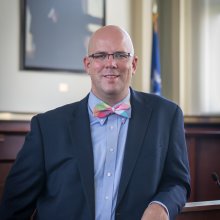
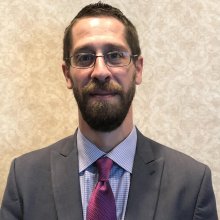
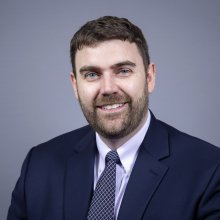
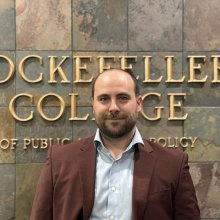
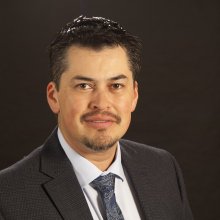
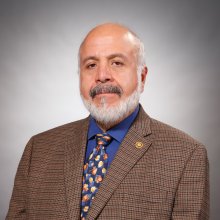
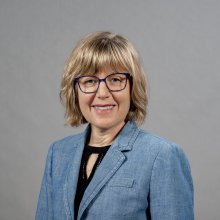
The Center, led by Professor Victor Asal, has more than 20 staff, researchers, and affiliated faculty. Other key Center personnel include Mrs. Lois Brando Pownall and Mr. Jim Levy.
Research Projects
- Project on International Security, Commerce, and Economic Statecraft (PISCES), Bryan Early
- Project on State and Local Government Finance, Donald J. Boyd, Gang Chen
- Project on Violent Conflict, Victor Asal, R. Karl Rethemeyer
- Extremist Violent and Nonviolent United States (EVAN_US) Database
- BAAD I Data Set
- Lethality Codebook
When using the data referenced above, please use this citation: Asal, Victor H. and R. Karl Rethemeyer "The Nature of the Beast: Terrorist Organizational Characteristics and Organizational Lethality" Journal of Politics, (2008) 70(2): 437-449.
Affiliates & Partners Websites
Past & Present Funders
- U.S. Department of State
- Defense Advanced Research Projects Agency (DARPA)
- Defense Threat Reduction Agency (DTRA)
- Department of Homeland Security Science & Technology
- National Science Foundation (NSF)
- MacArthur Foundation
- National Institute of Mental Health
- Society of Actuaries
- Centers for Disease Control and Prevention
- Oak Ridge National Laboratory
- New York State Health Foundation
- Ewing Marion Kauffman Foundation
- Stanton Foundation
- USAID - South African Parliamentary Support Trust
- Smith Richardson Foundation
Grant Resources
Power Point Presentations from the April 2016 CPR Grants Workshop
- Applying for and Managing Grants: How CPR Can Help
- Going after Grants: The Benefits and Opportunity Costs
Pre-Award and Post-Award Grant Guidelines
135 Western Avenue
Albany, NY 12222
United States